Yurt Eco-Friendliness Calculator
Configure the features of your potential stay to see its environmental impact.
Eco-Score
0%
Select Options
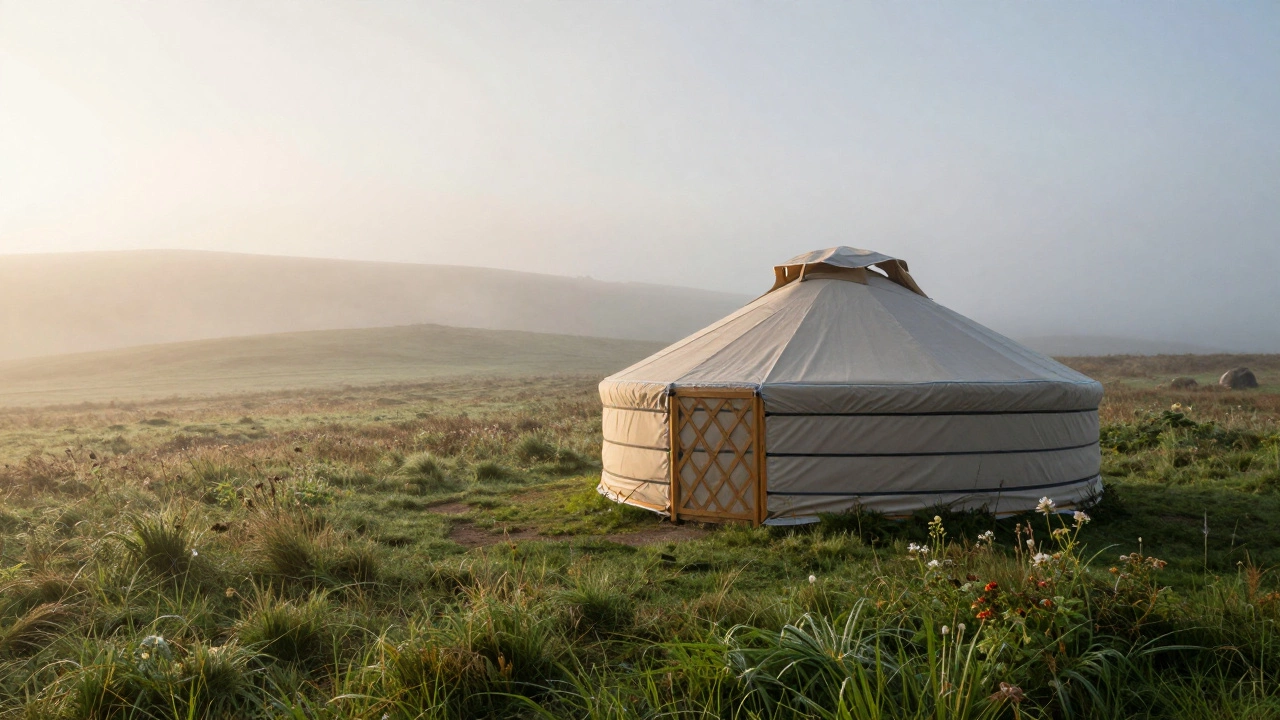
Picture this: you’re standing in a meadow at dawn, the mist rolling off the grass, and you step into a round, canvas-walled structure that feels ancient yet cozy. It’s not a tent, but it’s not quite a house either. It’s a yurt, a portable, round dwelling traditionally used by nomadic peoples of Central Asia. For years, yurts have been marketed as the ultimate eco-friendly escape-a way to reconnect with nature without leaving a trace. But does that marketing hold up under scrutiny? Are yurts truly green, or are they just another trendy accommodation hiding a heavy carbon footprint?
The short answer is: it depends. A well-built, responsibly managed yurt can be one of the lowest-impact ways to stay overnight outdoors. But if that yurt sits on concrete foundations, runs on diesel generators, and imports all its furniture from overseas, it’s about as green as a coal plant. Let’s pull back the canvas and look at what makes a yurt genuinely eco-friendly.
What Makes a Yurt Different From Other Accommodations?
To understand whether yurts are eco-friendly, we first need to understand what they are. Unlike a traditional holiday cottage or hotel room, a yurt is designed for portability and minimal site disturbance. Traditional yurts were built by Mongolian herders who moved with their livestock across the steppes. They needed homes that could be packed up in hours, transported by camel or horse, and reassembled anywhere. That design philosophy-lightweight, reusable, and temporary-is inherently low-impact.
Modern glamping yurts borrow from this heritage but often add comforts like wooden floors, insulated walls, and even en-suite bathrooms. This shift changes the environmental equation. A basic camping tent leaves almost no mark on the land. A luxury yurt with a heated bathroom and Wi-Fi router starts looking more like a tiny house. The key question isn’t whether yurts are eco-friendly by default-it’s how they’re built, where they’re placed, and how they’re powered.
The Environmental Footprint of Building a Yurt
Every structure has an embodied carbon cost-the energy and emissions tied to extracting materials, manufacturing components, and transporting them to the site. For yurts, this footprint varies wildly depending on construction choices.
| Material | Carbon Footprint (per kg) | Durability | Recyclability |
|---|---|---|---|
| Spruce wood frame | Low (sequesters CO₂ while growing) | High (20+ years with maintenance) | Yes (can be reused or composted) |
| Canvas covering | Moderate (cotton farming uses water/pesticides) | Medium (5-10 years) | Limited (biodegradable if untreated) |
| Steel frame | High (energy-intensive production) | Very high (30+ years) | Yes (highly recyclable) |
| Synthetic waterproofing | High (petroleum-based) | High (10+ years) | No (microplastic pollution risk) |
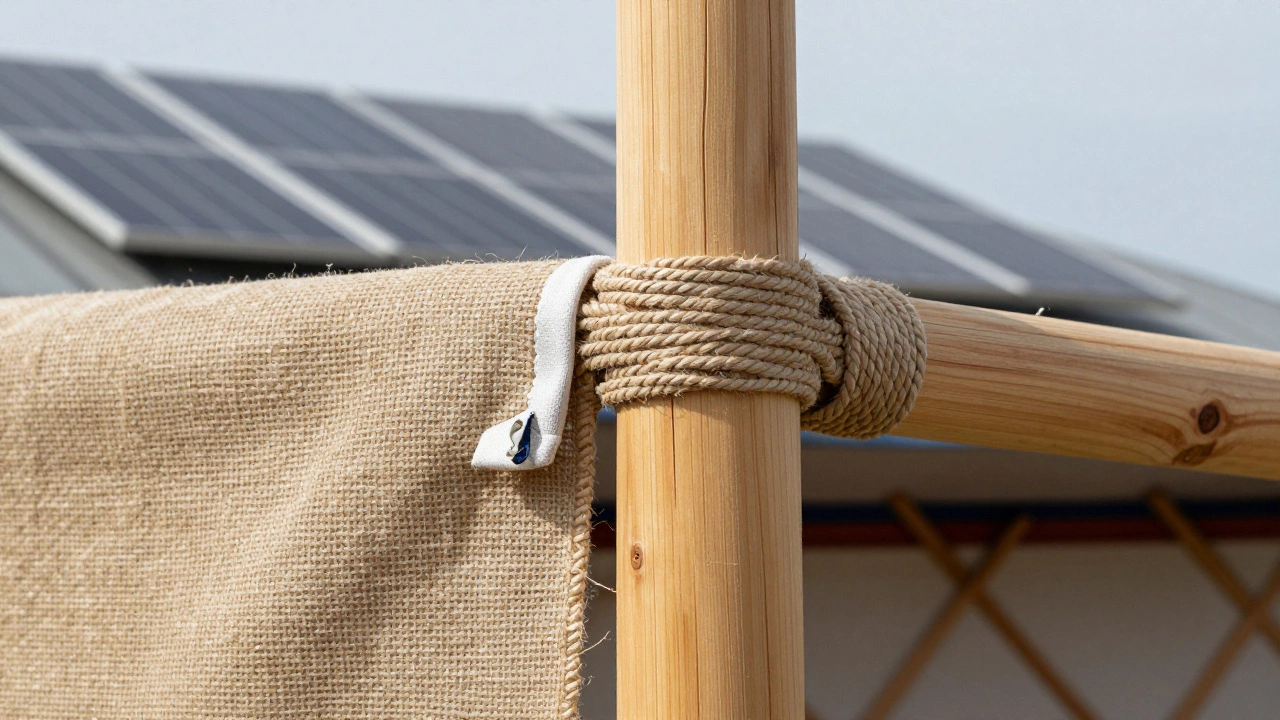
Traditional yurts use locally sourced timber and natural felt or canvas. Modern versions often swap felt for synthetic fabrics to reduce weight and increase weather resistance. While synthetics last longer, they shed microplastics when washed and don’t break down naturally. If you’re evaluating a yurt’s eco-credentials, ask what the cover is made of. Hemp canvas or organic cotton is far better than polyester-coated nylon.
The frame matters too. Spruce or pine poles harvested from sustainably managed forests store carbon rather than releasing it. Steel frames, while durable, require massive amounts of energy to produce. Some operators claim their yurts are “green” because they’re reusable-but if the yurt travels thousands of miles by truck to reach the campsite, those transport emissions eat into any savings.
Site Impact: Does a Yurt Leave a Trace?
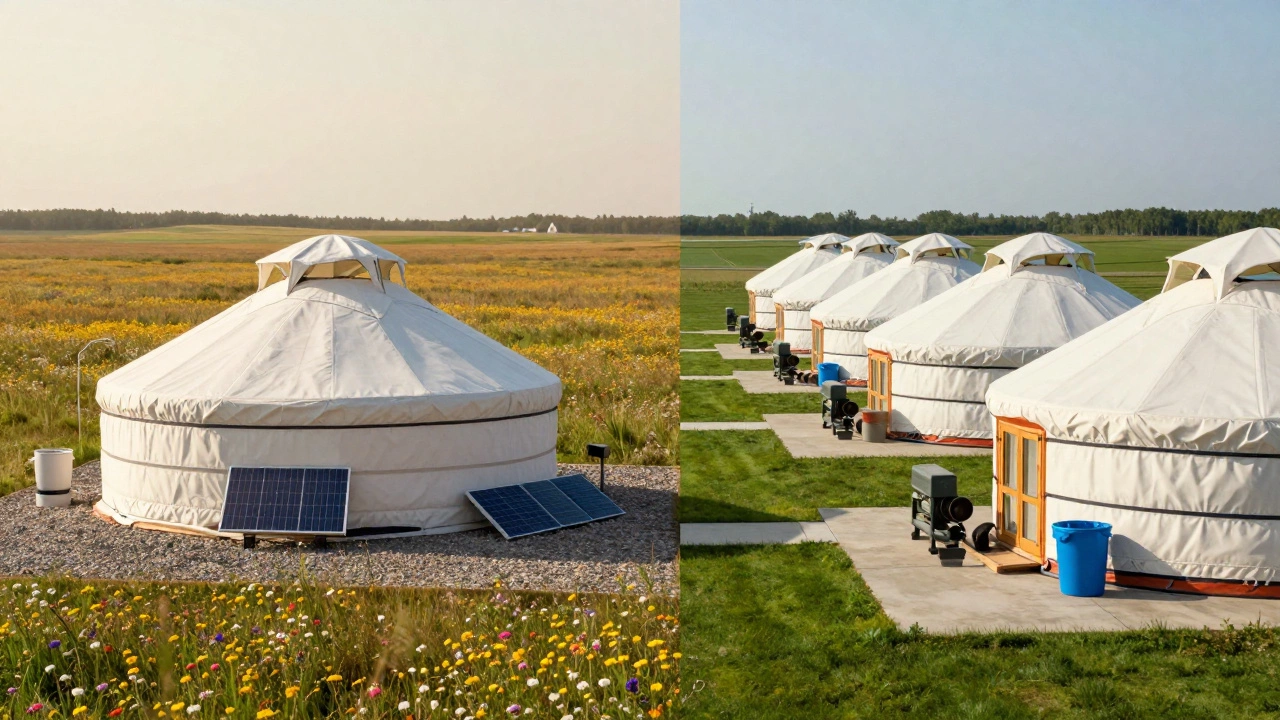
One of the biggest selling points of yurts is that they don’t require permanent foundations. Instead of pouring concrete slabs-which disrupt soil ecosystems and generate significant CO₂-many yurts sit on gravel pads, wooden decks, or even directly on grass. This reduces habitat destruction and allows rainwater to soak into the ground naturally.
But here’s the catch: some glamping sites pave over large areas to support multiple yurts, install underground sewage lines, and clear trees for “views.” In these cases, the yurt itself might be lightweight, but the infrastructure around it isn’t. True low-impact yurts should:
- Sit on permeable surfaces that allow water drainage
- Avoid clearing native vegetation
- Use existing tracks instead of creating new paths
- Be removable without leaving scars on the land
If a yurt site looks like a mini-resort with paved parking lots and manicured lawns, pause. The structure may be round, but its footprint isn’t necessarily small.
Energy Use: How Green Is Your Yurt Stay?
This is where most yurts fall short. Many assume that because a yurt is rustic, it must be off-grid. In reality, many glamping yurts run on grid electricity, propane heaters, or diesel generators. None of these are particularly clean.
Consider heating. A standard electric space heater in a poorly insulated yurt can consume 1,500 watts continuously. Over a three-night stay, that’s roughly 108 kWh of electricity-if drawn from a coal-heavy grid, that equals about 70 kg of CO₂. Compare that to a passive solar design or a wood-burning stove using locally sourced fuel, and the difference is stark.
Eco-conscious yurt operators are starting to adopt smarter solutions:
- Solar panels: Small arrays can power lights, phone chargers, and fans during daylight hours.
- Composting toilets: Eliminate the need for septic tanks and reduce water usage by up to 90%.
- Rainwater harvesting: Collect runoff for washing hands or flushing dry-compost systems.
- Passive insulation: Thick wool blankets or sheepskin liners retain heat without mechanical aid.
If a yurt advertises itself as eco-friendly but plugs into the main grid and uses a conventional flush toilet, treat those claims with skepticism.
Water Usage: The Hidden Cost of Comfort
We tend to think of yurts as simple shelters, but modern guests expect hot showers, running taps, and sometimes even bathtubs. Each of these amenities demands water-and treating and pumping water requires energy.
A typical shower uses 10-20 liters per minute. A five-minute shower consumes 50-100 liters. Multiply that by ten guests per night, and you’re moving thousands of liters daily. Where does that water come from? If it’s pumped from a local aquifer or river, it can strain ecosystems, especially in drought-prone regions.
Truly sustainable yurts minimize water demand through design:
- Dry baths: Provide biodegradable soap and towels for sponge baths instead of full showers.
- Greywater recycling: Filter sink and shower water for irrigation (not drinking).
- Low-flow fixtures: Reduce consumption without sacrificing comfort.
Ask your host how they handle wastewater. If they pipe it into a municipal system, that’s fine-but it means the yurt relies on external infrastructure, which increases its overall impact.
Waste Management: What Happens After You Leave?
Even the greenest yurt generates waste. Food packaging, toiletries, laundry, and human waste all need somewhere to go. On-site composting bins, recycling stations, and proper trash disposal are non-negotiable for eco-friendly operations.
Some yurt camps go further by banning single-use plastics entirely. Others partner with local farms to turn food scraps into fertilizer. These practices close the loop and prevent waste from ending up in landfills.
As a guest, you play a role too. Bring reusable bottles, refuse plastic utensils, and pack out anything that doesn’t belong in nature. The best eco-yurts empower visitors to participate in sustainability-not just observe it.
How Do Yurts Compare to Other Eco-Accommodations?
You might wonder: if I’m trying to travel sustainably, why choose a yurt over a cabin, tent, or treehouse? Here’s a quick breakdown:
| Type | Land Disruption | Energy Needs | Best For |
|---|---|---|---|
| Tent | Minimal | None (if no lighting/heating) | Budget travelers, wilderness enthusiasts |
| Yurt | Low (if sited properly) | Low to moderate | Comfort-seeking naturals, families |
| Cabin | Moderate (foundation required) | Moderate to high | Longer stays, colder climates |
| Treehouse | Variable (depends on construction) | Low to moderate | Unique experiences, forest settings |
Yurts strike a balance between comfort and conservation. They offer more protection than tents and less permanence than cabins. When done right, they let you sleep under the stars without sacrificing warmth or safety.
Red Flags: Spotting Greenwashing in Yurt Marketing
Not every yurt labeled “eco-friendly” deserves the title. Watch out for these warning signs:
- Vague claims: Phrases like “nature-inspired” or “earth-conscious” mean nothing without specifics.
- No transparency: If the operator won’t share details about materials, energy sources, or waste handling, assume the worst.
- Overdevelopment: Rows of identical yurts with paved roads and neon signage contradict the ethos of simplicity.
- Imported luxury: Furniture flown in from Italy or bedding shipped from China adds hidden emissions.
Real sustainability shows up in details: locally crafted beds, solar-powered lanterns, and menus featuring seasonal ingredients grown nearby.
How to Choose a Truly Eco-Friendly Yurt
If you want to book a yurt that aligns with your values, follow this checklist:
- Check the materials: Look for natural fibers, reclaimed wood, and non-toxic finishes.
- Ask about energy: Solar, wind, or biomass beats grid electricity or diesel.
- Inquire about water: Composting toilets and rainwater collection are big pluses.
- Review waste policies: Recycling, composting, and plastic bans indicate serious commitment.
- Visit reviews: Past guests often mention whether the place felt authentic or overly commercialized.
Don’t hesitate to email the host with questions. Operators who care about sustainability will welcome the conversation.
Final Thoughts: Can Yurts Be Part of a Greener Future?
Yurts aren’t automatically eco-friendly-but they have the potential to be. Their modular design, low foundation requirements, and connection to nomadic traditions make them ideal candidates for sustainable tourism. The challenge lies in execution. Too many operators prioritize aesthetics over ecology, adding comforts that undermine the very principles they claim to uphold.
As travelers, we hold the power to shape this industry. By choosing yurts that demonstrate genuine care for the environment-and avoiding those that dress up excess as enlightenment-we can help steer glamping toward true sustainability. Next time you’re tempted by a picturesque yurt listing, dig deeper. Ask questions. Demand proof. And remember: the most beautiful thing about a yurt shouldn’t just be how it looks-it should be how lightly it touches the earth.
Are yurts better for the environment than hotels?
Generally yes, if the yurt is built sustainably and operates off-grid. Hotels typically consume more energy, water, and resources due to larger scale and fixed infrastructure. However, a poorly managed yurt with diesel generators and imported furnishings can have a higher per-guest footprint than an efficient boutique hotel.
Do yurts require permits to build?
It depends on location and zoning laws. In many rural areas, temporary structures like yurts may not need building permits if they’re not permanently anchored. Always check local regulations before installing a yurt, especially if you plan to rent it out commercially.
Can yurts be used year-round?
Yes, with proper insulation and heating. Double-layered walls, thick rugs, and wood stoves keep yurts comfortable in winter. Summer ventilation comes from roof vents and open doorways. Climate-adapted designs exist for both extreme cold and heat.
What’s the lifespan of a yurt?
A well-maintained yurt can last 15-25 years. Wooden frames endure decades with occasional treatment. Canvas covers typically need replacement every 5-10 years depending on exposure and quality. Regular inspections prevent rot and mildew buildup.
Are there eco-certifications for yurt accommodations?
Some yurt camps pursue certifications like Green Key, EarthCheck, or national eco-labels. These verify practices around energy efficiency, waste reduction, and biodiversity protection. Look for displayed badges or ask hosts directly about third-party audits.