Holiday Payment Risk & Options Estimator
Enter your details and click calculate to see your estimated risk and recommended next steps.
- Missing a payment usually triggers an automatic cancellation of your booking.
- Your ability to get money back depends heavily on whether you booked a package or a DIY trip.
- Communication with the provider is your best tool to avoid heavy penalties.
- Travel insurance only helps in specific "unforeseen" circumstances, not general lack of funds.
The immediate fallout of a missed payment
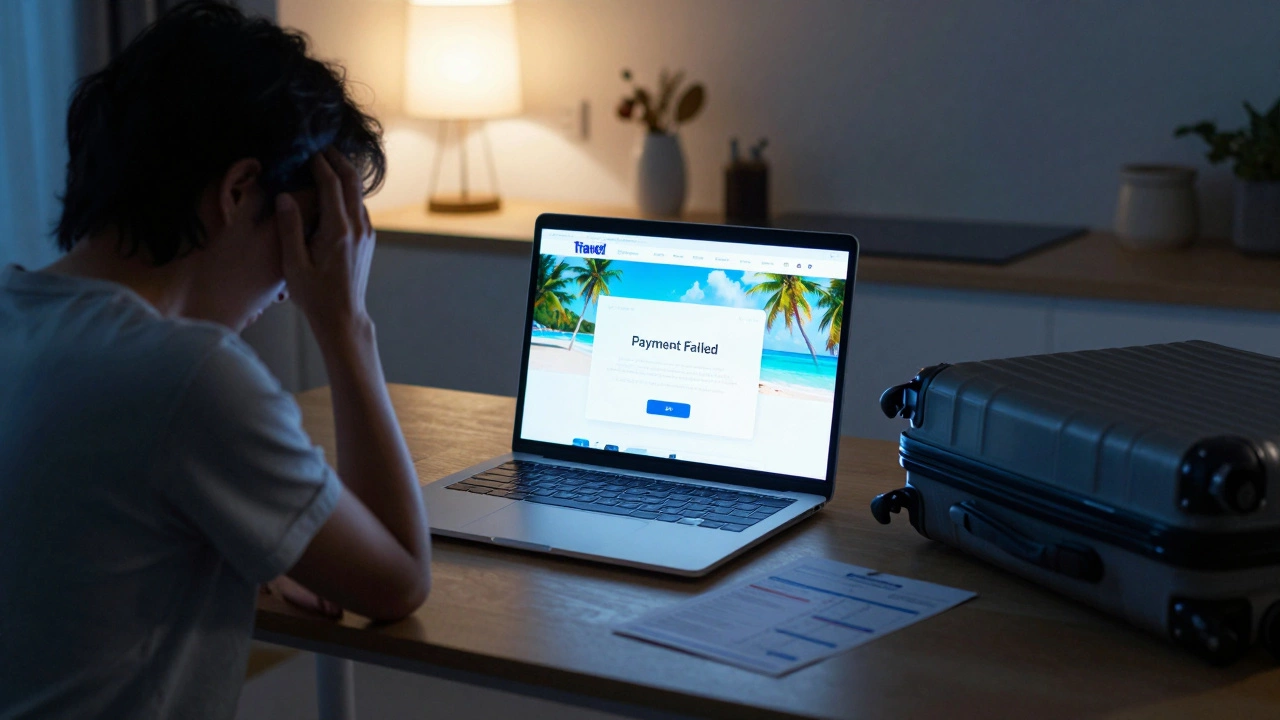
If you're dealing with a last minute holiday a trip booked shortly before departure, often at a discounted rate to fill remaining capacity, the timeline is much tighter. Most travel companies use automated systems. If a payment fails or a deadline passes without a transfer, the system often flags the booking for automatic cancellation. Usually, you'll get a notification-maybe an email or a text-giving you a 24 to 48-hour window to rectify the payment. If you ignore this, the company will release your hotel room or flight seat back into the pool of available inventory. Because last-minute slots are highly competitive, they won't hold a spot for you for long. Once it's gone, you can't just "pay later" and expect the original price to still be there; you'll likely have to re-book at the current market rate, which could be significantly higher.Understanding the financial hit: Deposits vs. Full Payments
What you lose depends on when you hit the wall. If you only paid a small deposit and can't afford the balance, you'll likely lose that deposit. Most operators categorize deposits as non-refundable because they've already used that money to secure a block of rooms or seats. However, if you've already paid in full and suddenly realize you can't afford the "extras" (like food, transport, or activities), you're in a different spot. In this case, the holiday is secure, but your experience will be limited. If you can't pay the final balance of a package, the operator will likely cancel the whole thing and apply your deposit toward a cancellation fee. This fee is based on how close you are to the departure date. If you cancel two weeks before you fly, you might lose 80% to 100% of the total cost. If you're three months out, you might only lose the deposit.Package holidays vs. DIY bookings
There is a massive difference in how you're treated based on how you booked. When you book a Package Holiday a trip where at least two different travel services, such as flight and hotel, are combined into a single price, you are generally protected by stronger consumer laws. In the UK and EU, for example, package operators are often the single point of contact. If you can't pay, you deal with one company. If you've gone the DIY route-booking a flight with one airline, an Airbnb with a private host, and a car rental from another agency-you have multiple contracts. If you can't pay for the flight, the hotel doesn't care; they still expect their payment. This can lead to a "domino effect" where you're paying for a hotel room you can't actually get to because you couldn't afford the flight.| Feature | Package Holiday | DIY Booking |
|---|---|---|
| Point of Contact | One travel agent/operator | Multiple separate vendors |
| Cancellation Process | Single request cancels all | Must cancel each item individually |
| Refund Likelihood | Standardized terms apply | Varies by each vendor's policy |
| Protection | Covered by operator's bond | Individual terms of service |

Does travel insurance cover financial hardship?
This is where many people get caught out. Most people assume Travel Insurance an insurance policy that covers losses associated with a trip, such as medical emergencies or trip cancellations is a safety net for any reason. It isn't. Standard policies cover "unforeseen circumstances" like a sudden illness, a death in the family, or a natural disaster. Running out of money or losing your job is rarely a covered reason for a claim. If you tell an insurance provider, "I can't afford the trip," they will almost certainly reject your claim. However, if your inability to pay is a direct result of something covered-like a sudden medical emergency that wiped out your savings-you might have a case. Always read the "Cancellation' section of your policy. If it doesn't explicitly list "financial hardship" or "unemployment," don't count on it to save your deposit.How to handle the conversation with travel providers
If you know you can't make the payment, the worst thing you can do is go silent. Travel agents are humans, and they'd rather have a conversation than a failed payment notification. Try these steps to minimize the damage:- Ask for a date shift: If you're expecting a bonus or a tax refund in a few weeks, ask to move the holiday dates. This keeps the booking active and might save your deposit.
- Request a downgrade: Can you swap a five-star resort for a three-star boutique hotel? The operator might let you downgrade the accommodation and credit the difference toward your balance.
- Partial Payment: Offer to pay what you can immediately to show good faith, then negotiate a short-term payment plan for the rest.
- Transfer the booking: Some companies allow you to transfer your booking to a friend or family member for a small fee. You get your money back (or avoid further loss), and they get a holiday.
The danger of "Quick Fix" loans
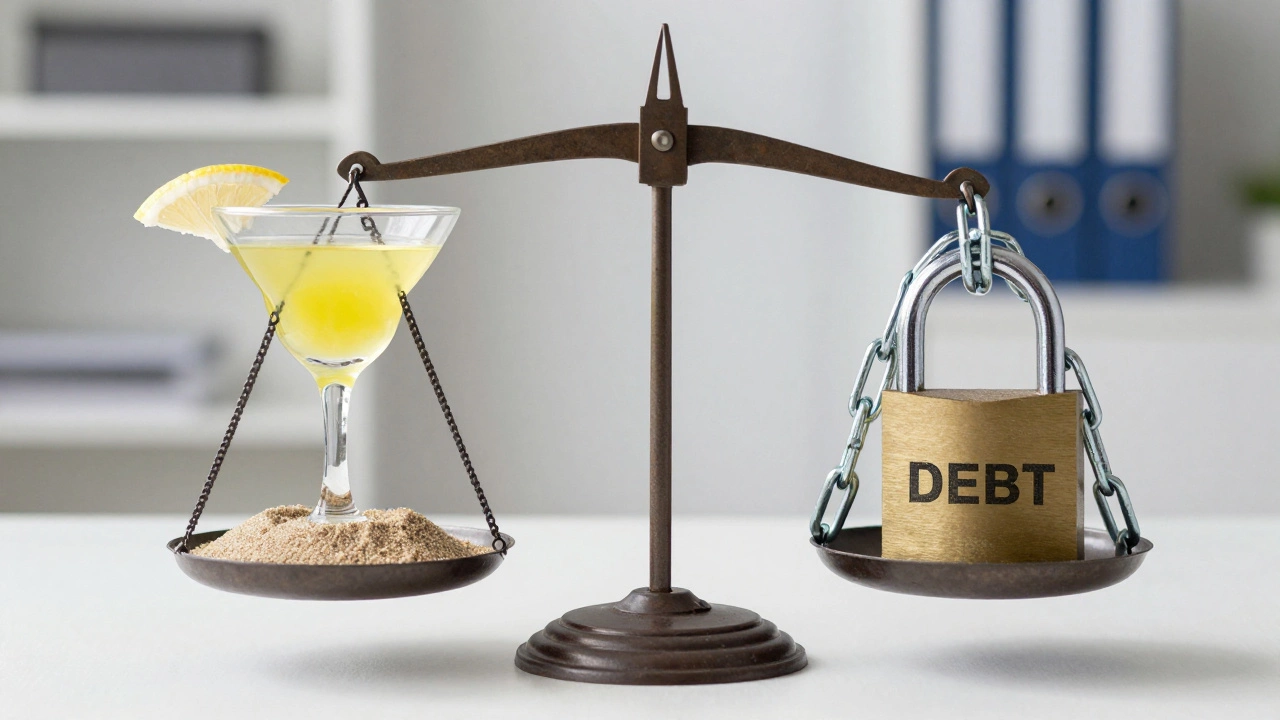
When desperation hits, it's tempting to look at high-interest short-term loans to cover the balance. This is a dangerous path. Taking out a loan with a 30% or 40% APR just to go on a vacation often leads to a cycle of debt that lasts long after the tan has faded. If you find yourself considering a payday loan to pay for a trip, it's a clear signal that the holiday is no longer affordable. It is far better to lose a £200 deposit now than to spend two years paying back £1,000 in interest. Consider the "cost of the stress"-spending a week on a beach while worrying about how you'll pay for the loan when you get home isn't actually a vacation.Legal rights and the 'Cooling Off' period
If you've only just booked the holiday-perhaps within the last 14 days-you might be able to use a cooling-off period. While this is more common for financial products, some online bookings have a short window where you can cancel for a full refund. Check your terms and conditions immediately. If you booked through a third-party site, they may have a "24-hour grace period" where errors or changes of heart are forgiven. Furthermore, if the travel company has significantly changed the itinerary, the price, or the hotel, you may have the legal right to cancel and get a full refund regardless of your financial situation. This is a common loophole in package holiday law-if the company can't deliver what was promised, you can walk away with your money.Can I get a refund if I simply can't afford the trip anymore?
Generally, no. Lack of funds is not a legal ground for a refund. You will be subject to the cancellation policy of the provider, which usually means losing your deposit or a percentage of the total cost depending on how close the departure date is.
What happens if my credit card payment for the balance fails?
The travel provider will usually notify you that the payment failed and give you a short window (often 24-72 hours) to provide an alternative payment method. If you fail to do so, the booking is typically cancelled automatically, and the room/flight is released to other customers.
Can I move my holiday to a later date to buy more time to save?
Many operators allow date changes, though they often charge a change fee plus the difference in price between the old and new dates. This is often a cheaper alternative than cancelling entirely and losing your entire deposit.
Is there any way to get my deposit back from a non-refundable booking?
Your best bets are: 1. Finding someone to take over the booking (if the operator allows transfers). 2. Checking if the operator has made a significant change to the trip that allows you to cancel legally. 3. Negotiating with the agent to convert the deposit into a credit voucher for future use.
Will a cancelled holiday affect my credit score?
Simply cancelling a holiday or losing a deposit does not affect your credit score. However, if you took out a specific travel loan or used a "Buy Now, Pay Later" service and then missed those payments, your credit score will be negatively impacted.
Next steps and troubleshooting
Depending on where you stand, here is the best path forward:If you're 3+ months away: Cancel now. You'll likely only lose your deposit, which is better than losing the full amount later. Check if you can get a voucher instead of a refund.
If you're 1 month away: Call your agent immediately. Don't email; call. Explain the situation and ask for a date shift or a room downgrade. If that fails, check if you can sell your spot to someone else via social media or a travel forum (ensure the company allows this first).
If you're 1 week away: You are in the high-risk zone. Most of your money is likely gone if you cancel. At this point, look for the cheapest possible ways to supplement your trip-think hostels over hotels or grocery shopping instead of dining out-to make the most of the money you've already spent.