G Adventures 'g for good' Impact Calculator
Enter your trip details to estimate how much of your budget stays in the destination and your relative environmental impact.
Estimated Impact
--%Select a travel style to see how much money stays in the community vs. leaking out to international corporations.
Enviro Score
--
Relative Carbon/WasteSocial Score
Community BenefitInsight: Adjust settings to see recommendations.
You’re scrolling through G Adventures itineraries and you see a little green leaf icon or the phrase "g for good" next to certain trips. You click it, expecting maybe a discount code or a donation link. But what does it actually mean? Is it just marketing fluff, or is there real substance behind the label?
If you’ve ever felt guilty about your carbon footprint while jetting off to Peru, or wondered if your tourist dollars actually help the local community, this is for you. The "g for good" initiative isn’t just a badge; it’s a structural shift in how one of the world’s largest small-group tour operators handles its supply chain. It’s about ensuring that when you book an adventure holiday, the money stays in the destination, the environment gets protected, and the people you meet are treated with dignity.
The Core Philosophy Behind g for good
At its heart, g for good is G Adventures’ corporate social responsibility framework. But unlike many companies that tack on charity work as an afterthought, this program is woven into the product design. Launched around 2017, it emerged from a simple realization: mass tourism often extracts value from destinations rather than adding to them. The goal was to reverse that flow.
The framework rests on three main pillars: Local Prosperity, Environmental Protection, and Community Engagement. When you see a trip marked with this designation, it means G Adventures has audited that specific itinerary against strict criteria within these pillars. It’s not enough to say you’re eco-friendly; you have to prove where the money goes and how the waste is managed.
| Pillar | Focus Area | Tangible Action Examples |
|---|---|---|
| Local Prosperity | Economic impact on host communities | Using locally-owned hotels, hiring local guides, sourcing food from nearby farms. |
| Environmental Protection | Reducing ecological footprint | Eliminating single-use plastics, choosing energy-efficient transport, supporting conservation projects. |
| Community Engagement | Cultural respect and social support | Fair wages for staff, community development funds, respectful visitor guidelines. |
How Your Money Moves Differently
Here’s the part most travelers miss: traditional package tours often leak up to 80% of their revenue out of the destination country. That money goes to international airline headquarters, foreign-owned hotel chains, and global booking platforms. With a "g for good" trip, G Adventures actively works to plug those leaks.
Take accommodation, for instance. On standard tours, you might stay at a multinational chain like Marriott or Hilton. While convenient, the profits fly back to New York or London. On a "g for good" itinerary, you’re more likely to stay in family-run guesthouses or locally-owned boutique hotels. This keeps cash circulating in the local economy. A study by the World Tourism Organization suggests that locally owned businesses retain significantly more profit within the community compared to foreign-owned entities.
It’s not just about hotels. Think about your meals. If you’re eating at a restaurant that sources vegetables from a farm down the road, that farmer gets paid directly. If you’re buying souvenirs from an artisan cooperative rather than a factory-made gift shop, your purchase supports a craft tradition and a household income. These micro-decisions, aggregated across thousands of travelers, create a macro-economic shift.
What Does It Look Like in Practice?
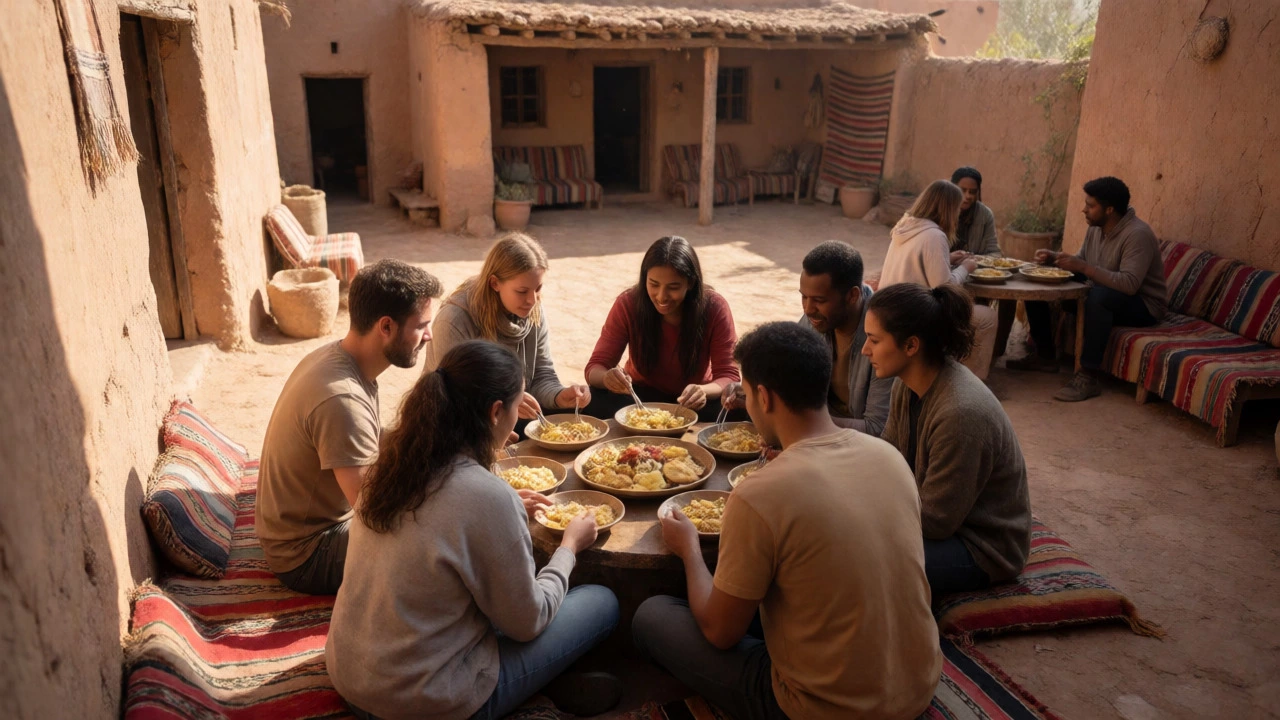
Let’s ground this in reality. Imagine you’re booking a trip to Morocco. A standard tour might involve staying in large riads in Marrakech and taking day trips to the Atlas Mountains. A "g for good" version of that same route might include a night in a Berber village homestay. You eat dinner cooked by the family hosting you. You learn how they make argan oil. The fee you pay covers their labor and ingredients, not just a room rate.
Another common example involves transportation. G Adventures has been aggressive in removing bottled water from their tours. Instead of handing you a plastic bottle every morning, they provide reusable bottles and refill stations. In some remote areas, they partner with local water purification initiatives. This reduces plastic waste-often a massive problem in places without robust recycling infrastructure-and saves the traveler money over the course of a two-week trip.
Then there’s the guide factor. Guides are the face of any tour. "g for good" mandates fair wage policies and training programs for guides. Many tour operators hire freelance guides who get paid per day, often with no benefits. G Adventures invests in their guide network, offering health insurance and professional development. Why does this matter to you? Because a well-paid, well-trained guide is happier, more knowledgeable, and provides a richer experience. You’re paying for quality service, not just exploitation.

Is It More Expensive?
This is the big question. Does doing good cost more? Sometimes, yes. But often, it’s about value redistribution rather than pure cost increase. Locally-owned hotels might charge slightly less than luxury international chains because they don’t have the same overheads. However, paying fair wages to local staff can raise labor costs slightly.
When comparing prices, look at what’s included. A cheaper tour might exclude park fees, tip packages, or special excursions, which add up later. A "g for good" tour often includes these elements upfront. Furthermore, the intangible value-authentic connections, cleaner environments, feeling ethically aligned-is hard to put a price tag on. For many modern travelers, especially Millennials and Gen Z, ethical consumption is a non-negotiable part of the brand identity. They are willing to pay a premium for transparency.
It’s also worth noting that "g for good" isn’t a separate product line with a fixed surcharge. It’s a filter applied to existing itineraries. Some trips fully meet the criteria; others are transitioning toward it. The company aims to have all trips meet these standards eventually. So, you’re not necessarily buying a "premium" ticket; you’re buying into a verified operational model.
How to Identify and Book a g for good Trip
Spotting these trips on the G Adventures website is straightforward once you know what to look for. Each trip page features a dedicated tab or section labeled "g for good." Here, you’ll find specific details about how that particular itinerary meets the criteria. Don’t just glance at the icon; read the breakdown.
- Check the Accommodation List: See if the hotels are described as "locally owned" or "family-run." If they’re major international brands, the "local prosperity" score might be lower.
- Look for Community Projects: Does the itinerary include visits to schools, cooperatives, or conservation centers? These aren’t always "tourist attractions" but are key indicators of genuine engagement.
- Review the Waste Policy: Specific mentions of plastic-free initiatives or carbon offset partnerships signal strong environmental compliance.
- Read Guide Bios: Are guides highlighted as long-term partners? This indicates stability and investment in human capital.
If you’re still unsure, contact their customer service team. Ask direct questions: "Which of the hotels on this trip are locally owned?" or "What percentage of the tour cost stays in the destination?" Their willingness (or lack thereof) to answer specifics tells you a lot about their commitment.

Beyond the Label: Criticisms and Realities
No system is perfect, and it’s healthy to approach sustainability claims with a bit of skepticism. Critics sometimes argue that "greenwashing" is rampant in travel. How do we know G Adventures isn’t just slapping a leaf sticker on business-as-usual?
The difference lies in third-party verification and measurable goals. G Adventures partners with organizations like Planeterra, a non-profit foundation established by the company. Planeterra manages the community development projects funded by a portion of every booking. This separation ensures that charitable contributions aren’t mixed with general operating expenses. Additionally, they publish annual impact reports detailing how many jobs were created, how much waste was diverted, and how many students benefited from educational grants.
However, challenges remain. Air travel itself is a massive carbon emitter, regardless of how eco-friendly the ground tour is. G Adventures offers carbon offset options, but offsets are controversial among climate scientists. Some argue they allow continued high-emission behavior without systemic change. As a traveler, you need to decide how much weight to give to ground-level sustainability versus flight emissions. Often, choosing fewer, longer trips over frequent short hops helps balance this equation.
Also, consider the "overtourism" angle. Even well-meaning small groups can strain fragile ecosystems or cultural sites. "g for good" trips often include rules about group size and timing to mitigate this. Smaller groups mean less noise, less trash, and less pressure on local resources. It’s a trade-off: you might feel less anonymous in a small group, but you’ll likely have deeper interactions.
Who Should Choose g for good Trips?
This isn’t for everyone, and that’s okay. If your primary goal is luxury amenities, air conditioning everywhere, and dining at Michelin-starred restaurants, a standard tour might suit you better. "g for good" experiences can be rustic. You might share a bathroom, eat simple local food, or walk further than you expect.
But if you fit any of these profiles, lean toward the "g for good" options:
- The Conscious Traveler: You want your vacation to align with your values. You care about fair trade and ethical labor.
- The Cultural Immersion Seeker: You prefer authentic interactions over staged performances. You want to meet locals, not just watch them.
- The Solo Traveler: Small groups foster connection. Knowing you’re traveling responsibly can break the ice with fellow travelers.
- The Family Planner: Teaching kids about global citizenship and environmental stewardship is easier when you’re living it.
Ultimately, "g for good" is about intentionality. It shifts the narrative from "what can I take from this place?" to "what can I leave behind?" It acknowledges that tourism is a powerful economic force, for better or worse. By choosing these trips, you’re voting with your wallet for a model that prioritizes people and planet alongside profit.
So, next time you see that green icon, pause. Click through. Read the details. It might just change how you view your entire journey, transforming a simple holiday into a meaningful contribution to the world you’re visiting.
Does "g for good" mean my trip will be more expensive?
Not necessarily. While fair wages and local sourcing can increase costs, avoiding international hotel chains and reducing waste can lower them. Often, the price is comparable to standard tours, but the value proposition includes higher-quality local experiences and ethical assurance. Always compare what's included in the base price versus add-ons.
Are all G Adventures trips "g for good"?
No, not yet. G Adventures is transitioning its portfolio. Currently, a significant portion of their trips meet the criteria, and they aim to have all trips comply in the future. You must check individual itineraries for the "g for good" label to ensure they meet the specific sustainability standards.
How does G Adventures verify these claims?
They use internal audits and partner with external organizations like Planeterra. They track metrics such as local employment rates, supplier diversity, and waste reduction. Annual impact reports provide data on these efforts, allowing travelers to see tangible results rather than just vague promises.
Can I request a "g for good" trip if it's not listed?
You can ask, but the designation depends on the pre-arranged logistics. Changing hotels or suppliers mid-trip can disrupt the vetted supply chain. It’s best to book an itinerary already designated as "g for good" to guarantee the specific local economic and environmental benefits associated with that label.
Does "g for good" apply to solo travelers?
Yes, absolutely. The principles of local spending and environmental protection apply regardless of group size or traveler status. Solo travelers often benefit even more from the community-focused aspects, as smaller group dynamics encourage deeper interaction with hosts and fellow participants.