All-Inclusive Value & Budget Estimator
Trip Details
Daily Consumption Habits
Total Trip Cost: $0
Estimated Resort Tier: Budget
The Budget Tier: What to Expect for $150 to $300 Per Night
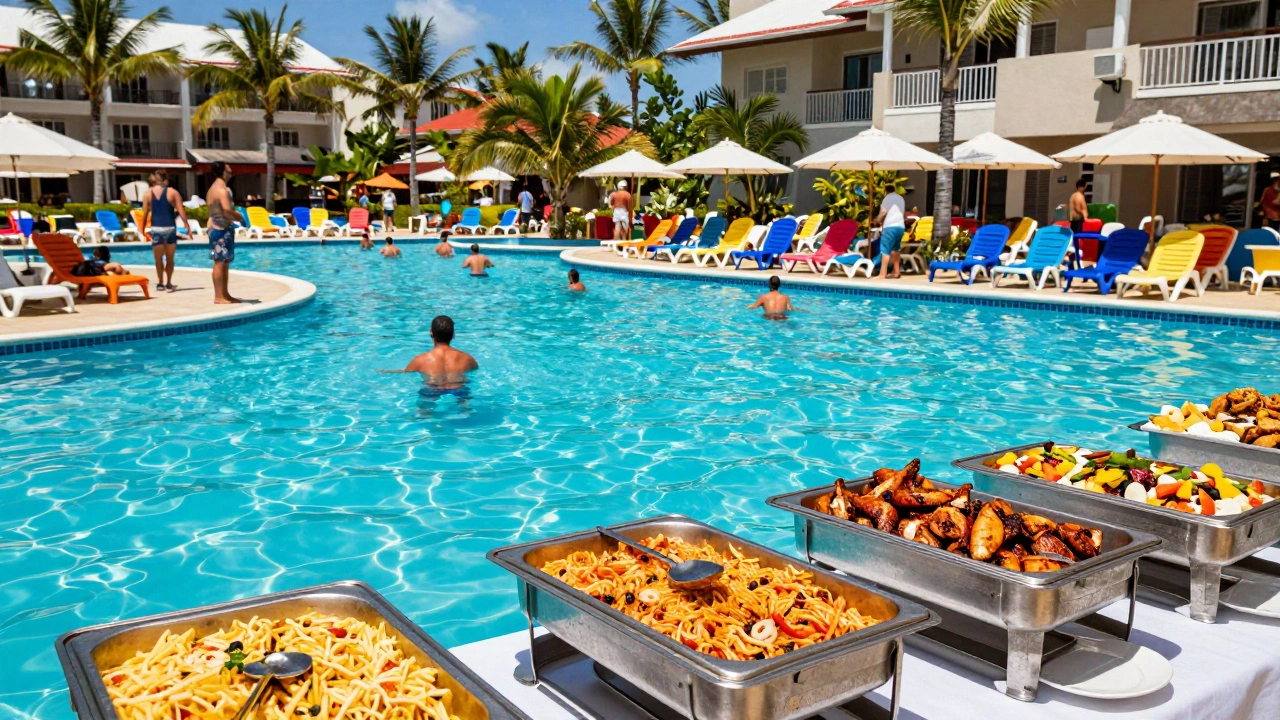
If you're looking at a resort in the range of $150 to $300 per person, per night, you're entering the budget or 'value' tier. This is common in destinations like Dominican Republic or parts of Mexico. At this price point, you aren't paying for exclusivity; you're paying for convenience. In these resorts, the food is typically buffet-style. While the variety is huge, the quality can be hit-or-miss, and you'll often find the same grilled chicken and pasta appearing at lunch and dinner. The drinks are usually house brands-think plastic cups and local spirits rather than a chilled glass of vintage champagne.You'll likely be staying in a standard room with a balcony. Don't expect a butler or a private plunge pool here. The crowds are larger, and you might have to fight for a lounge chair by 8:00 AM. However, for a family with three kids who will eat their weight in fries and ice cream, this tier is a lifesaver because the cost is predictable. You won't have a heart attack when the bill comes because the kids' endless appetite was already paid for.
The Mid-Range Sweet Spot: $300 to $600 Per Night
This is where most travelers find their balance. In this bracket, you move away from the "mega-resort" feel and into properties that focus more on guest experience. You'll start seeing a mix of high-quality buffets and a few a la carte restaurants where you can actually get a steak cooked to your liking without waiting in a 40-minute line. At this level, the alcohol shifts from "well drinks" to recognized brands. You might find a decent selection of imported beers and a basic wine list. The rooms are usually more modern, often featuring better linens, larger bathrooms, and perhaps a view of the ocean rather than the parking lot.One big difference here is the activity level. You'll likely have access to non-motorized water sports like kayaking or paddleboarding without an extra fee. The service is more attentive, and you'll feel less like a number in a crowd. If you want a vacation that feels like a treat without draining your entire savings account, this is the target range.
The Luxury Tier: $700 to $1,500+ Per Night
When you cross the $700 per night threshold, you aren't just paying for a room; you're paying for a lifestyle. These resorts, often found in Maldives or exclusive sections of Cancun, prioritize intimacy and personalization. In the luxury tier, the concept of a buffet often disappears or becomes a secondary option. Instead, you have gourmet dining with chefs who can accommodate every allergy and preference imaginable. The drinks are top-shelf-think premium tequila, aged scotch, and curated cocktails using fresh, local ingredients.The standout feature here is the service. You'll likely have a dedicated concierge or butler who handles everything from unpacking your bags to securing the best spot on the beach. The rooms are often suites or private villas with their own pools. You're paying for silence, space, and the feeling that the resort exists solely for you. If you're celebrating a honeymoon or a milestone anniversary, this is where the value lies-not in the cost of the food, but in the lack of stress.
| Tier | Price Range | Dining Style | Drink Quality | Key Vibe |
|---|---|---|---|---|
| Budget | $150 - $300 | Buffet-heavy | House/Local | Lively, crowded, convenient |
| Mid-Range | $300 - $600 | Mixed Buffet/A la Carte | Brand name/Imported | Balanced, comfortable |
| Luxury | $700 - $1,500+ | Fine Dining/Gourmet | Premium/Top-shelf | Private, quiet, pampered |
Hidden Costs That Blow Your Budget
One of the biggest mistakes people make is assuming "all-inclusive" means everything is free. If you don't read the fine print, your "reasonable" budget can vanish quickly. Most resorts have a tiered system for alcohol and dining. First, look for "Premium" vs. "Standard" packages. You might find that the basic package covers a local beer, but if you want a Heineken, you're paying $12. Similarly, many resorts have a "Signature Restaurant" that requires an additional fee or an upgrade to a luxury club level.Then there's the Spa. Massages, facials, and specialty treatments are almost never included. If you're planning on doing a full body scrub and a deep-tissue massage, add at least $200 to $500 to your trip total. Don't forget about motorized sports-jet skis and parasailing are classic "extra" charges that can eat into your spending money.
Calculating the Value: The "Consumption Math"
To figure out if a price is reasonable, you need to do some basic math based on your habits. If you're someone who drinks two coffees and a glass of water a day and eats light salads, paying for a high-end all-inclusive is actually a waste of money. You're paying for food and drink you aren't consuming. However, if you're a "foodie" who loves cocktails, tries every dessert, and spends four hours a day by the pool with a drink in hand, the all-inclusive model is a massive bargain. In a traditional hotel, a dinner with wine and dessert can easily hit $100 per person. Do that twice a day, add breakfast and drinks, and you're spending $300 daily just on sustenance.A good rule of thumb: If the daily cost of the all-inclusive package is less than what you'd spend on three meals and four drinks at a mid-range restaurant in your hometown, you're winning. If it's double that, you're paying for the luxury of the environment, not the value of the food.
Timing and Booking Strategy
When is a price actually "reasonable"? In the travel world, the date on the calendar changes everything. Booking a trip to the Caribbean in February (peak season) will cost significantly more than booking in September (hurricane season). If you see a price that looks too good to be true for a luxury resort, check the dates. A $400 room in October might be the same room that costs $1,200 in January. If you have flexible dates, use that to your advantage. Use a "blind search" tool to see the price fluctuations across a month; often, moving your trip by just one week can save you 30% of the total cost.Also, consider the "flight + hotel" bundle. Often, tour operators have negotiated wholesale rates with resorts that are lower than what you'll find on the hotel's own website. While it's tempting to book everything separately to feel in control, the bundled price is frequently the most reasonable option for all-inclusive trips.
Does 'all-inclusive' include tips and gratuities?
It depends on the resort. Some luxury properties explicitly state that gratuities are included in the price. However, in many budget and mid-range resorts, tipping is still expected. While the staff is paid, small tips for bartenders and housekeeping often lead to much better service and faster drinks. It's a good idea to bring $100-$200 in small bills specifically for tipping.
Is it cheaper to go all-inclusive or pay as you go?
If you plan to stay on the resort property most of the time and enjoy drinks and multiple meals, all-inclusive is almost always cheaper and less stressful. However, if you are an explorer who plans to spend your days in the city, eating at local holes-in-the-wall and hiking, you'll pay a premium for a resort package you aren't using. In that case, a standard hotel or Airbnb is the smarter financial move.
What is the 'club level' and is it worth the extra cost?
The club level (often called 'Diamond' or 'Preferred' club) usually gives you access to a private beach area, a dedicated lounge, and upgraded liquor. If you hate crowds and love a quiet spot with a private waiter, the extra $100-$200 per night is worth it. If you're social and like the energy of the main pool, you're essentially paying for a fence and a different chair.
Are kids' meals included in the all-inclusive price?
Usually, yes. Most resorts offer a discounted rate for children (often based on age), and once that rate is paid, their food and drinks are fully covered. Always check if there are age limits-some resorts consider a 12-year-old an adult, which can unexpectedly double the cost for that person.
Do I need travel insurance for all-inclusive trips?
Because all-inclusive packages are often more expensive than basic hotels, you have more to lose if you have to cancel. Travel insurance is highly recommended, especially if you're booking a luxury tier or traveling during a volatile season (like hurricane season in the Caribbean). A policy that includes 'cancel for any reason' is the gold standard for peace of mind.