Eco-Friendly House Cost Calculator
Estimate the cost of building your own eco-friendly home based on the principles in the article. Calculate savings compared to standard builds and see how material choices affect your budget.
Home Details
Material Choices
Foundation
Wall Material
Insulation
Flooring
Systems
Labor Options
Estimated Cost Breakdown
Estimated Total Cost: £0
Pro Tip: The average eco-build costs £150-200/m². Using reclaimed materials and self-building can reduce costs by 30-50% compared to standard builds.
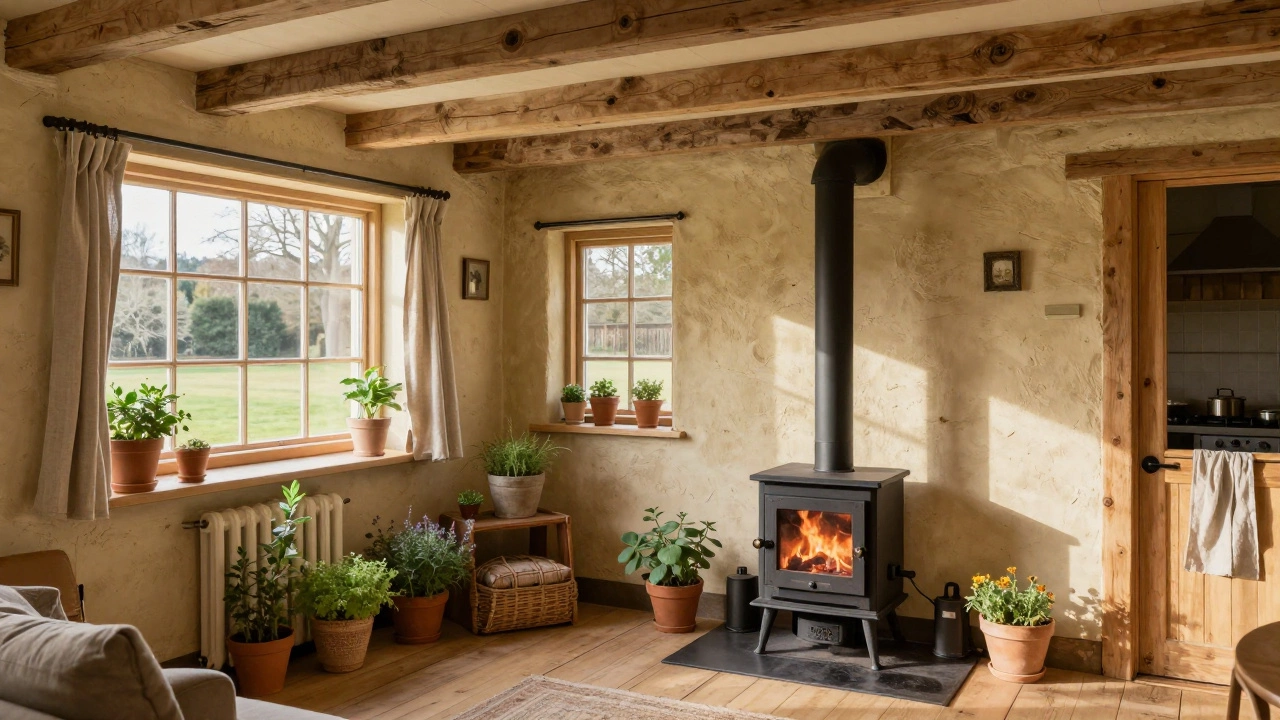
Building a cheap eco-friendly house doesn’t mean living in a tiny cabin with no running water. It means using smart design, recycled materials, and simple tech to create a home that’s kind to the planet-and your wallet. In Bath, where winters are damp and summers are mild, I’ve seen people cut their heating bills by 60% just by changing how they build. You don’t need to be an architect or a millionaire to do this. Here’s how.
Start with the Right Design
The cheapest way to build green is to design small. A 60-square-meter home uses less material, less energy, and costs less to heat than a 150-square-meter one. Most people think they need a three-bedroom house, but studies show that 70% of homeowners use only two rooms regularly. Focus on one open-plan living space, a bedroom, and a compact kitchen. Add a loft bed if you need extra sleeping space. Less square footage = less cost = less environmental impact.
Orientation matters too. In the northern hemisphere, face the longest wall of your house south. That means windows get sunlight all day in winter, naturally warming the interior. In summer, overhangs or deciduous vines block the high sun. This passive solar design cuts heating needs by up to 50%. No fancy tech. Just physics.
Use Recycled and Local Materials
Concrete and steel are expensive and carbon-heavy. Skip them. Instead, look at what’s already here.
- Reclaimed timber from old barns or demolished buildings: costs 40% less than new wood and has character you can’t buy. I’ve seen cottages in Somerset built with beams from a 1920s cider press-strong, dry, and free from chemical treatments.
- Straw bales: yes, straw. When packed tight and plastered with lime, they’re excellent insulators. A 30cm straw wall has an R-value of 40-better than most fiberglass. And it’s renewable. A bale costs about £1.50. A whole cottage? Under £2,000 in materials.
- Recycled denim insulation: made from old jeans, it’s non-toxic, easy to install, and traps heat better than fiberglass. It’s not common yet, but suppliers in Bristol ship it nationwide.
- Local stone: if you’re in the Cotswolds or near Bath, use stone from nearby quarries. Transport costs drop, and it blends with the landscape. A ton of local stone costs £30. A ton shipped from Scotland? £120.
These materials aren’t just cheap-they’re durable. A straw bale home in Wales has stood for 30 years without a single repair.
Build It Yourself (or With Friends)
Labor is the biggest cost in building. Skip the contractors. You don’t need to be a pro. Many eco-builds use self-build methods: simple, modular, and documented online.
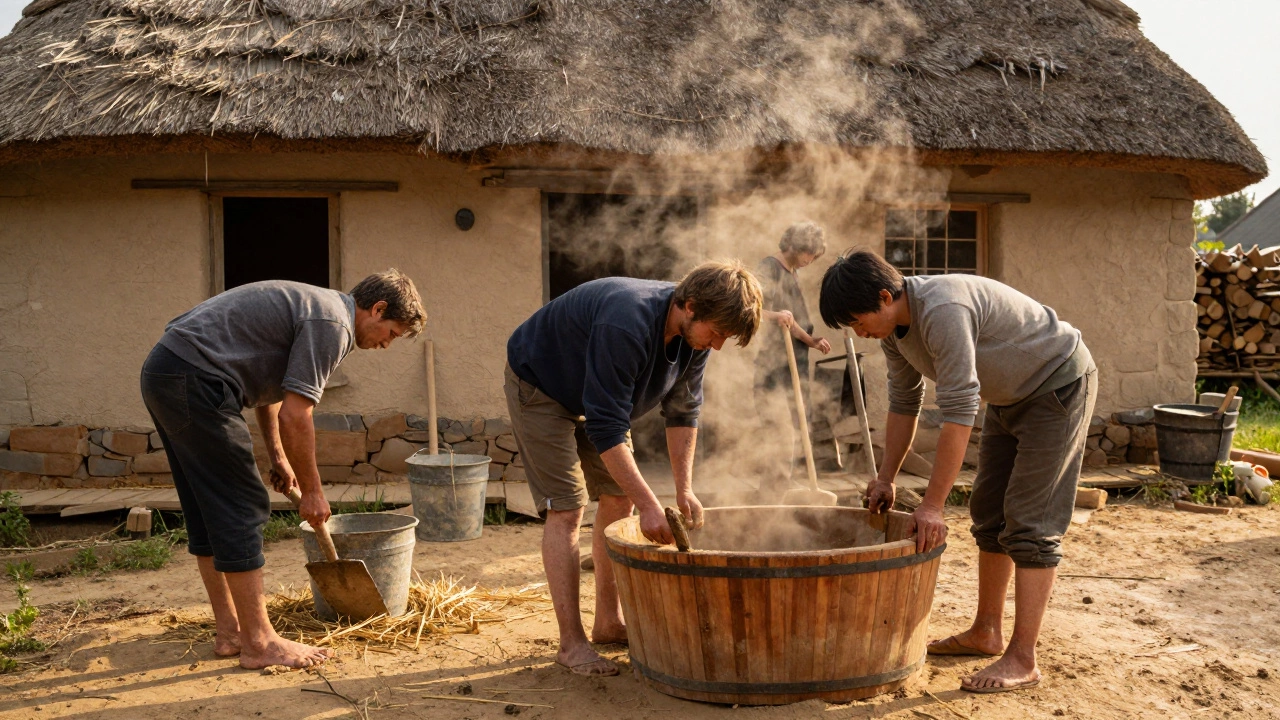
Look up the “Cob” technique-a mix of clay, sand, straw, and water. It’s been used in Devon for 800 years. You mix it by foot, pack it into walls, and let it dry. A team of four can build a 40m² wall in two weeks. No power tools. Just shovels, buckets, and sweat.
Or go with prefab timber frames. Companies like Ecobuild UK a UK-based supplier of low-carbon, prefabricated timber frames for self-builders ship kits with all parts numbered. You assemble like LEGO. One person can do it over a weekend. The frame costs £8,000. A full turnkey home with this method? Around £35,000.
Go Off-Grid Smart
You don’t need solar panels on every roof to be eco-friendly. But you do need to cut your reliance on the grid.
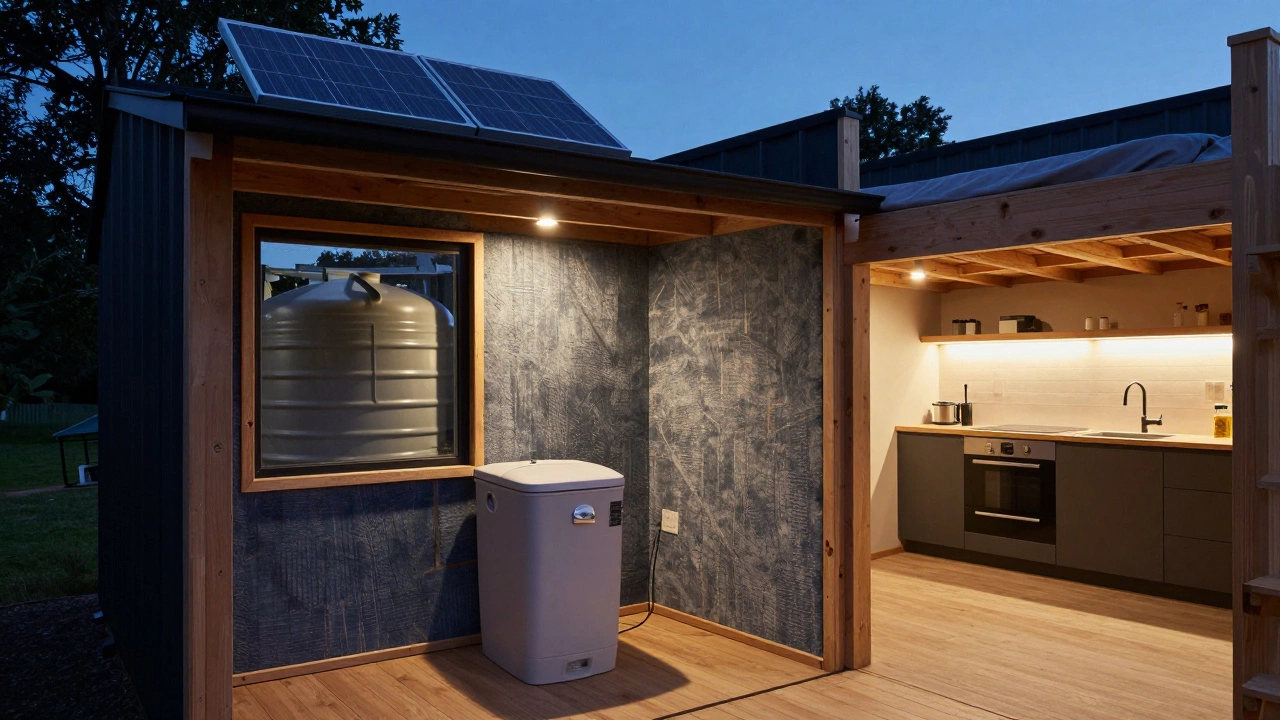
- Composting toilet: no water used, no sewage line needed. Costs £800. Lasts 20 years. Waste turns into fertilizer after six months. I’ve seen gardens in Frome grow 12kg of tomatoes from one compost system.
- Rainwater harvesting: a simple gutter system and a 2,000-litre tank (cost: £450) can supply all your washing, gardening, and even flushing. In Bath, you get 600mm of rain a year. That’s 12,000 litres per 100m² of roof.
- Wood stove: not just cozy. A well-built stove with dry, local wood heats the whole house. A £1,200 stove can last 30 years. Wood? Free if you split your own from fallen trees or buy from a local arborist for £60 per cubic meter.
For electricity, start small. One 400W solar panel (cost: £250) can power LED lights, a fridge, and charge phones. Add a 12V battery system. No need for inverters or grid-tie systems. Keep it simple.
Avoid the Greenwashing Traps
Not everything labeled “eco” is cheap-or even eco.
- Don’t buy “sustainable” laminate. It’s plastic with a green label. Use linoleum instead. Made from linseed oil, cork, and wood flour. It’s biodegradable, lasts 40 years, and costs £25 per m².
- Don’t install heat pumps unless you’re building new. They’re efficient, but cost £10,000+ and need good insulation. If your walls are straw or cob, you don’t need one.
- Don’t chase certifications. Passivhaus or BREEAM cost thousands in fees and paperwork. For a cottage under £50k, they’re overkill. Focus on function, not labels.
Real Cost Breakdown: A £30,000 Eco Cottage
Here’s what one couple in Devon actually spent building a 55m² home:
| Item | Cost (£) | Notes |
|---|---|---|
| Straw bale walls | 1,800 | 1,200 bales at £1.50 each |
| Reclaimed timber frame | 4,500 | From local demolition site |
| Recycled denim insulation | 800 | For roof and floor |
| Local stone foundation | 2,200 | 12 tonnes from nearby quarry |
| Composting toilet | 800 | Self-install |
| Rainwater tank (2,000L) | 450 | With gutter system |
| Wood stove | 1,200 | Includes flue |
| One 400W solar panel + battery | 300 | LED lighting and fridge only |
| Linoleum flooring | 1,400 | 55m² at £25/m² |
| Windows (second-hand) | 1,500 | From eBay and local salvage yards |
| Permits and fees | 3,000 | Planning permission and building control |
| Labour (self-built) | 0 | Family and friends |
| Total | 16,750 | Not including land |
That’s £16,750 for a fully functional home. Add land (a plot outside Bath can cost £10,000-£15,000) and you’re under £30,000. Compare that to a £180,000 standard build.
Where to Start Today
Don’t wait for perfect conditions. Start small.
- Visit your local salvage yard. Take photos of reclaimed timber, windows, and doors. Ask if they have a “builder’s discount”.
- Measure your ideal home size. Sketch a 60m² floor plan. Can you live with less? Probably yes.
- Call your council’s planning department. Ask about permitted development rights for small eco-builds. In many rural areas, you can build up to 100m² without full planning permission.
- Join a local self-build group. Bath has one. Devon has another. They share tools, knowledge, and sometimes even free materials.
- Build a prototype. Start with a garden shed. Use cob or straw bales. Learn how to plaster, insulate, and seal. Then scale up.
You don’t need permission to think differently. You just need to start.