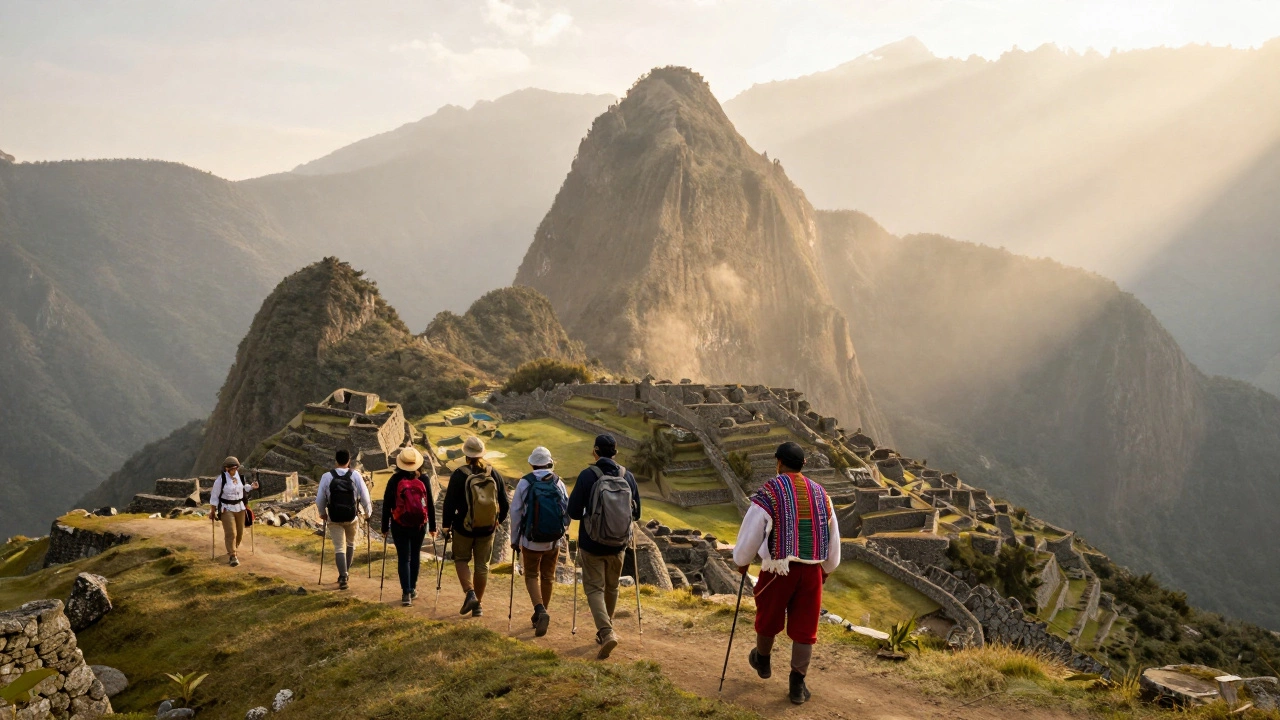
When you see the name National Geographic on a travel brochure, it’s hard not to imagine wild landscapes, deep-sea explorers, and wildlife documentaries. Now, if you spot G Adventures right beside it, you might wonder-are they the same company? Or is this just a marketing partnership? The short answer: G Adventures is not owned by National Geographic, but they’ve built something much more meaningful together.
What Is G Adventures?
G Adventures is a Canadian-based tour operator founded in 1990 by Bruce Poon Tip. It started as a small company focused on small-group travel, with trips designed to connect travelers with local cultures and environments. Unlike big cruise lines or resort packages, G Adventures doesn’t take you to the same hotels every night. Instead, you sleep in local guesthouses, ride in regional transport, and eat meals cooked by families who’ve lived in those villages for generations.
They specialize in what they call "impact travel." That means every trip includes a community project or local guide who benefits directly from your presence. For example, on a trek through Peru, your guide might be a former farmer who now runs a small lodge. Your money doesn’t just pay for a tour-it helps keep his business alive.
They operate in over 100 countries. Their most popular routes include the Inca Trail, the Serengeti migration, and the Mekong River. Their group sizes are capped at 16 people. That’s intentional. Smaller groups mean less environmental impact and more personal interaction with local communities.
What Does National Geographic Do in Travel?
National Geographic is best known for its documentaries, magazines, and scientific research. But in 2019, they launched their own travel division: National Geographic Expeditions. This isn’t just a branded tour. It’s a collaboration between their explorers, scientists, and photographers-and real travel operators who know how to get people into remote places safely.
Think of it this way: National Geographic doesn’t run buses or book hotels. They bring expertise. Their expeditions often include scientists who’ve studied the Amazon for 20 years, or photographers who’ve documented the Arctic for decades. You don’t just see the Northern Lights-you hear why they form, from someone who’s tracked them for years.
They offer trips to places most tour companies can’t access: deep inside Antarctica’s ice caves, aboard research vessels in the Galápagos, or on foot with indigenous rangers in Borneo. These aren’t luxury trips. They’re immersive, physically demanding, and designed for curiosity, not comfort.
The Partnership Between G Adventures and National Geographic
In 2019, National Geographic Expeditions partnered with G Adventures to co-create a line of trips called National Geographic Expeditions powered by G Adventures. This wasn’t a takeover. It wasn’t even a simple licensing deal. It was a merger of values.
G Adventures brought their decades of experience running small-group tours, their network of local partners, and their commitment to sustainable tourism. National Geographic brought their scientific credibility, access to researchers, and storytelling power. Together, they created trips that are more than just sightseeing-they’re learning experiences.
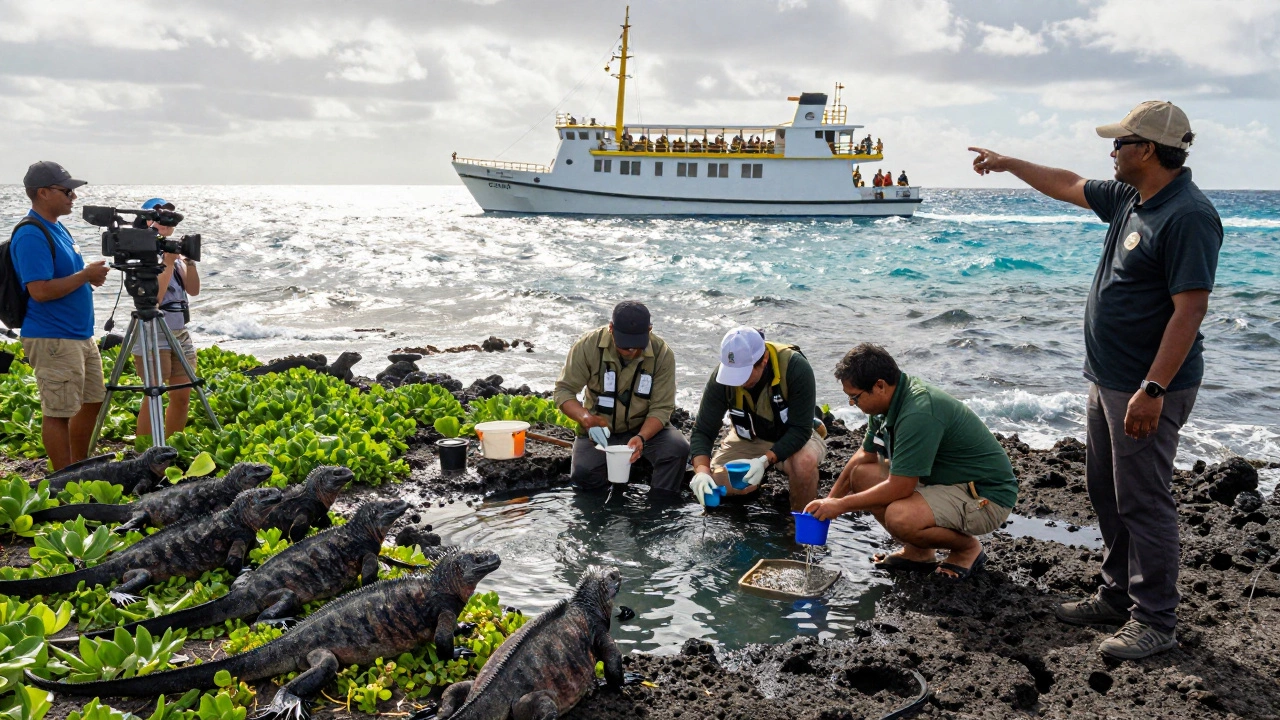
For example, on a trip to the Galápagos, you might board a ship that’s been modified for research. You’ll sail with a marine biologist who’s published papers on sea lion behavior. At night, you’ll watch a documentary shot by National Geographic filmmakers-and then, the next morning, you’ll see those same sea lions in real life, guided by a local naturalist who’s worked there since he was 16.
The trips are branded with both names. But if you book through G Adventures’ main site, you’ll see these trips listed under "National Geographic Expeditions." If you go to National Geographic’s travel site, they’ll send you to G Adventures to complete the booking. The experience is seamless. The partnership is real.
How Is This Different From Other Brand Partnerships?
Many travel companies slap famous logos on their tours. You’ll see "Disney" or "Lonely Planet" on a package, but the actual tour is run by a third party with no real connection to the brand. That’s not what’s happening here.
With National Geographic and G Adventures, the collaboration goes deeper:
- Trips are co-designed by National Geographic explorers and G Adventures’ route planners
- Local guides are trained by National Geographic’s education team
- Each trip includes a journal or field guide written by a National Geographic scientist
- Proceeds from select trips fund conservation projects vetted by National Geographic
There’s no greenwashing. No empty promises. If a trip claims to support coral reef restoration, you’ll get a report after your trip showing exactly how much funding was donated-and where it went.
Who Are These Trips For?
These aren’t for people who want to sit on a beach all day. They’re for curious travelers who want to understand the world-not just see it. You’ll need a decent level of fitness. Many trips involve hiking, kayaking, or long days on rough roads. But you don’t need to be an expert.
Most travelers on these trips are between 35 and 65. They’ve traveled before. They’ve seen the Eiffel Tower and the Taj Mahal. Now they want to go deeper. They want to know how climate change is affecting the glaciers in Patagonia. Or why the Maasai are shifting from cattle herding to eco-tourism. They’re not just looking for a vacation. They’re looking for context.
One traveler told me after a trip to Bhutan: "I didn’t just see a monastery. I sat with a monk who showed me how he meditates with the same stones his grandfather used. That’s not something you get on a bus tour. That’s why I chose this trip."
What About Price?
These trips aren’t cheap. A 10-day expedition to the Galápagos with National Geographic and G Adventures starts at around $6,500. A 14-day trek through Nepal with a glaciologist runs closer to $8,000. But here’s the catch: almost everything is included. Flights between countries. All meals. Accommodations. Park fees. Even the research materials you get to take home.
Compare that to booking a standard tour with G Adventures alone-you’d pay $3,500 for the same route, but without the scientist, the journal, or the conservation contribution. The extra cost isn’t for luxury. It’s for access.
Are There Other Partners Like This?
G Adventures also partners with other organizations. They work with the Jane Goodall Institute on chimpanzee conservation tours. They’ve teamed up with the World Wildlife Fund on Arctic bear expeditions. But none of them carry the same weight as National Geographic.
Why? Because National Geographic has over 130 years of scientific trust. Their name is attached to peer-reviewed research, not marketing. When they say a trip supports conservation, you can check their annual impact reports. They’re transparent. G Adventures is too. That’s why the partnership works.
What If You Just Want a Regular Adventure Trip?
You don’t need to book a National Geographic trip to have a meaningful adventure. G Adventures offers hundreds of trips without the National Geographic label. These are just as authentic. You’ll still sleep in local homes. You’ll still meet community leaders. You’ll still help fund local projects.
The National Geographic version just adds an extra layer: expert insight. If you’re the kind of traveler who reads scientific journals on vacation, or who asks "why?" at every stop, then it’s worth the upgrade. If you just want to hike Machu Picchu and call it a day, the standard G Adventures trip will give you the same memories-without the extra cost.
Final Thoughts
G Adventures and National Geographic are two separate companies with different histories, leadership, and business models. But they share a mission: travel that changes both the traveler and the place they visit. Their partnership isn’t about branding. It’s about depth.
If you’re looking for a trip that doesn’t just show you a place-but helps you understand it-this is one of the few partnerships in travel that actually delivers on that promise.