Mexico All-Inclusive Safety Risk Calculator
Assess Your Safety Risk
Enter your travel details to get personalized safety recommendations based on Mexico's resort safety data.
More than 4 million travelers visited Mexico’s all-inclusive resorts last year. Most came back with tan lines, great food, and stories to tell. But a growing number are asking: Is it safe to go to Mexico all-inclusive? The answer isn’t yes or no-it’s about where you go, what you do, and how you prepare.
Most all-inclusive resorts are in safe zones
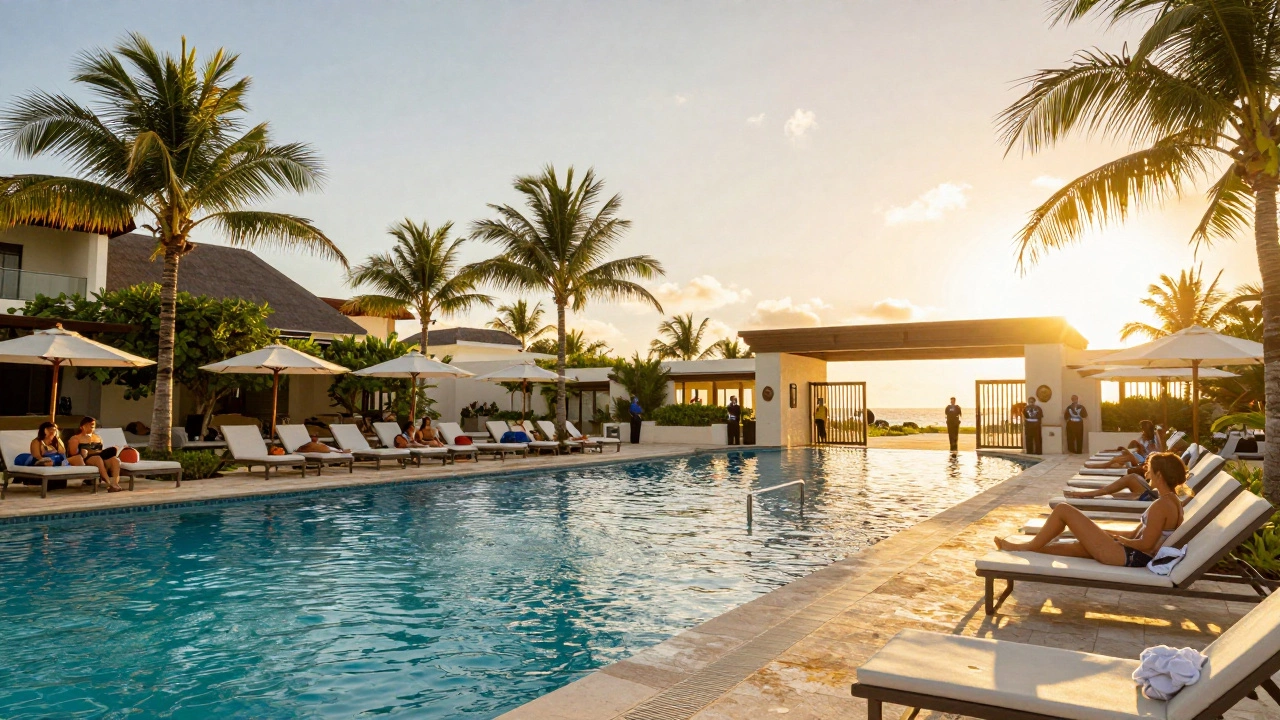
Not all of Mexico is the same. The country is huge-over 2 million square kilometers-and its safety varies wildly by region. The resorts you’re likely considering-Cancún, Playa del Carmen, Riviera Maya, Los Cabos, Puerto Vallarta-are clustered along the Caribbean and Pacific coasts. These areas have been designed for tourism for decades. They’re guarded, monitored, and built to keep guests contained within secure zones.
According to Mexico’s Tourism Ministry, over 95% of violent incidents reported in tourist areas in 2024 occurred outside resort boundaries. In Cancún’s hotel zone, police patrols run 24/7. Resorts have private security teams, gated entrances, and strict visitor policies. You’re unlikely to see anything beyond the resort unless you leave it.
Think of it like this: staying at an all-inclusive resort in Mexico is closer to being on a cruise ship than walking through a busy city. You’re in a controlled environment with staff trained to handle everything from lost passports to medical emergencies.
What happens if you leave the resort?
The real risk doesn’t come from your room or the pool. It comes from venturing out unprepared. A 2024 study by the U.S. State Department found that over 70% of crimes involving tourists happened during off-resort excursions-especially when people took unlicensed taxis, visited unfamiliar towns, or went out late at night alone.
Here’s what works:
- Book tours through your resort. They use vetted drivers and guides.
- Avoid walking alone after dark, even in popular spots like Playa del Carmen’s Fifth Avenue.
- Use Uber or official resort shuttles. Avoid hailing cabs on the street.
- Don’t flash expensive jewelry or phones. Pickpockets target distracted tourists.
- Respect local advice. If your concierge says not to go to X town, don’t go.
Many resorts offer day trips to ancient ruins like Chichén Itzá or Tulum. These are safe, organized, and include transportation. You’ll see fewer locals, but you’ll also avoid crowded, unregulated areas where scams are common.
Drug-related violence rarely affects tourists
You’ve probably heard about cartel violence in Mexico. It’s real-but it’s not random. Most violence is between criminal groups, over territory or smuggling routes. Tourists are not targets. Cartels don’t want bad press. They know tourism brings in billions.
According to Mexico’s National Institute of Statistics and Geography, tourist zones accounted for less than 2% of all homicides in 2024. The majority of killings happened in northern states like Sinaloa, Tamaulipas, and Michoacán-places most tourists never visit.
Even in areas with higher crime rates, resorts operate like islands. Staff don’t mix with local gangs. Guests don’t wander into restricted zones. The only way you’d get caught in something dangerous is if you deliberately went looking for it.

Health and scams are bigger everyday risks
While violent crime is rare, other problems are common-and easier to avoid.
- Food poisoning: Stick to bottled water. Avoid ice in drinks unless you’re sure it’s made from purified water. Resorts usually use filtered systems, but if you’re eating off-site, be cautious.
- Scams: Someone might offer you a “free” beach massage, then demand payment. Or a taxi driver will claim your hotel is closed and take you somewhere else. Always confirm prices upfront. Say no politely but firmly.
- Overcharging: Some beach vendors charge 3x the local price for sunglasses or drinks. If it feels too high, walk away.
- Sunburn and dehydration: The sun in Mexico is intense. Use reef-safe sunscreen. Drink water constantly. Many guests get sick not from food, but from heat exhaustion.
Most resorts now include basic medical care in their packages. If you feel unwell, call the front desk. You’ll get help fast.
What the U.S. and UK governments actually say
The U.S. State Department rates most Mexican resort areas as “Level 2: Exercise Increased Caution.” That’s the same rating as Italy, Spain, and Greece. The UK Foreign Office says: “Most visits are trouble-free. Avoid non-essential travel to certain states, but resort areas are generally safe.”
Neither government advises against visiting all-inclusive resorts. They warn against specific regions-not entire destinations. If your government says it’s safe to go to Cancún, then it’s safe to go to Cancún.
Real stories from real travelers
Emma, 38, from Manchester, went to Riviera Maya with her husband and two kids in March 2025. “We stayed at a resort with a kids’ club, pool, and daily excursions. We never left the property except for a guided tour to Tulum. We felt safer there than in some parts of London.”
James, 52, from Toronto, visited Los Cabos alone for a week. “I went out for dinner one night. Walked back to the resort. No issues. I talked to locals. They were friendly. The only thing I regret? Not staying longer.”
These aren’t outliers. They’re the norm.

What to pack for safety (and peace of mind)
Don’t overpack, but do pack smart:
- Portable water purifier (like a SteriPEN) if you’re nervous about ice
- Small money belt or hidden pouch for your passport and cash
- Travel insurance that covers medical evacuation
- Copy of your passport (stored separately from the original)
- Local SIM card or international data plan-so you can use Uber and Google Maps
- Reef-safe sunscreen and a hat
Leave the expensive camera at home. Use your phone. Leave the designer sunglasses in the suitcase. You don’t need them to enjoy the beach.
Who shouldn’t go?
Not everyone should go. If you’re:
- Traveling alone and uncomfortable in unfamiliar places
- Planning to explore rural areas or border towns
- Unwilling to follow basic safety rules
- Going during peak holiday season without booking a resort with strong security
Then you might want to reconsider. But if you’re staying put, sticking to the resort, and using common sense-you’re in the safest possible position.
Final verdict: Yes, it’s safe-if you do it right
Is it safe to go to Mexico all-inclusive? Yes. Millions do it every year. The resorts are built for safety. The staff are trained for it. The government depends on it.
The real danger isn’t the country. It’s ignoring basic precautions. Don’t wander off. Don’t trust strangers offering free things. Don’t assume everything’s fine because you’re on vacation.
Go with your eyes open. Stay inside the lines. And you’ll have one of the best vacations you’ve ever had.