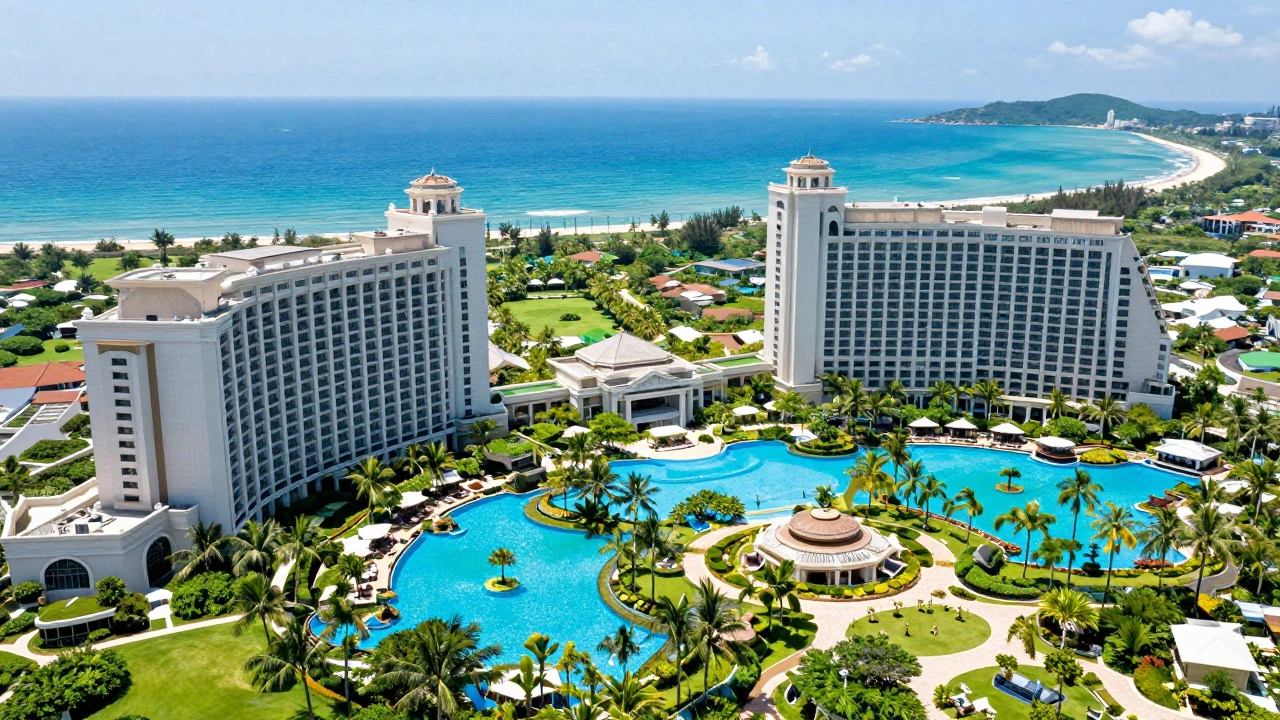
The Verdict
The "Bubble" Profile
- Predictability High cost certainty
- Culinary Standardized mass production
- Impact Higher risk of tourism leakage
The "Explorer" Profile
- Predictability Variable daily spending
- Culinary Local gems and street food
- Impact Direct support for local economy
Key Takeaways
- Limited culinary variety and lower food quality due to mass production.
- The "resort bubble" effect which discourages exploring local culture.
- Hidden costs for "premium" services that aren't actually included.
- Lack of flexibility in scheduling and activity choices.
- Environmental impact and high waste levels associated with buffet culture.
The Quality Trade-Off in Mass Catering
When a hotel promises unlimited food for thousands of guests, they have to prioritize volume over quality. All-inclusive hotels is a hospitality model where the cost of the room, meals, and some activities are bundled into a single upfront price. To keep profit margins healthy, resorts often rely on industrial-scale kitchens. This means you'll likely encounter the same bland, overcooked buffet options every single day.
Have you ever noticed how the "international buffet" tastes exactly the same whether you're in Mexico, Jamaica, or Turkey? That's because these resorts use standardized recipes designed to please the widest possible audience. You lose the chance to eat at a hidden gem of a local bistro or try a street food stall that the locals actually love. Instead of a curated dining experience, you get a conveyor belt of food where the goal is to keep the crowd fed, not to impress the palate.
Escaping the Resort Bubble
The biggest psychological trap of an all-inclusive stay is the Resort Bubble the phenomenon where travelers stay within the confines of a hotel, avoiding interaction with the local community and economy . When your drinks, snacks, and entertainment are already paid for, the incentive to leave the property vanishes. Why walk twenty minutes to a local café when there is a free mojito by the pool?
This creates a sanitized version of travel. You see the destination, but you don't experience it. You miss out on the chaotic energy of local markets, the unplanned conversations with residents, and the genuine feeling of a new place. By staying inside the fence, you are essentially visiting a themed park that happens to be located in a foreign country, rather than actually traveling.
The Illusion of 'Everything Included'
One of the most frustrating parts of these packages is discovering that "all-inclusive" is often a marketing term rather than a literal fact. Many resorts utilize a tiered system. You might find that the basic package includes "house spirits," but the brand of gin you actually like is considered a Premium Package an upgraded all-inclusive tier that offers higher-quality alcohol and specialty dining , requiring an extra daily fee per person.
It doesn't stop at drinks. Many hotels charge extra for the "best" beach loungers, high-speed Wi-Fi, or specific excursions. You end up in a strange position where you've already paid a premium for the package, yet you're still spending money on a constant stream of small upgrades. It's a psychological nudge designed to increase the average spend per guest after they've already committed to the trip.
| Feature | All-Inclusive Package | Independent / A La Carte |
|---|---|---|
| Budget Predictability | High (Fixed cost upfront) | Variable (Pay as you go) |
| Food Quality | Mass-produced, generic | Diverse, local, fresh |
| Cultural Immersion | Low (Stay inside resort) | High (Explore the city) |
| Flexibility | Low (Fixed meal times/locations) | High (Eat wherever, whenever) |
The Environmental and Ethical Toll
We rarely think about the waste generated by a 24-hour buffet. The amount of food thrown away at the end of each meal service in a large resort is staggering. This culture of "unlimited" encourages guests to take more than they need, contributing to massive food waste. Furthermore, these resorts often rely on imported goods to satisfy the tastes of international tourists, increasing the carbon footprint of every meal.
From an ethical standpoint, the Leakage Effect the process where tourism revenue leaves the local economy and goes to foreign-owned corporations instead of local businesses is a serious issue. When you pay for a package, the bulk of that money goes to the global hotel chain or the tour operator. Very little of that spend trickles down to the local farmers, artisans, or restaurant owners in the town next door. By choosing a package, you are inadvertently supporting a system that can marginalize the very community you came to visit.
Rigid Schedules and Forced Socialization
All-inclusive resorts love their "activities calendars." You'll see schedules for aqua aerobics at 10 AM, beach volleyball at 2 PM, and themed dance parties at 9 PM. While this is great for some, it can feel suffocating for others. The pressure to participate in these corporate-curated "fun" events can take away from the relaxation you actually wanted. Instead of waking up and deciding how you feel, you're following a script written by a cruise director.
There is also the social dynamic. Because everyone is trapped in the same space, you are often forced into a specific type of social environment. The vibe is often skewed toward heavy drinking and loud music, which can be exhausting if you're looking for a peaceful retreat. If you're an introvert or just want some quiet time, finding a corner of a 500-room resort that isn't blasting Europop can be a challenge.
Is the Convenience Worth the Cost?
Whether the disadvantages of all-inclusive packages outweigh the benefits depends entirely on what you want from a trip. If your goal is to totally shut down your brain, ignore the world, and not think about money for seven days, these resorts are perfect. They remove the "friction" of travel-no debating where to eat, no haggling over prices, and no navigating unfamiliar streets.
However, if you travel to grow, to learn, or to truly connect with a different culture, the all-inclusive model is a hindrance. You are paying for a shield that protects you from the reality of the destination. The most memorable travel moments usually happen in the gaps-the wrong turn that leads to a beautiful plaza, the weird dish you tried at a hole-in-the-wall eatery, or the conversation with a local shopkeeper. All-inclusive packages are designed to eliminate those gaps.
Are all-inclusive resorts always more expensive?
Not necessarily. For a family with three children who eat and drink a lot, a package can be cheaper than paying for every single meal and drink individually. However, for a couple who prefers light meals and spends most of their time exploring the city, a standard hotel with a breakfast buffet is almost always more cost-effective.
Can I still explore the local area if I stay at an all-inclusive?
Yes, but it requires a conscious effort to fight the convenience. The resort will try to keep you inside with "free" activities and food. To truly explore, you'll need to set a budget for outside meals and transportation, as these are never included in your package.
What are the most common "hidden' charges?
The most frequent extras include top-shelf liquor, specialized a la carte dining (as opposed to the buffet), airport transfers, spa treatments, and motorized water sports like jet skiing. Always check the "Excluded' list in your booking contract before arriving.
How do I avoid the 'resort bubble' while still using a package?
The best way is to dedicate at least two full days of your trip to leaving the property. Skip the resort breakfast and find a local bakery, use local taxis instead of hotel shuttles, and seek out experiences that aren't listed on the hotel's activity board.
Is the food quality always bad at all-inclusive resorts?
Not always. Luxury five-star resorts often have high-end chefs and better ingredients. However, the risk of inconsistency is much higher than at a standalone restaurant because they are cooking for hundreds of people simultaneously.
Next Steps for Your Trip Planning
If you're torn between a package and going independent, try a hybrid approach. Look for "Half-Board" options where breakfast and dinner are included, but lunch is your own. This gives you a home base and a guaranteed meal, but forces you to leave the resort during the day to find lunch, encouraging you to explore the local neighborhood.
For those who want a truly sustainable trip, consider boutique hotels or guesthouses. You'll likely spend more on individual meals, but the money stays in the community and the food quality is usually vastly superior. Before you book that "unlimited" deal, ask yourself: do I want a vacation where I'm pampered and sheltered, or a trip where I'm challenged and inspired?