Resort Food Waste Calculator
Estimate how much food waste your vacation might contribute to the environment. Based on industry data showing all-inclusive resorts generate 1.2 kg of food waste per guest per day.
Key insight: Most food waste comes from buffet-style dining where portions are fixed and guests feel pressured to take more than they need.
Estimated Food Waste
(Based on 1.2 kg per guest per day)
Your stay contributes to 0 kg of food waste
This calculator uses industry data showing all-inclusive resorts generate an average of 1.2 kg of food waste per guest per day. Reducing your portion size can significantly decrease your environmental impact.
Tip Ask for smaller portions or to-go containers—many resorts now offer incentives for guests who reduce waste.
Ever sat through a buffet at an all-inclusive resort, loaded your plate with five kinds of pasta, three desserts, and a whole grilled fish, only to leave half of it behind? You’re not alone. Millions of guests do it every day. But what happens to all that food when the last guest walks away? The answer isn’t pretty-and it’s not what most people assume.
Most Leftover Food Gets Thrown Away
Despite claims of sustainability and responsible sourcing, the reality is that the majority of uneaten food in all-inclusive hotels ends up in the trash. A 2024 audit by the International Tourism Partnership found that large all-inclusive resorts generate an average of 1.2 kilograms of food waste per guest per day. That’s more than double the global average for household food waste.
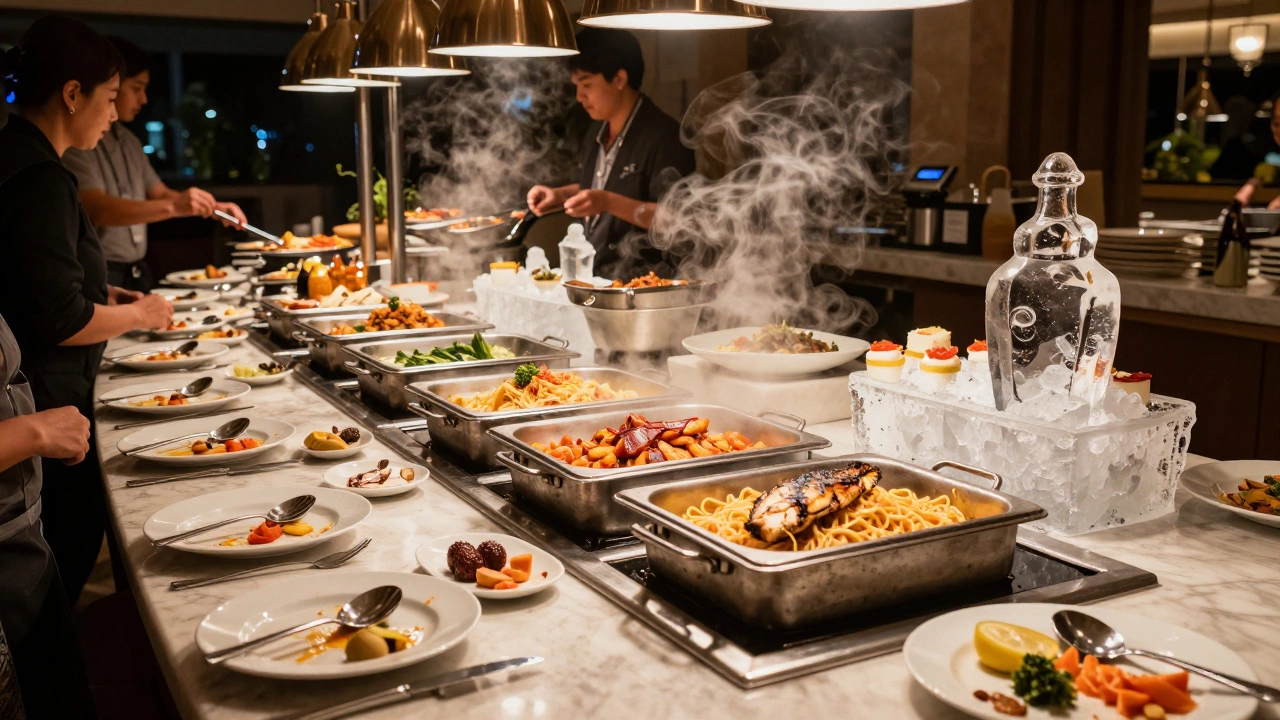
Why? Because these hotels operate on a model built around abundance. Buffets are designed to look overflowing-constant refills, endless options, giant carved ice sculptures holding shrimp. The goal isn’t efficiency. It’s perception. Guests feel like they’re getting their money’s worth when the table looks like a feast. And that means kitchens overproduce. A lot.
One resort manager in Cancún told me they cook enough food for 1,200 guests every night, even when occupancy is at 70%. Why? Because if a guest walks into the dining room and sees a half-empty buffet, they complain. And complaints mean bad reviews. So they cook extra. Always.
It’s Not Just Buffets-Catering and Room Service Add Up
Buffets get the spotlight, but they’re not the only source. Room service orders that go unanswered. Breakfast trays left outside doors. Pre-portioned meals for guests who never show up for dinner. Even the snacks in the minibars get tossed when guests check out. One hotel in Jamaica reported that nearly 30% of its daily food prep is never touched.
And here’s the kicker: it’s not because guests are wasteful. It’s because the system doesn’t let them be precise. You can’t ask for “just one slice of pizza” at a buffet. You can’t order a small portion of steak if you’re not hungry. You’re forced to take what’s offered-and often, you can’t take it back.
Some Hotels Are Trying to Fix This
Not all resorts are ignoring the problem. A growing number are testing new systems to cut waste. The most common fix? Switching from open buffets to made-to-order stations.
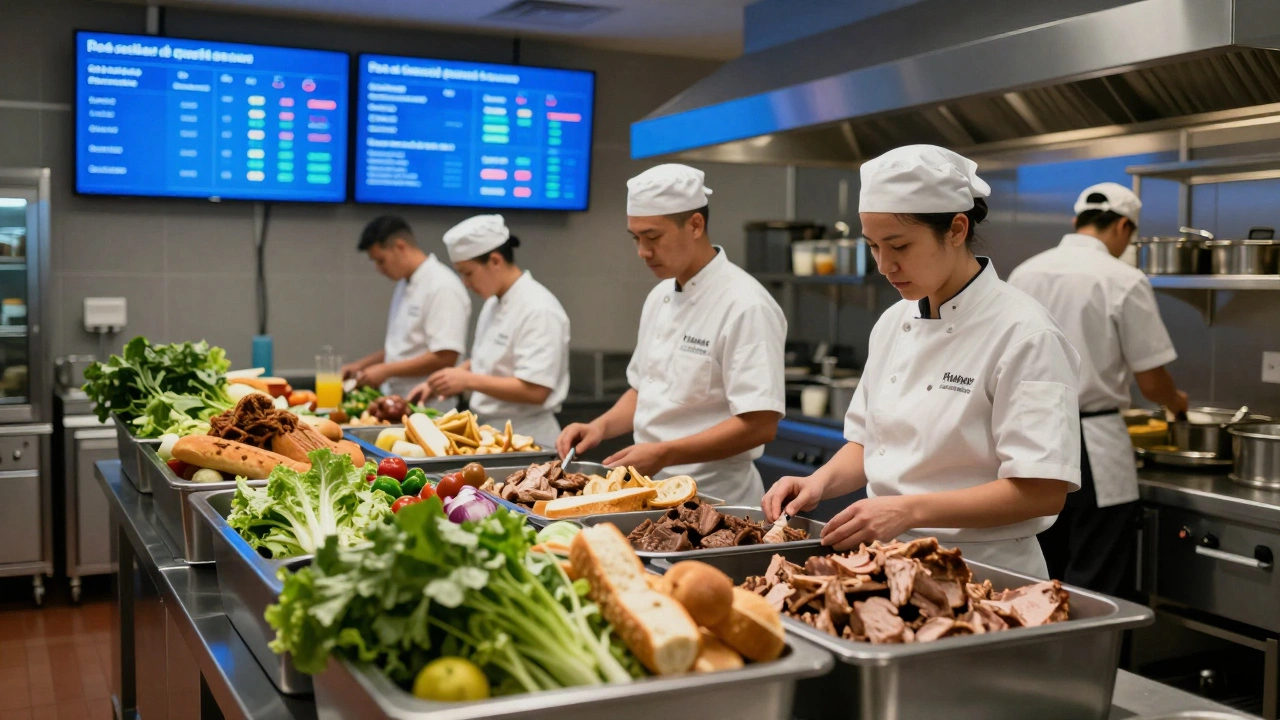
At a resort in the Dominican Republic, they replaced the 12-station buffet with three live cooking stations: pasta, grilled meats, and vegetarian bowls. Guests order what they want, when they want it. Result? Food waste dropped by 58% in six months. And guest satisfaction went up. Why? Because people appreciated the fresher food and didn’t feel pressured to overfill their plates.
Other resorts are using AI-powered inventory systems. Sensors track how much of each dish gets taken. Algorithms predict demand based on weather, occupancy, and past trends. One chain in Spain now reduces daily prep by 22% without cutting options. They still serve 15 desserts-but only make 12 of each.
What About Donating Leftovers?
You’d think hotels would donate unused food to local communities. And some do. But it’s rare-and legally tricky.
Food safety laws in many countries require that prepared food served to guests can’t be redistributed unless it’s still sealed, refrigerated, and labeled. Buffet food? It’s been sitting out for hours. Even if it looks fine, it’s considered unsafe. So most hotels can’t donate it.
There are exceptions. In Mexico, a few resorts partner with local NGOs to collect untouched, sealed items like bottled water, unopened snacks, and unopened dairy. One hotel in Tulum donates 150 pounds of these items every week to a children’s shelter. But that’s less than 5% of their total waste.
Even then, logistics are a nightmare. Who picks it up? Who stores it? Who pays for the transport? Most resorts don’t have the staff or budget to manage it.
What Happens to the Rest?
So what’s left after the donations and the smart systems? The bulk ends up in landfills-or worse, in open pits near the resort.
In some countries, especially where waste management is weak, food waste is dumped in ditches or burned. That releases methane, a greenhouse gas 25 times more potent than CO2. A 2025 report from the UN Environment Programme found that tourism-related food waste contributes to 1.5% of global emissions-equivalent to the annual output of 12 million cars.
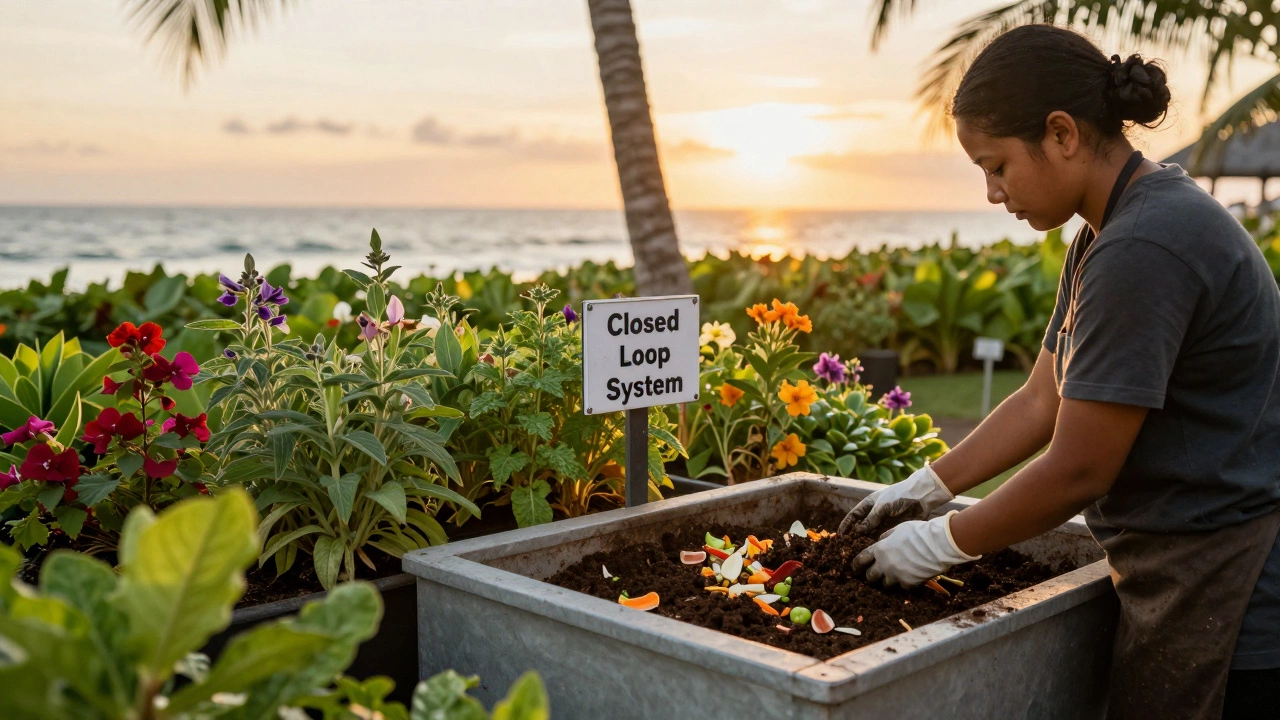
Some resorts are trying composting. One in Costa Rica grinds all organic waste into compost, which they use in their on-site gardens. They grow herbs for the kitchen and flowers for the lobby. It’s a closed loop. But it takes space, equipment, and trained staff. Only about 8% of all-inclusive resorts have it.
Others send waste to anaerobic digesters-machines that turn food into biogas. That gas can power kitchens or water heaters. But these systems cost $200,000 to install. Few resorts can afford it without government subsidies.
Guests Have More Power Than They Think
You might think this is just the hotel’s problem. But guests play a huge role.
When you take more than you’ll eat, you’re telling the hotel: “Make more.” When you leave half your plate, you’re reinforcing the system. But when you take only what you’ll eat, or ask for smaller portions, you’re sending a signal.
Some resorts now offer a “Waste Less, Save More” program. Guests who finish their meals or opt for smaller portions get a free cocktail, a discount on spa services, or a gift card for the next visit. Simple incentives. But they work. At one resort in the Bahamas, participation rose from 12% to 47% in a year.
And here’s a quiet trick: ask for a to-go container. Not because you want leftovers, but because you want to show the staff you care. Many servers will quietly give you one. And if enough guests do it, the hotel notices.
The Bigger Picture: Why This Matters
This isn’t just about a few extra scoops of rice. It’s about how tourism treats resources. All-inclusive hotels use 10 times more water and 5 times more energy than regular hotels. They import food from continents away. They rely on single-use plastics. And food waste is just one part of that cycle.
When you choose a resort, you’re voting with your wallet. If you care about waste, choose ones that track it, report it, and reduce it. Look for certifications like EarthCheck or Green Key. Ask if they compost. Ask if they use AI to predict demand. If they don’t know what you’re talking about, they’re probably not trying.
The truth? You can still enjoy an all-inclusive vacation without supporting waste. It just takes a little awareness-and a little courage to say, “I don’t need that.”