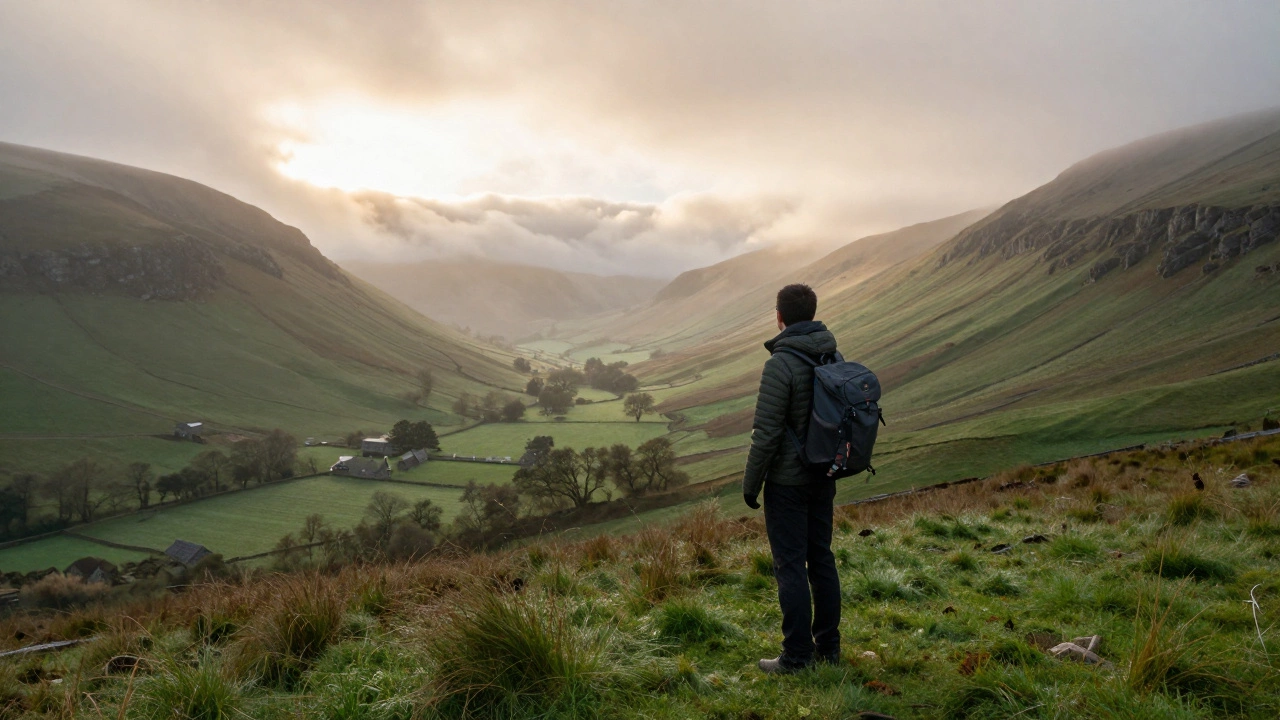
Weekend Getaway Impact Calculator
How Your Trip Will Impact Your Brain
Your Brain Benefits
Based on University of Bath & Illinois studies
When you pack your bag for a weekend getaway, you’re not just leaving your to-do list behind-you’re resetting your brain. Science shows that even a short trip can rewire how your mind works, lowering stress, boosting creativity, and giving you back a sense of control you didn’t realize you’d lost. It’s not just about the view from your hotel window. It’s about what’s happening inside your skull.
Your brain on vacation: the stress shutdown
Stress doesn’t vanish when you leave work. It lingers in your amygdala, the brain’s alarm system. Every ping, email, and deadline keeps it firing. When you travel-even just two hours away-your amygdala starts to quiet down. A 2023 study from the University of Bath tracked cortisol levels in 200 people before and after weekend trips. Those who left town saw cortisol drop by an average of 28% within 48 hours. That’s more than what most meditation apps achieve in a month.
Why? Because travel breaks the pattern. Your brain thrives on predictability, but it also gets trapped by it. When you walk into a new room, smell unfamiliar air, or hear a different language on the street, your brain switches from autopilot to active mode. That’s not just curiosity-it’s a biological reset. Your prefrontal cortex, the part responsible for planning and worrying, gets a break. And for the first time in weeks, your nervous system thinks: It’s safe to relax.
Memory and novelty: why new places feel so vivid
Ever notice how your weekend trip feels longer than it was? That’s your hippocampus at work. This tiny, seahorse-shaped region is the brain’s memory center, and it loves novelty. When you explore a new town, climb a hill you’ve never seen, or try a dish you can’t name, your hippocampus fires off signals like crazy. It’s creating new neural pathways, tagging every moment as unusual and therefore important.
That’s why your two-day trip to the Lake District feels like a week. Your brain doesn’t measure time by hours-it measures it by new experiences. A study in Nature Neuroscience found that people who traveled regularly remembered more details from their trips than from months of routine workdays. The more unfamiliar the environment, the richer the memory. That’s not nostalgia. That’s neurobiology.
Creativity spikes after just 48 hours
Need a fresh idea? Go somewhere new. Researchers at the University of Illinois found that people who took short trips showed a 40% increase in creative problem-solving after just two days away from their usual surroundings. Why? Because routine narrows your thinking. Your brain gets lazy. It uses shortcuts, recycled thoughts, the same mental models over and over.
Travel disrupts that. Suddenly, you’re navigating unfamiliar streets, reading signs in a different font, figuring out how to order coffee in a place where the menu is all pictures. These small challenges force your brain to adapt. It starts making connections it never did before. That’s why so many writers, designers, and entrepreneurs say their best ideas come on trips. It’s not magic. It’s your brain finally getting room to breathe.
The dopamine boost you didn’t know you needed
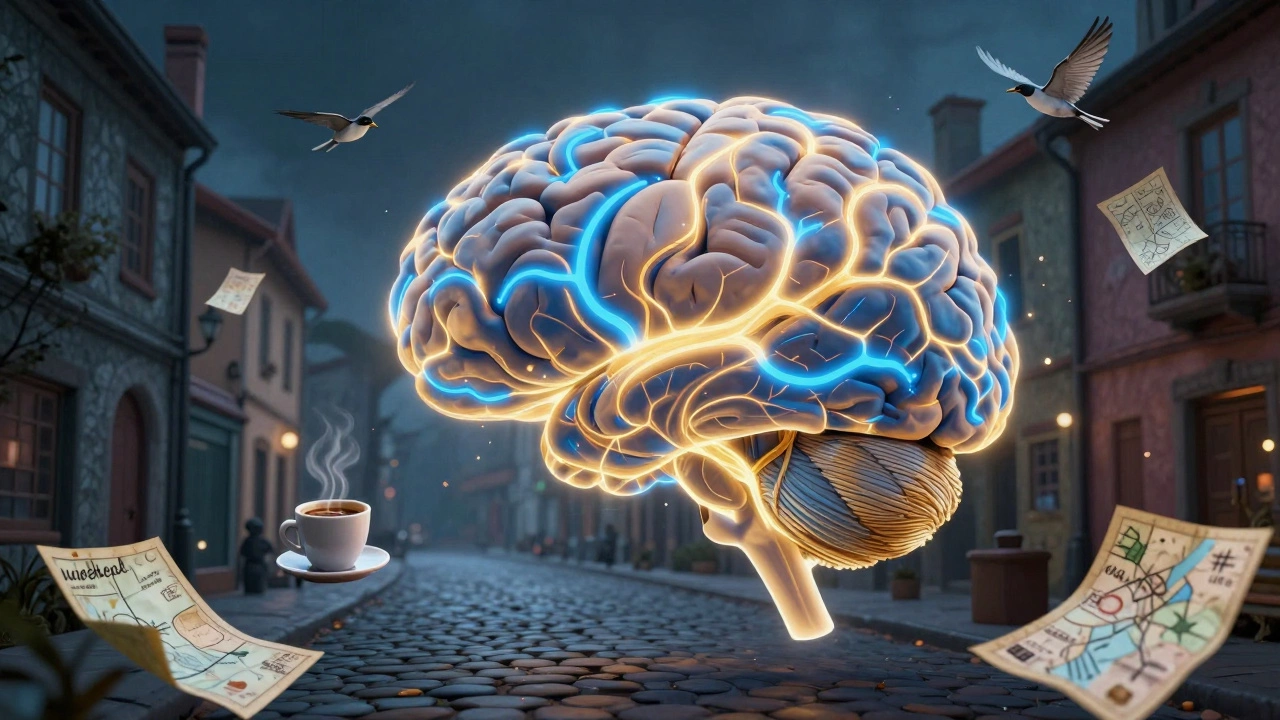
When you plan a getaway, your brain starts releasing dopamine-the “anticipation chemical”-weeks in advance. But the real surge happens when you arrive. Walking into a cozy cottage in the Cotswolds, hearing birds instead of traffic, seeing sunlight hit a stone wall you’ve never seen before-these moments trigger dopamine spikes. And dopamine isn’t just about pleasure. It’s about motivation, focus, and reward.
Most of us live in a low-dopamine state: scrolling, replying, checking, repeating. Travel breaks that cycle. You’re not waiting for a notification. You’re waiting for the next bend in the road, the next hidden café, the next quiet spot to sit and just be. That shift from passive consumption to active discovery rewires your reward system. You start to feel more alive-not because you’re doing more, but because you’re noticing more.
Why short trips work better than long ones
You don’t need two weeks off to feel the benefits. In fact, shorter trips often work better. A 2024 meta-analysis of over 12,000 travelers found that weekend getaways delivered 80% of the mental health benefits of longer vacations-with none of the stress that comes with planning a week-long trip. The key? Consistency. People who took a short trip every 4-6 weeks reported lower anxiety, better sleep, and higher job satisfaction than those who waited for a big summer holiday.
Why? Because long trips create pressure: Make this perfect. Don’t waste it. Weekend trips have no such burden. You’re not trying to transform your life-you’re just trying to feel better. And that’s exactly what makes them so powerful. They’re not an escape. They’re a recharge.
What happens when you don’t travel
Skipping getaways doesn’t just mean missing out on nice views. It means your brain slowly forgets how to relax. A longitudinal study from the University of Oxford followed 500 office workers for five years. Those who never took weekend trips showed a steady decline in cognitive flexibility-the ability to switch tasks, adapt to change, and think creatively. Their stress markers stayed high. Their sleep quality worsened. Their sense of personal agency shrank.
It’s not laziness. It’s biology. Without novelty, your brain starts to shrink its own neural networks. The same paths get worn deeper. The same worries get louder. You don’t realize it until you’re stuck in a loop: wake up, work, scroll, sleep, repeat. Travel is the antidote. It doesn’t fix your job. But it fixes your mind’s ability to handle it.
How to make your next weekend count
You don’t need a flight to feel the change. Start small:
- Choose a destination you’ve never visited within 90 minutes of home
- Leave your phone in airplane mode for at least 12 hours
- Walk without a destination-just follow your feet
- Try one new thing: a local bakery, a trail you’ve ignored, a museum you always passed
- Don’t plan every hour. Leave space to be bored. That’s when your brain does its best work
It’s not about luxury. It’s about change. Even a rainy Saturday in a nearby village can do more for your mental health than a week of scrolling through vacation photos.
The quiet return
When you come back, things haven’t changed. Your inbox is full. Your to-do list is longer. But you have. Your brain has been rewired. You’re less reactive. More present. More patient. You notice the light on your kitchen table the way you noticed it on that stone wall in the Cotswolds. You pause before answering a stressful email. You breathe.
That’s the real gift of travel. It doesn’t change your life. It changes how you live it.