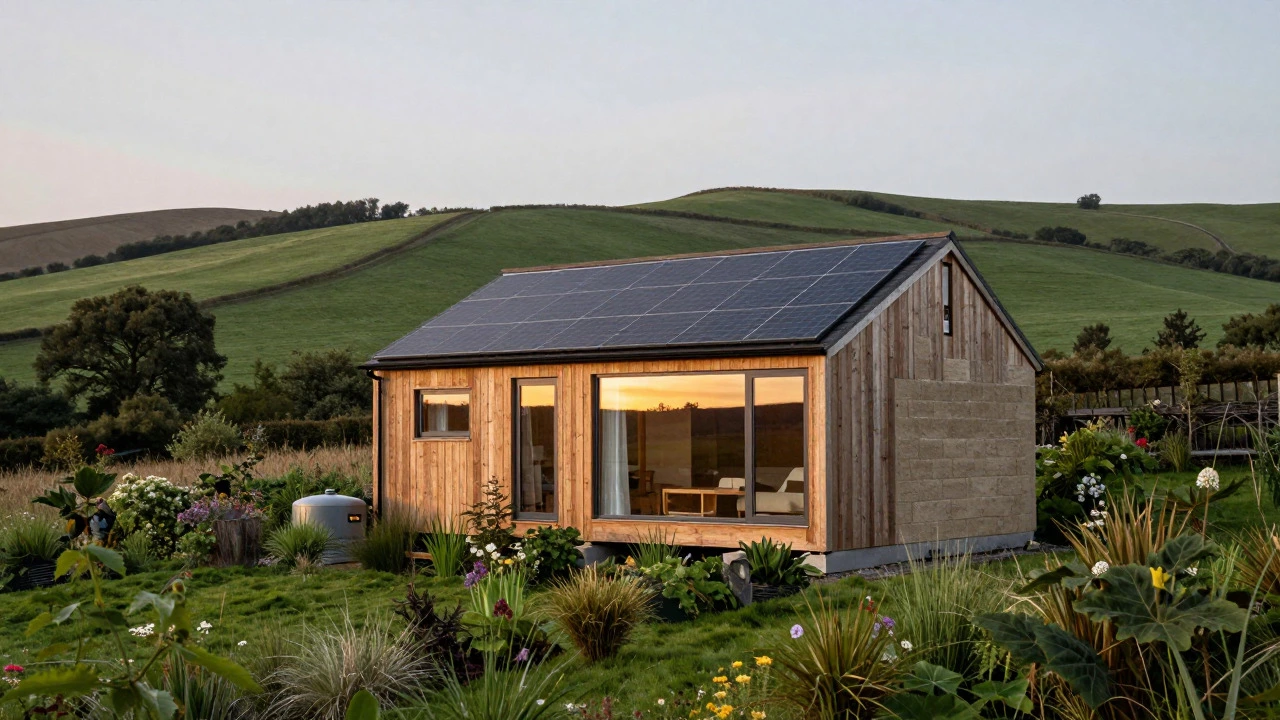
Imagine waking up to the sound of birdsong in a home that leaves almost no carbon footprint. That’s the promise of an eco cottage is a residential structure designed to minimize environmental impact through sustainable materials, energy efficiency, and integration with natural surroundings. Unlike standard holiday lets, these homes aren't just "green" in marketing copy; they are engineered for low consumption and high comfort. If you’ve been searching for what makes a stay truly sustainable, this guide breaks down the core components, the real-world benefits, and how to spot a genuine eco-stay versus a greenwashed listing.
An eco cottage isn’t defined by a single feature but by a holistic approach to design and operation. At its heart, it relies on passive design principles, which mean the building uses its orientation and shape to regulate temperature without heavy machinery. For example, large south-facing windows capture winter sun, while overhangs block summer heat. This reduces the need for artificial heating or cooling significantly.
Beyond passive design, three active systems define the modern eco cottage:
The goal is simple: reduce reliance on external grids and resources while maintaining a comfortable indoor environment. It’s about working with nature, not against it.
You might wonder how this differs from a standard countryside cottage. The difference lies in operational transparency and material choice. A traditional cottage might look rustic, but it could still run on oil boilers and single-glazed windows, leading to high energy waste. An eco cottage prioritizes performance metrics alongside aesthetics.
This table highlights that sustainability isn't just about having a solar panel on the roof. It’s a system-wide change in how the property operates daily.
People often assume eco means "spartan," but the reality is quite the opposite. Because eco cottages prioritize air quality and natural light, guests frequently report better sleep and higher energy levels compared to stays in conventional hotels or rentals.
Natural materials like wood and stone regulate humidity naturally, reducing the "stuffy" feeling common in sealed, plastic-heavy interiors. Additionally, many eco cottages are located in remote, low-light-pollution areas. This means you get darker nights, which helps regulate your circadian rhythm. If you’re someone who struggles with jet lag or general fatigue, a few nights in a well-designed eco cottage can feel like a reset button for your body.
Furthermore, the quietness associated with these locations-away from traffic noise-contributes to mental well-being. It’s not just about saving the planet; it’s about creating a space where humans function better.
With "green" becoming a buzzword, spotting authentic sustainability requires a bit of detective work. Here’s a checklist to help you verify claims before you book:
If a listing is vague about its systems or relies heavily on stock photos of generic "nature" without showing the actual infrastructure, proceed with caution.
Do eco cottages cost more? Often, yes, but the value proposition extends beyond the nightly rate. Many guests find that the reduced utility bills (if included) and the premium experience justify the price. However, the bigger economic argument is long-term savings for owners and stability for guests.
For travelers, staying in an eco cottage often supports the local economy more directly than large hotel chains. Money spent on local food, artisan crafts, and rural tourism stays within the community. This creates a virtuous cycle where the destination remains attractive and unspoiled, benefiting future visitors.
When budgeting, consider the total experience. If the stay includes guided nature walks, access to local farms, or educational tours of the building systems, the effective cost per hour of enjoyment drops significantly. It’s less about paying for a bed and more about investing in an immersive, low-impact experience.
The sector is evolving rapidly. By 2026, we’re seeing a shift towards "smart" eco systems. This doesn’t mean replacing nature with screens, but using technology to optimize resource use. Smart sensors monitor soil moisture for gardens, adjusting irrigation automatically. Energy management systems balance solar input with battery output in real-time, ensuring no wasted power.
We’re also seeing more modular construction techniques. Prefabricated eco units allow for faster build times and less waste on-site. These structures can be disassembled and moved, reducing land disturbance permanently. As climate change impacts become more tangible, demand for resilient, low-carbon accommodations will only grow, making this niche a mainstream expectation rather than a luxury alternative.
Yes, absolutely. Many eco cottages are designed with safety in mind, featuring sturdy railings, rounded corners, and secure fencing. The natural environments surrounding them offer safe spaces for play, though parents should always check for specific hazards like uneven terrain or wildlife. Most operators provide child-proofing kits upon request.
Most reputable eco cottages have battery banks sized to handle several days of poor weather. In extreme cases, some may have a silent diesel generator as a last resort, or a connection to the main grid via a temporary cable. Always ask the host about their backup plan before booking, especially if you rely on medical devices or need constant internet connectivity.
Not necessarily. Off-grid refers specifically to independence from public utilities (electricity, water, sewage). Eco is a broader term encompassing sustainability, which can include being on-grid but using efficient appliances and renewable sources. An eco cottage can be on-grid, off-grid, or semi-off-grid. The key distinction is the focus on minimizing environmental harm, regardless of utility connections.
While exact numbers vary by location and size, staying in a certified eco cottage can reduce your accommodation-related carbon emissions by 40-60% compared to a standard hotel room. This is due to lower energy consumption, local food sourcing, and reduced waste. Combined with sustainable travel methods, it contributes significantly to a lower overall trip footprint.
Usually, yes, but check with the host first. Some eco cottages have strict policies on bringing in plastics or certain types of cookware to maintain their zero-waste status. Bringing reusable bottles, cloth bags, and minimal packaging is encouraged and often appreciated by hosts who pride themselves on sustainability.