Eco-Lifestyle Matchmaker
Not sure where to go for your next green getaway? Answer three quick questions to find the place that aligns with your values.
1. What is your primary travel motivation?
Country Name
Tagline goes here
Why It Fits You
Reasoning will appear here.
Top Features
Imagine waking up to air so clean it tastes crisp, powered by sunlight, and heated by the earth itself. You step out of a cottage built from local stone and reclaimed timber, where every drop of rainwater is captured and every scrap of food waste feeds a garden that feeds you back. This isn't a sci-fi fantasy; it's a growing reality in specific pockets of our planet. But if you had to pick just one spot as the most eco-friendly place on Earth, who would win? The answer isn't straightforward because "eco-friendly" means different things depending on whether you're looking at carbon emissions, biodiversity protection, or circular economy practices.
Most lists you'll find online are biased toward wealthy nations with high-tech solutions, ignoring indigenous communities that have lived sustainably for millennia. Or they focus solely on tourism hotspots, missing the industrial hubs making massive strides in green manufacturing. To give you a real answer, we need to break this down. Are you looking for a vacation destination that leaves zero trace? Or are you researching where humans actually live with the lowest environmental impact? Let's look at the top contenders, the data behind them, and how you can bring a slice of this lifestyle home, even if you're staying in a standard holiday cottage.
Defining What Makes a Place "Eco-Friendly"
Before we crown a winner, we need to agree on the rules. When scientists and travelers talk about an Eco-Friendly Place is a location where human activity minimizes negative impacts on the natural environment through sustainable resource use, renewable energy adoption, and biodiversity conservation, they aren't just talking about recycling bins. It’s a complex mix of metrics.
The Environmental Performance Index (EPI), developed by Yale University, ranks countries based on climate change performance, environmental health, and ecosystem vitality. But EPI has its critics. It often favors rich countries that can afford expensive technology over poorer nations with low consumption levels. For instance, a country might have excellent water treatment facilities but consume enormous amounts of energy per capita. Conversely, a remote village might have poor infrastructure but a near-zero carbon footprint simply because people walk everywhere and eat what they grow.
So, when evaluating places, we look at three key pillars:
- Carbon Neutrality: How much greenhouse gas is emitted versus absorbed?
- Biodiversity Preservation: Is native wildlife thriving or being pushed out by development?
- Circular Economy: Do resources get reused, repaired, and recycled, or do they end up in a landfill?
No single place scores perfect 10s across all three. But some come dangerously close.
The Global Contenders: Countries Leading the Charge
If we look at national policies and measurable outcomes, a few names consistently pop up. These aren't just marketing slogans; these are governments enforcing strict laws that shape daily life.
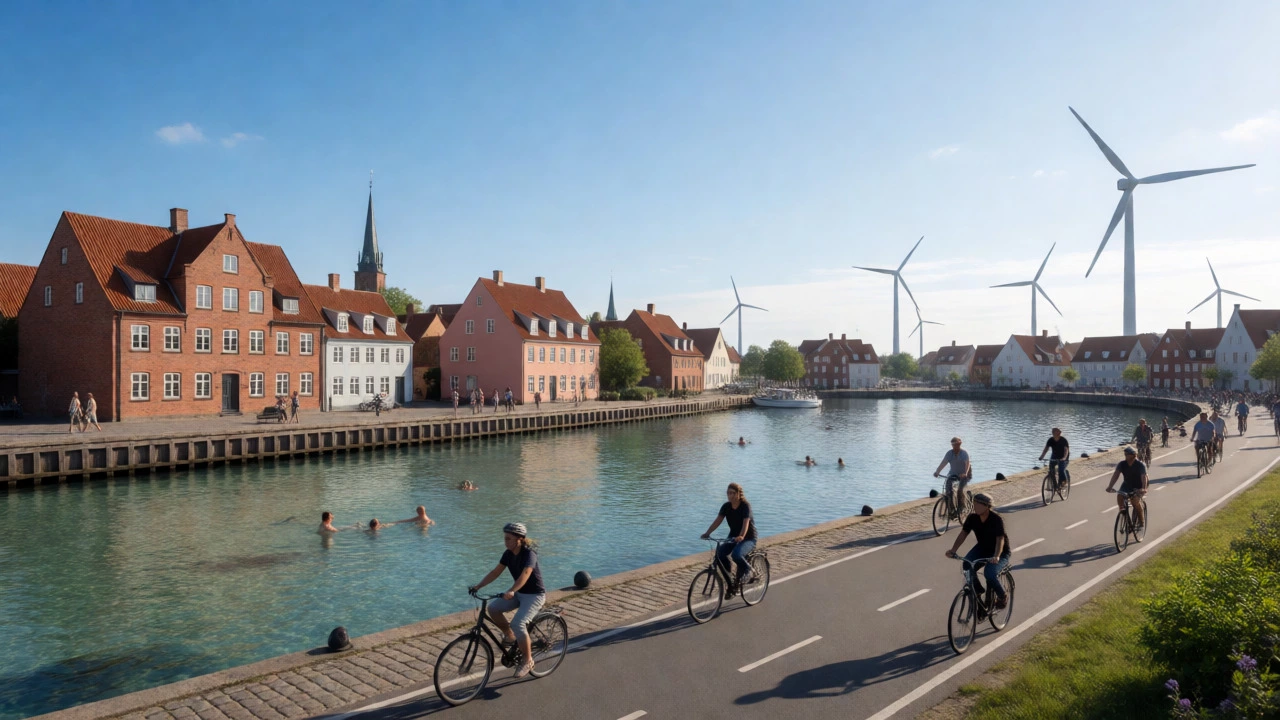
Denmark is widely recognized as a global leader in wind energy and cycling culture, aiming to be completely free of fossil fuels by 2050. In Copenhagen, nearly half of all trips to work or school are made by bicycle. The city’s harbor is so clean you can swim in it, despite it being a major port. Denmark doesn't just talk about green energy; they generate more than 50% of their electricity from wind. If you visit, you’ll notice the absence of car horns and the presence of well-maintained bike lanes that feel safer than many pedestrian zones elsewhere.
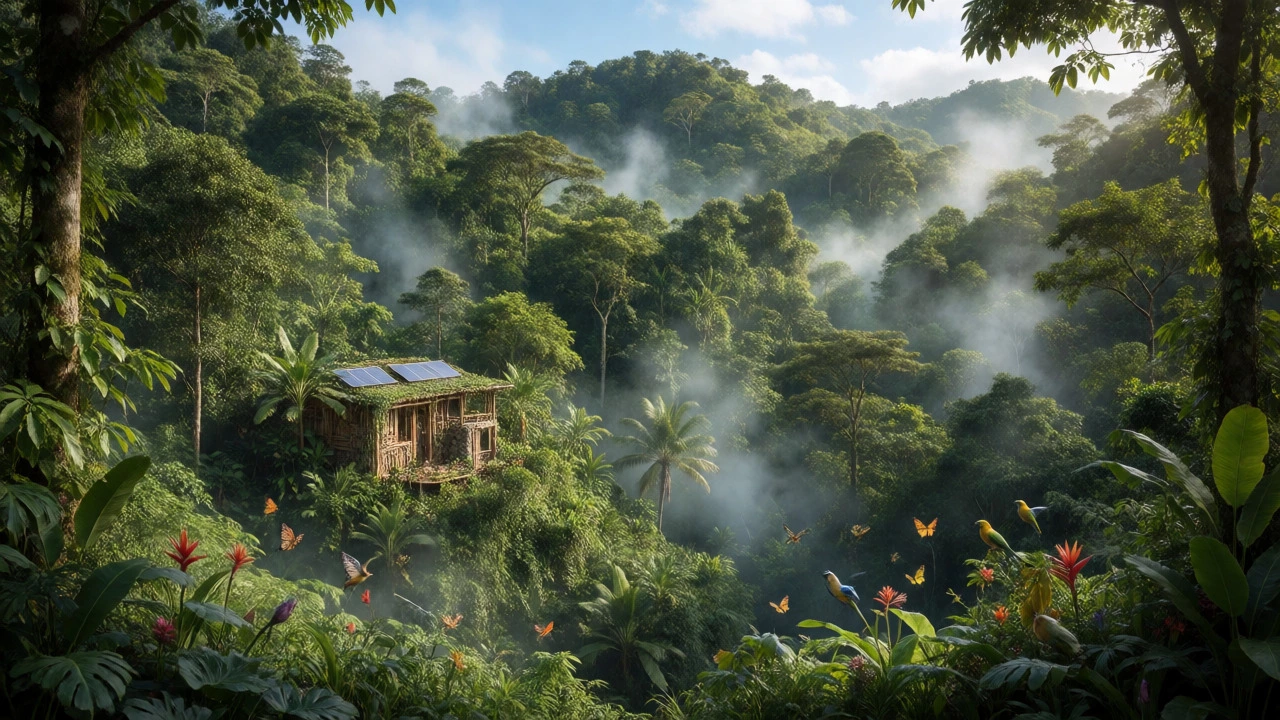
Then there's Costa Rica which generates over 98% of its electricity from renewable sources like hydro, geothermal, and solar power while protecting a quarter of its land in national parks. Costa Rica flipped the script on deforestation. Decades ago, they were losing forests rapidly. Today, forest cover has doubled. They banned single-use plastics in national parks early on and offer tax incentives for eco-lodges. For a traveler, this means your holiday stay directly funds conservation efforts rather than exploiting them.
We also have to mention Bhutan the only country in the world that is officially carbon-negative, absorbing more CO2 than it emits thanks to its vast forests and constitutional mandate to keep 60% of land under forest cover forever. Bhutan limits tourist numbers through a daily fee, which sounds expensive but ensures that tourism doesn't overwhelm the fragile Himalayan ecosystem. Their approach is radical: Gross National Happiness is measured alongside GDP, and environmental sustainability is a core component of that happiness index.
| Country | Primary Green Strategy | Key Statistic | Best For |
|---|---|---|---|
| Denmark | Wind Energy & Cycling | >50% electricity from wind | Urban sustainability & tech |
| Costa Rica | Renewables & Conservation | 98% renewable electricity | Nature tourism & wildlife |
| Bhutan | Carbon-Negative Forestry | Absorbs >3x its own CO2 | Spiritual & low-impact travel |
| Iceland | Geothermal Power | ~70% primary energy is geothermal | Energy independence & landscapes |
Micro-Havens: Where Specific Communities Excel
Countries are big, messy entities. Sometimes, the most eco-friendly places are smaller-villages, islands, or intentional communities. These spots often lack the political clout of a nation-state but lead in practical, day-to-day sustainability.
Consider El Hierro a small island in the Canary Islands that became the first island in the world to be fully self-sufficient with renewable energy using a hybrid wind and hydro plant. El Hierro proved that isolation doesn't mean inefficiency. By linking two reservoirs with a pumped-storage hydroelectric plant, they stabilized their grid without importing diesel. Visiting here feels different; the silence is profound, broken only by the wind turbines that literally power your lights.
In Europe, Vauban District in Freiburg, Germany is a model urban neighborhood designed to be car-free, energy-positive, and socially inclusive, serving as a blueprint for future cities. Vauban was once a military barracks. Now, it’s a community where houses produce more energy than they consume. Residents share cars instead of owning them, and streets are paved with permeable materials to manage rainwater naturally. It’s a proof of concept that density doesn't have to mean pollution.
For those interested in rural living, look at Tigh na Sgeir a remote Scottish crofting community utilizing traditional building techniques combined with modern micro-hydro systems to achieve off-grid status. Here, the connection to the land is visceral. You learn quickly why local food matters when the nearest supermarket is a boat ride away. This kind of resilience is what many people seek in eco-cottages-a return to basics supported by smart tech.
The Role of Eco-Friendly Cottages in Sustainable Tourism
You might not move to Bhutan tomorrow, but you can choose where you stay. This is where Eco-Friendly Cottages are small, independent accommodations that utilize sustainable materials, renewable energy sources, and waste reduction practices to minimize their environmental footprint become crucial. They bridge the gap between luxury comfort and ecological responsibility.
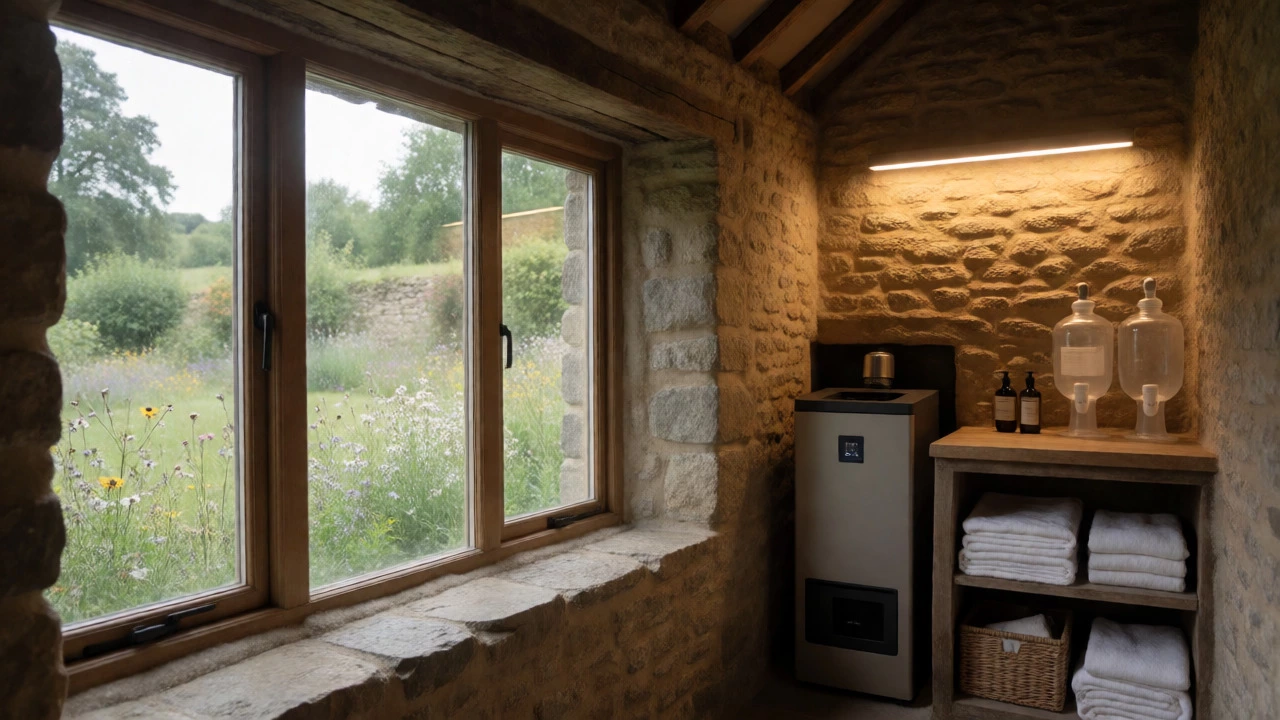
When I review properties around Bath and the wider UK, I look for specific signs. Does the cottage have a biomass boiler or heat pump? Is the insulation upgraded to modern standards, or is it leaking heat into the countryside? True eco-cottages don't just put a recycling bin in the corner; they actively reduce waste. They source linens from organic cotton suppliers, use biodegradable cleaning products, and often grow their own herbs for guests.
Choosing a certified eco-cottage supports local economies too. Money spent on locally sourced breakfast ingredients stays in the community. It encourages farmers to maintain hedgerows and wildflower margins, which support pollinators. Compare this to a large chain hotel where food is flown in from abroad and amenities are mass-produced plastic bottles. The difference in carbon footprint per night can be significant-sometimes up to 40% lower for a well-managed eco-cottage compared to a conventional hotel.
How to Spot Greenwashing vs. Genuine Sustainability
Be careful. Many places slap a leaf logo on their website and call themselves "green." That’s greenwashing. Real sustainability is boringly detailed. It’s about audits, energy bills, and supply chains.
Here’s a quick checklist to verify claims before you book or visit:
- Ask about Energy Source: Don’t accept "we care about the planet." Ask, "Do you use solar panels, ground-source heat pumps, or buy renewable tariffs?" If they can't answer, they probably aren't serious.
- Check Waste Management: Do they compost food waste? Do they have bulk dispensers for shampoo instead of tiny plastic bottles?
- Look for Certifications: Trust third-party labels like Green Key, B Corp, or local equivalents like VisitEngland’s Green Tourism award. These require actual inspections.
- Assess Transportation Access: Is the place accessible by train or bus? An eco-cottage in the middle of nowhere requires a car, which adds to your trip's carbon cost. The best eco-places are connected to public transport networks.
Remember, perfection is impossible. A place might be great on energy but poor on water usage. Look for transparency. A business that admits, "We're still working on our plastic reduction," is often more trustworthy than one claiming to be "100% Zero Waste" with no evidence.
Living Greener: Bringing the Lesson Home
You don't need to move to Iceland to adopt an eco-friendly mindset. The principles that make these places successful can be applied anywhere, including in historic cities like Bath. Start small. Reduce your home energy demand first-insulation and LED lighting are unglamorous but effective. Then, shift your consumption habits. Buy less, buy better, and repair what breaks.
Travel choices matter too. If you fly, offset your carbon properly-not through vague donations, but by supporting verified reforestation or renewable projects. Choose accommodations that align with your values. Support businesses that hire locally and source locally. Every pound you spend is a vote for the kind of world you want to live in.
The most eco-friendly place on Earth isn't just a coordinate on a map. It's a state of mind. It's the decision to tread lightly, respect boundaries, and appreciate the intricate web of life that sustains us. Whether you're hiking in Costa Rica or staying in a refurbished stone cottage in Somerset, your actions define your impact.
Which country has the lowest carbon footprint per person?
While rankings fluctuate annually, countries like Tuvalu and Samoa often have very low per-capita emissions due to limited industry and population size. However, among developed nations, Switzerland and Sweden frequently rank highly for low emissions relative to their economic output. Keep in mind that low consumption often correlates with lower wealth, so context matters.
Are eco-friendly holidays more expensive?
Not necessarily. While some luxury eco-resorts charge premium prices for exclusivity and high-end sustainable tech, many eco-cottages and guesthouses are competitively priced. Often, the savings come from reduced utility costs for the owner, which can be passed on to guests. Additionally, avoiding paid activities in favor of nature walks can significantly lower overall trip costs.
What makes a cottage truly eco-friendly?
A truly eco-friendly cottage combines structural efficiency (high insulation, double/triple glazing), renewable energy generation (solar/wind), water conservation systems (rainwater harvesting), and sustainable operational practices (local sourcing, waste reduction). It should also have minimal disruption to the surrounding landscape during construction and maintenance.
Can I find eco-friendly options in the UK?
Yes, the UK has a robust eco-tourism sector. Look for properties with the 'Green Tourism' accreditation. Areas like the Lake District, Snowdonia, and the Cotswolds have numerous certified eco-cottages. Many utilize historic buildings retrofitted with modern green technologies, preserving heritage while reducing impact.
Is flying ever considered eco-friendly?
Generally, no. Flying is one of the highest-emission activities per mile. However, long-haul flights have a lower emission-per-mile rate than short hops due to takeoff fuel usage. Direct flights are better than connecting ones. If you must fly, choose airlines investing in Sustainable Aviation Fuel (SAF) and consider taking fewer, longer trips instead of multiple short ones.