All-Inclusive Resort Cost Calculator
Example: A 7-day trip for 2 people costs $1,200 in the Caribbean all-inclusive versus $1,800 for US-style travel when factoring in separate dining, drinks, and activities.
Cost Comparison
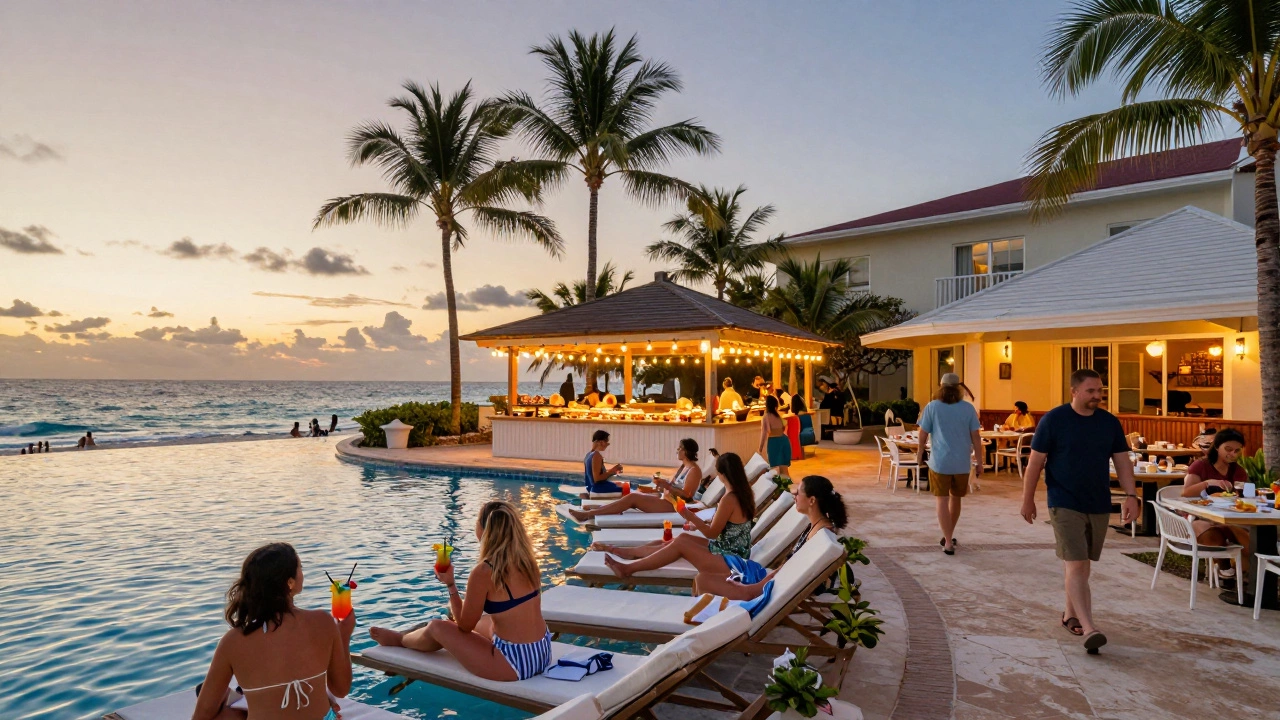
Walk into any all-inclusive resort in Mexico, Jamaica, or the Dominican Republic, and you’ll find unlimited drinks, buffet meals, snacks, and activities all wrapped into one price. You pay upfront, and that’s it-no surprise bills, no card swipes at the bar. Now, imagine walking into a resort in Florida or California and being told that’s not how things work here. Why?
The US Doesn’t Have All-Inclusive Resorts Because It Doesn’t Need To
The US doesn’t ban all-inclusive resorts. In fact, there are a few scattered across Florida, Hawaii, and the U.S. Virgin Islands. But they’re rare, expensive, and often feel out of place. Why? Because American travelers don’t demand them the same way travelers from the UK, Canada, or Germany do.
In Europe and Canada, people book all-inclusive packages as a way to simplify vacation planning. They want predictability. They don’t want to worry about how much a cocktail costs or whether the seafood buffet is an extra $25. In the U.S., vacations are often seen as a chance to explore, not just relax in one spot. Americans want to eat at local diners, hop between towns, and experience the culture-not stay locked inside a resort compound.
It’s not about legality. It’s about culture. The American vacation ideal isn’t a walled-off paradise-it’s a road trip, a food tour, a weekend in the city, or a hike in the mountains. Resorts that try to force the all-inclusive model here often struggle. One resort in Cancun might fill 300 rooms a night with Canadian families. A similar resort in Orlando might fill 80, and half of those are international guests.
Cost Structure Doesn’t Add Up for American Operators
All-inclusive resorts rely on volume and tight cost control. They buy food and drinks in bulk, hire staff to serve endless buffets, and limit guest movement outside the property. That works when guests are paying $200-$300 a night for everything.
In the U.S., labor costs are higher. Minimum wage in Florida is $13.00 an hour. In New York, it’s $15.00. A single bartender at a resort serving 500 guests a day needs to be paid, fed, and scheduled. Add in the cost of unlimited alcohol-premium tequila, imported beer, craft cocktails-and margins shrink fast.
U.S. resorts can’t compete with Caribbean operators who pay lower wages, import food duty-free, and benefit from tax incentives. A resort in Punta Cana might pay $5 an hour for housekeeping. A resort in Miami pays $15. That’s a 200% difference in operating costs. To make all-inclusive work, you need to charge more. But Americans won’t pay $800 a night for an all-inclusive when they can get a $300 room and eat at a $15 taco stand down the road.
Legal and Licensing Hurdles Are Real
It’s not just money. It’s paperwork. Serving unlimited alcohol in the U.S. triggers a web of state and local regulations. In most states, liquor licenses are tied to specific venues and sales limits. A resort that wants to serve unlimited drinks to 1,000 guests a day needs special permits, security plans, and staff training that most hotels don’t bother with.
Some states, like Utah and parts of Texas, have strict alcohol service rules. Even in Florida, where it’s easier, resorts must follow strict serving hours, ID checks, and liability insurance requirements. All-inclusive means more alcohol sold, more staff trained, more risk. Most hotel owners just don’t see the return.
And then there’s the issue of food waste. In the Caribbean, all-inclusive resorts have learned to manage overproduction. They serve smaller portions, reuse leftovers, and compost. In the U.S., food waste laws are stricter. Throwing away $500 worth of lobster tail every night because guests didn’t eat it? That’s a lawsuit waiting to happen.

Guest Expectations Are Different
Think about how you book a vacation. If you’re from the UK, you might search for "all-inclusive Jamaica" and pick the first one with good reviews. If you’re from the U.S., you might search for "best beach hotels in Florida" and then spend hours reading reviews about the breakfast buffet, the poolside service, and whether the Wi-Fi works.
Americans value choice. They want to decide where to eat, what to drink, and how much to spend. They don’t want to feel trapped. One survey from 2024 found that 68% of U.S. travelers prefer having the option to leave their hotel for dinner. Only 19% said they’d be happy staying on-property for all meals.
Even when all-inclusive resorts try to launch in the U.S., they’re often marketed as luxury experiences-$1,200 a night for a private beach and unlimited caviar. That’s not the mass-market all-inclusive people know from the Caribbean. It’s a different product entirely. And it doesn’t scale.
There Are a Few Exceptions-But They Prove the Rule
There are U.S.-based all-inclusive resorts. The Beaches Resorts in Turks and Caicos (owned by a Canadian company) have a U.S. branch. The Viceroy Anguilla offers an all-inclusive package. And The Ritz-Carlton, Grand Cayman has an all-inclusive option for guests who want it.
But here’s the catch: these aren’t budget-friendly. They’re high-end, niche, and targeted at wealthy travelers or international visitors. They don’t compete with the $150-a-night beachside motels in Florida. They compete with private villas and yachts.
Even Disney’s Aulani Resort in Hawaii, which offers meal plans and drink packages, doesn’t call itself all-inclusive. Why? Because they know American guests want flexibility. You can pay extra for a character breakfast, or skip it and eat at the food truck outside.
What Would It Take for All-Inclusive to Work in the U.S.?
If all-inclusive resorts ever become common in the U.S., it’ll be because one of two things changes:
- Travelers change. If more Americans start valuing simplicity over exploration, demand will rise. Younger travelers, especially Gen Z, are showing more interest in stress-free vacations. Maybe that shifts things.
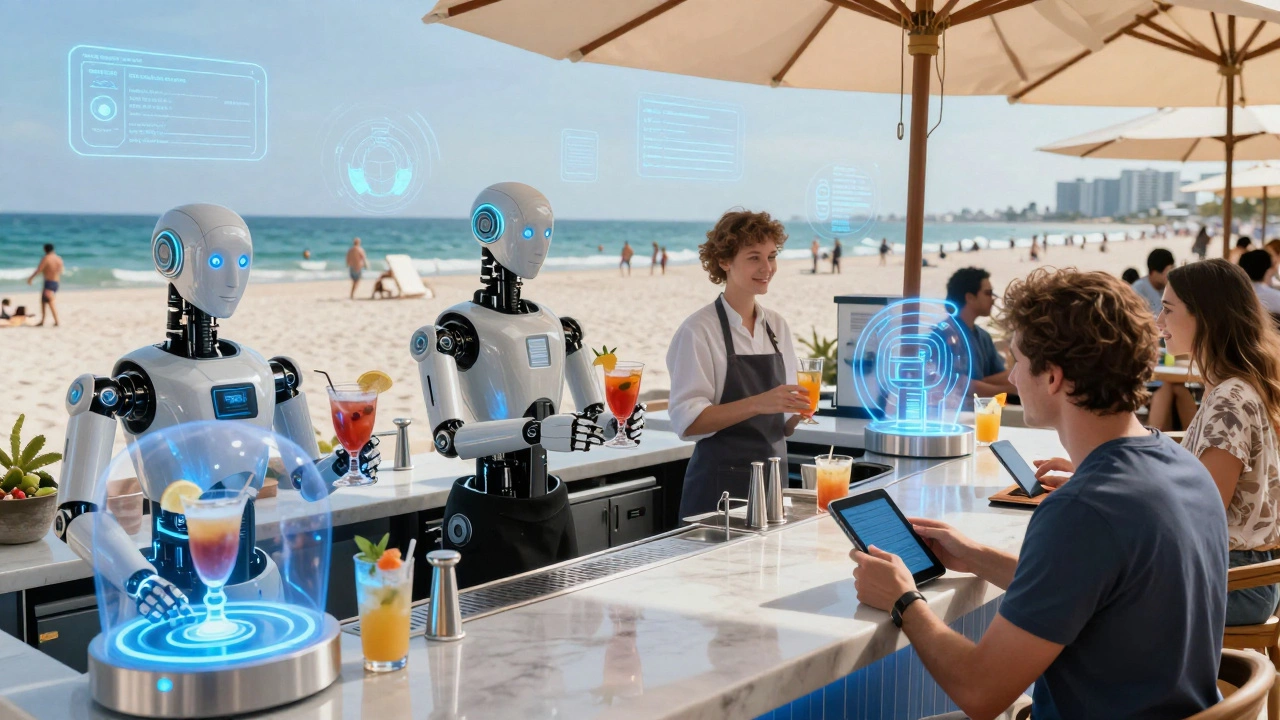
- Costs drop. If labor becomes cheaper, alcohol taxes are lowered, or automation replaces servers, then the model becomes viable. Some resorts are testing robot bartenders and AI-driven meal planning. It’s early, but it’s happening.
For now, the U.S. isn’t against all-inclusive. It’s just not built for it. The infrastructure, the culture, the costs, and the expectations all point in the same direction: pay as you go.
Where Can You Find All-Inclusive in the U.S.?
If you’re set on an all-inclusive experience in the U.S., here are your best bets:
- Beaches Resorts (Turks and Caicos, but U.S. citizens book there easily)
- Viceroy Anguilla (U.S. territory, all-inclusive packages available)
- The Ritz-Carlton, Grand Cayman (British territory, popular with Americans)
- Margaritaville Resort in the Florida Keys (partial all-inclusive with drink and food packages)
- The Breakers in Palm Beach (offers meal plans, but not true all-inclusive)
None of these are cheap. None are designed for families on a budget. And none are as widespread as the resorts you’ll find in Mexico.
Is the U.S. Missing Out?
Some argue the U.S. is missing a billion-dollar opportunity. But that assumes all-inclusive is the default vacation model. It’s not. For most Americans, the freedom to choose where to eat, when to drink, and how much to spend is the point of the trip.
The Caribbean doesn’t have to adapt to U.S. preferences. The U.S. doesn’t have to copy the Caribbean. Both models work-for different people.
Maybe one day, a U.S.-based company will crack the code: a clean, affordable, all-inclusive resort that fits American lifestyles. Until then, if you want unlimited rum punch and 24/7 room service, you’ll still need to fly south.
Are all-inclusive resorts illegal in the U.S.?
No, they’re not illegal. There are no federal or state laws banning all-inclusive resorts. The reason they’re rare is due to high operating costs, strict alcohol licensing, labor expenses, and low consumer demand-not because they’re forbidden.
Why are all-inclusive resorts cheaper in Mexico than in the U.S.?
Mexican resorts benefit from lower labor costs, duty-free imports, government tourism incentives, and higher guest volume. A housekeeper in Cancun earns about $5-$7 an hour. In Florida, the minimum is $13. That alone makes a huge difference in pricing.
Do any U.S. hotels offer true all-inclusive packages?
Very few. Some luxury resorts like Viceroy Anguilla and The Ritz-Carlton, Grand Cayman offer all-inclusive options, but they’re expensive and targeted at international travelers. Most U.S. hotels offer meal plans or drink packages, but not true all-inclusive with unlimited food, drinks, and activities.
Why don’t U.S. resorts just copy the Caribbean model?
Because it doesn’t fit the American vacation mindset. Most U.S. travelers want to explore, not stay put. They prefer choosing where to eat, and they’re used to paying separately for drinks and activities. The Caribbean model works because guests expect to be contained. Americans expect freedom.
Will all-inclusive resorts ever become popular in the U.S.?
Possibly, but not soon. If younger travelers prioritize convenience over exploration, and if automation reduces labor costs, the model could gain traction. For now, the cultural and economic barriers are too high to make it mainstream.