Family Hotel Room Feasibility Checker
Enter your trip details below to see if booking a single room is feasible, safe, and cost-effective for your family.
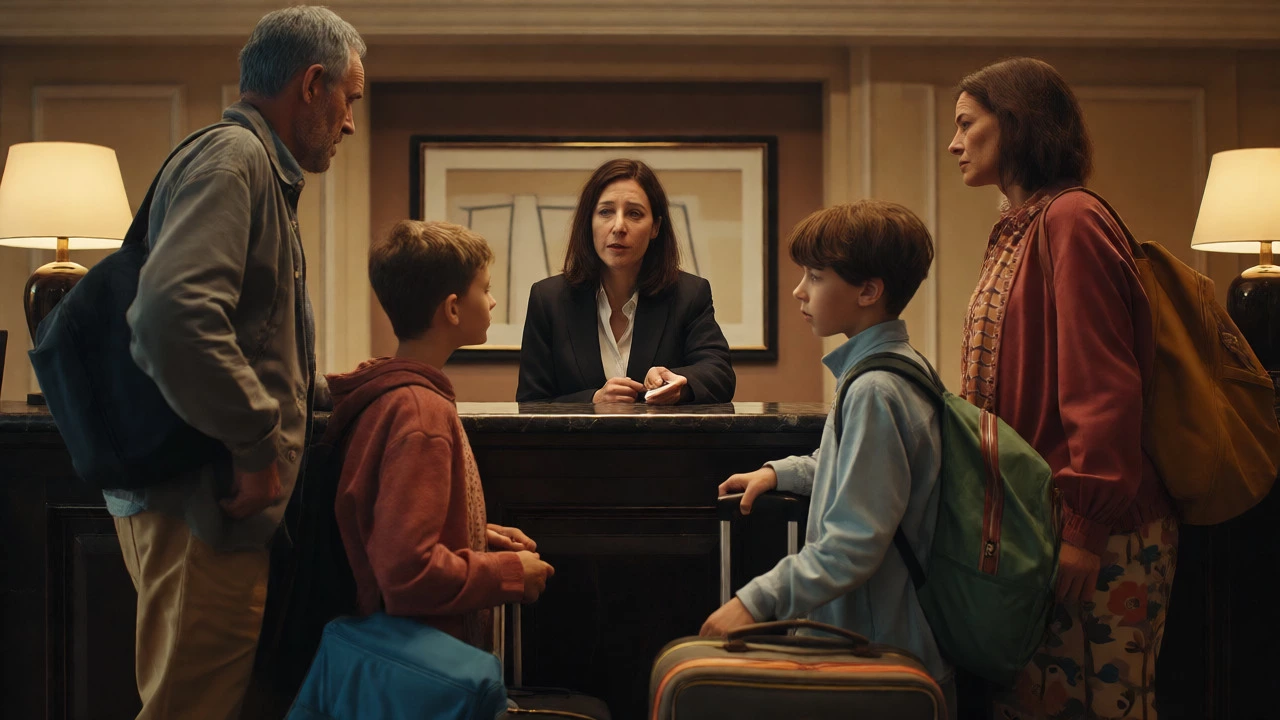
You’re standing at the check-in desk, bags packed, kids slightly melty from the travel day. You booked one room because it was cheaper, or maybe you just thought, "How bad can it be?" Then the receptionist gives you that polite but firm look: "I’m afraid this room is strictly for two adults and one child." Suddenly, your budget plan-and your sanity-is on shaky ground.
Here’s the short answer: Yes, a family of four can stay in one hotel room, but it depends entirely on three things: local fire codes, the specific hotel’s policy, and whether you’re willing to sleep like sardines. It’s not always about what fits physically; it’s about what the law allows and what the brand permits. Let’s break down exactly how to make this work without getting hit with surprise fees or awkward conversations at midnight.
The Hard Limits: Fire Codes vs. Hotel Policy
Most people think hotels set their own rules arbitrarily. They don’t. The primary reason a room says "Max Occupancy: 3" isn’t greed-it’s safety. Local building codes dictate how many people can safely exit a room in an emergency. In many jurisdictions, especially in older European buildings or historic properties in places like Bath, London, or New York City, rooms are small. If a room has only one window for escape, adding a fourth person might violate fire regulations.
Occupancy Limits are legal caps defined by local authorities. For example, in many US cities, the standard limit is often four persons per room unless the room size exceeds a certain square footage. In the UK, while there isn't a single national law banning four people in a small room, most major chains enforce a strict "two adults plus children under 12" rule, often capping total headcount at four regardless of age. Always check the fine print on the booking confirmation, not just the website headline.
Hotels also care about wear and tear. Four adults eating breakfast in a room designed for two means more linens, more towels, and more cleaning time. This is why some boutique hotels charge a hefty "extra person fee," sometimes up to $50-$100 per night, which can erase any savings from booking one room instead of two.
Room Types That Actually Work for Four
Not all "one room" options are created equal. When you search for accommodation, avoid the generic "Standard Double" label if you have four people. Instead, look for these specific configurations:
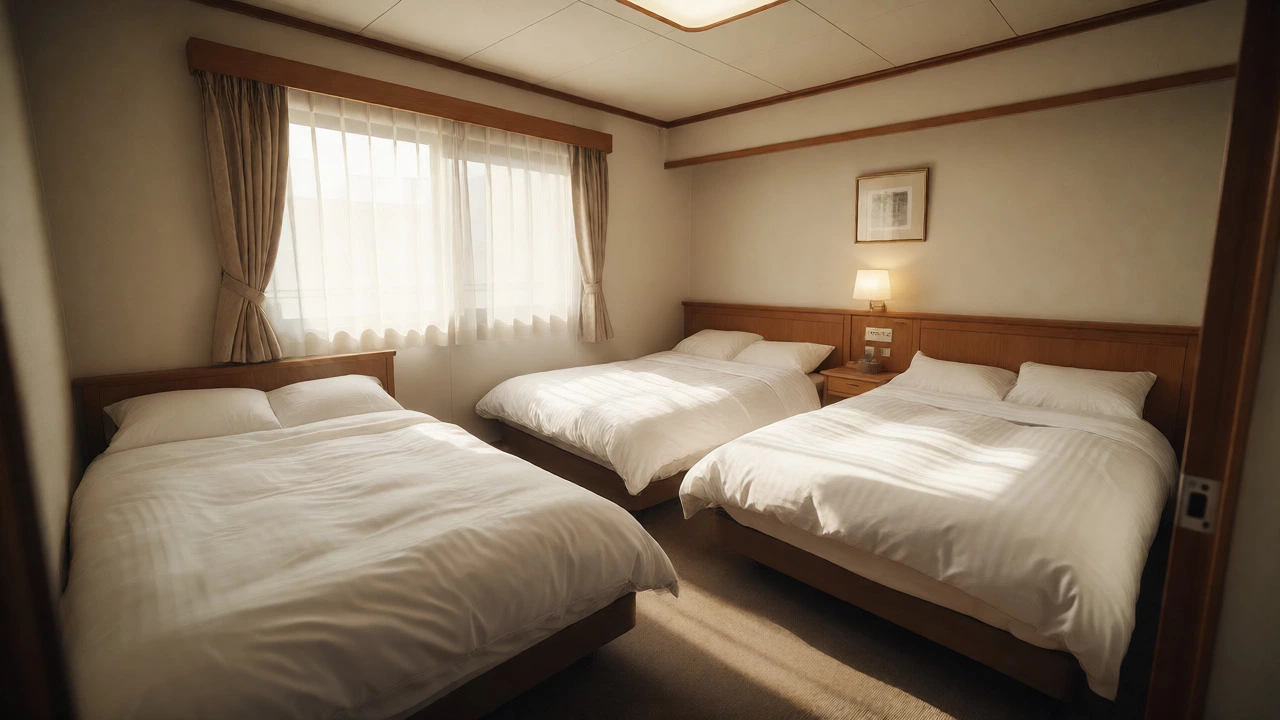
- Quad Rooms: These are specifically designed for four people. They usually feature four single beds or two doubles. They are common in hostels, budget chains (like Premier Inn or Travelodge in the UK), and family-oriented resorts.
- Family Suites: These offer more space, often with a separate sleeping area or a sofa bed. While pricier than a standard room, they are cheaper than two adjacent rooms and provide actual living space.
- Connecting Rooms: Technically two rooms, but booked as a unit. Great if you need privacy, but often priced similarly to a suite.
- Studio Apartments: Common in aparthotels (like Citadines or Quest). These include kitchenettes and multiple sleeping zones, making them ideal for longer stays where cooking saves money.
If you book a "Double Room" expecting to squeeze four people in, you’re gambling. Some hotels will allow two children to share a pull-out sofa with parents, but others will refuse entry if the system flags an over-capacity booking.
| Room Type | Beds Provided | Best For | Risk Factor |
|---|---|---|---|
| Standard Quad | 4 Singles or 2 Doubles | Budget travelers; teens who sleep well anywhere | Low (if explicitly booked) |
| Double + Sofa Bed | 1 Double + 1 Sofa | Families with young children | Medium (sofa comfort varies wildly) |
| Junior Suite | 1 King + Sofa Area | Couples with 2 kids needing space | Low (but expensive) |
| Standard Double | 1 Double | None (unless kids co-sleep) | High (often denied check-in) |
The Extra Bed Trap: Fees and Logistics
You might find a room listed as "Sleeps 4" online, but when you arrive, there are only two beds. The hotel offers to add a rollaway bed for an extra fee. Is this worth it?
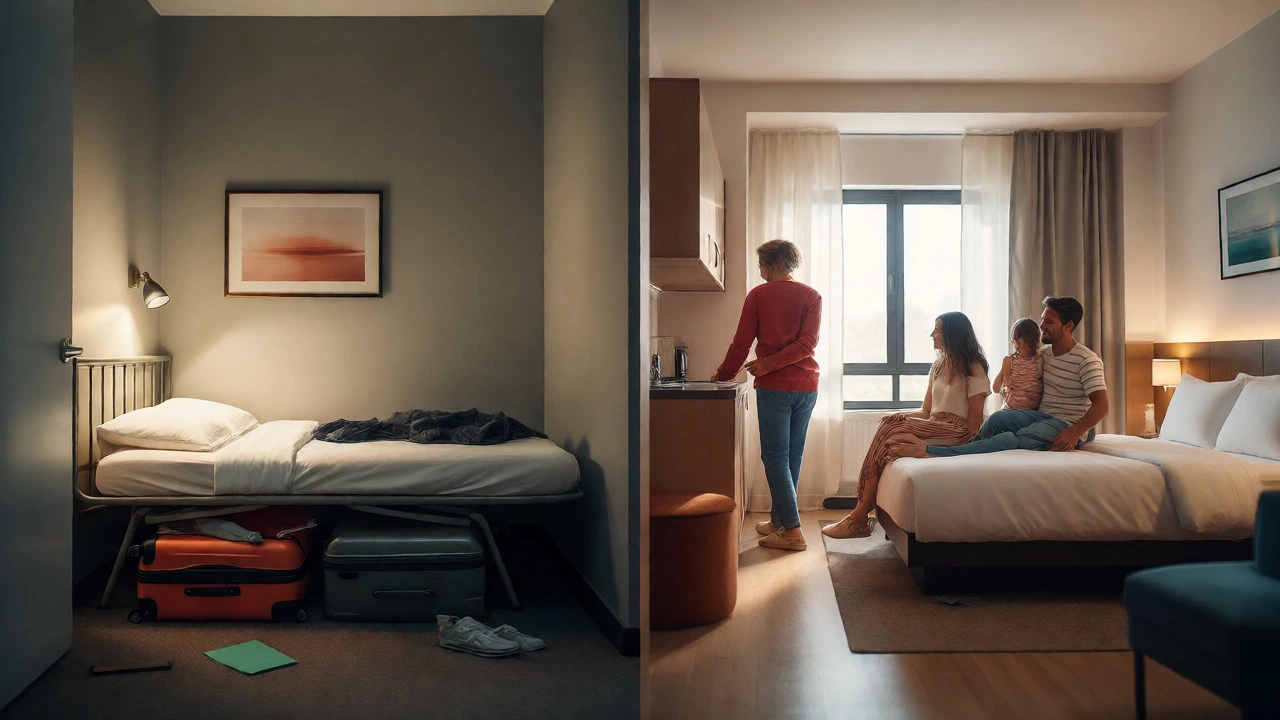
Often, no. Rollaway beds are notoriously uncomfortable-think thin foam mattresses on metal frames that squeak every time you turn. More importantly, they take up floor space. In a 15-square-meter room, a rollaway bed leaves no room for suitcases. You’ll be stepping over luggage to get to the bathroom.
Check the Extra Bed Policy. Many chains charge between £15 and £40 per night for a cot or rollaway. Multiply that by five nights, and you’ve spent enough to upgrade to a proper family room. Also, note that some hotels restrict extra beds to children under a certain age (e.g., under 12). If your youngest is 13, you might be treated as an adult, requiring a full second room.
When One Room Makes Sense (And When It Doesn’t)
There are scenarios where cramming into one room is brilliant, and others where it’s a disaster waiting to happen.
Choose one room if:
- Your children are under 6 years old. They sleep early, wake up late, and are happy sharing a bed with you. You save money, and they feel secure.
- You are staying for only one or two nights. Comfort matters less when it’s temporary.
- You plan to spend almost all your time out exploring. If you’re only using the room to sleep, why pay for space you won’t use?
Book two rooms (or a suite) if:
- Your children are teenagers. They need their own space, Wi-Fi passwords, and bedtime routines that differ from yours. Friction builds quickly in tight quarters.
- You are traveling during peak heat or humidity. Poor ventilation in crowded rooms makes sleep impossible.
- You have different sleep schedules. If one kid wakes up at 6 AM and another sleeps until 9 AM, someone needs to leave the room.
Pro Tips for Booking Successfully
Don’t rely solely on automated booking engines. Here’s how to ensure you don’t get stuck:
- Call Ahead: After booking online, call the hotel directly. Ask, "We are two adults and two children aged X and Y. Can we stay in this room without extra charges?" Get their name and time-stamp the conversation mentally.
- Read Recent Reviews: Search the hotel’s reviews for keywords like "family," "cramped," or "rollaway." Real guests will tell you if the "family room" is actually a closet with a bunk bed.
- Look for "Complimentary Children's Stays": Brands like Holiday Inn Express often let kids eat free and stay free in existing bedding. This is your best friend for budget family trips.
- Consider Apartment Rentals: If hotels are too restrictive, platforms like Airbnb or Vrbo often list entire apartments for the price of a mid-range hotel room. You get a kitchen, laundry, and multiple bedrooms.
Remember, transparency prevents conflict. If you hide the fact that you have four people, the hotel might charge you upon checkout or ask you to move mid-stay. That’s a hassle nobody wants on vacation.
Alternatives to Traditional Hotels
If standard hotels keep saying no, look elsewhere. Aparthotels are hybrid accommodations offering hotel services with apartment amenities. They are increasingly popular in cities like London, Paris, and Berlin for families. Another option is Hostel Private Rooms. Modern hostels aren't just for backpackers; many offer private family pods with ensuite bathrooms, often cheaper than hotels.
For road trips, consider Caravan Parks or Glamping Sites. These often have cabins designed for four people, including kitchenettes and outdoor space, giving kids room to run around after dinner.
Frequently Asked Questions
Is it legal for four people to stay in one hotel room?
It depends on local fire codes and building regulations. Generally, yes, if the room meets minimum square footage requirements and has adequate exits. However, individual hotels may impose stricter policies based on liability and insurance, so always check their specific terms.
Will I be charged extra for my children?
Many hotels allow children under 12 to stay free in existing bedding. However, if you need an extra bed or if the children are considered adults (often age 13+), you may face additional fees. Some luxury hotels charge per person regardless of age.
What happens if I show up with more people than booked?
The hotel may refuse check-in, require you to book a second room immediately (often at a higher walk-in rate), or charge a penalty fee. In worst-case scenarios, you might be asked to leave if no other rooms are available.
Are family rooms smaller than two standard rooms?
Yes, typically. A family room is usually one large room, whereas two standard rooms offer double the total square footage, two bathrooms, and more storage. Family rooms are cost-effective but less spacious.
Do all hotels offer connecting rooms?
No. Connecting rooms depend on the building's architecture. Older hotels may have them, but modern designs often lack internal doors. Always request them in advance and confirm availability, as they are rarely guaranteed at check-in.