Glamping Bathroom Suitability Finder
Select your priorities below to find the perfect glamping bathroom experience.
1. What is your top priority?
2. Who are you traveling with?
3. When are you visiting?
Your Recommendation
Picture this: you’ve booked a romantic weekend in the woods. You’re dreaming of stargazing from a cozy bed and waking up to birdsong. Then, reality hits. You need to use the bathroom. Do you run across muddy fields in your pajamas? Or is there a private shower and toilet just steps away?
This is the single most common question people ask before booking glamping pods are small, often circular or dome-shaped structures designed for luxury outdoor accommodation that blend comfort with nature immersion. The answer isn’t a simple yes or no. It depends entirely on the specific pod, the location, and the operator’s philosophy on sustainability.
The Spectrum of Glamping Pod Bathrooms
Glamping sits right at the intersection of rugged camping and hotel luxury. Because of this, bathroom facilities vary wildly. Understanding these categories helps you avoid awkward surprises during your holiday.
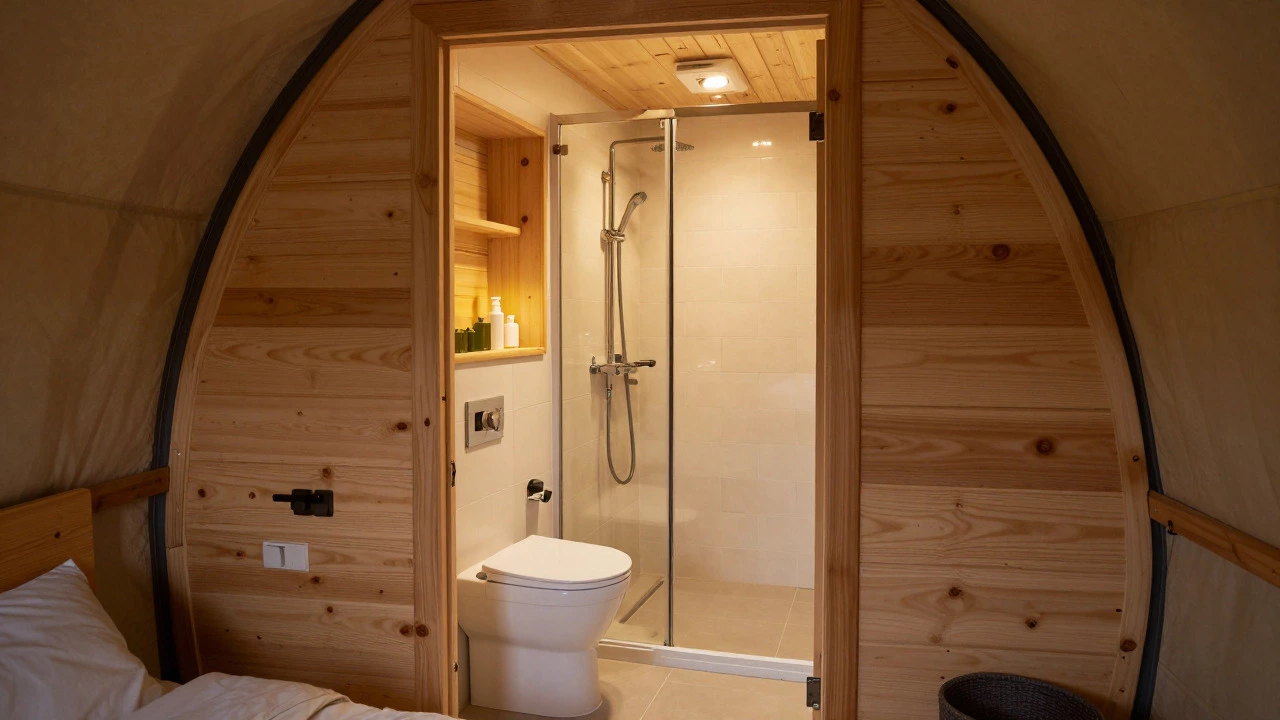
At one end of the spectrum, you have self-contained glamping pods are accommodations that include all essential amenities within the structure itself, including a private bathroom with flush toilet and running water. These feel like tiny cottages. You have a sink, a toilet, and usually a shower inside the pod. This is ideal if you value privacy, have mobility issues, or are traveling with young children who can’t handle walking long distances at night.
In the middle ground, you find semi-private facilities are shared bathroom blocks located very close to the accommodation units, typically housing two to four pods per bathroom unit. Here, you might step outside into a weatherproof corridor to access a clean, modern bathroom. It’s not *in* your room, but it’s exclusive to you and maybe one other family. This strikes a balance between space efficiency and convenience.
At the other end, you have communal facility sites are glamping locations where guests share larger central buildings containing toilets, showers, and sometimes kitchens. This mimics traditional campsite infrastructure. While less private, these sites often offer high-quality facilities because they are easier to maintain and service than dozens of individual septic systems.
Why Some Pods Don’t Have Internal Toilets
If you’re wondering why a pod doesn’t have a toilet inside, it’s rarely about cutting corners. It’s usually about logistics, environment, and cost.
Environmental Impact: Installing full plumbing requires digging trenches, connecting to mains sewage, or installing complex septic tanks. In sensitive woodland areas-common spots for glamping-operators try to minimize ground disturbance. Using communal facilities reduces the environmental footprint significantly.
Space Constraints: Many glamping pods are small by design, often under 15 square meters. Fitting a kitchenette, a sleeping area, and a full bathroom with proper ventilation and drainage is an engineering challenge. Removing the bathroom allows for more living space or a larger window for better views.
Maintenance and Cost: Plumbing breaks. Pipes freeze in winter. Septic tanks need pumping. By centralizing bathrooms, operators reduce maintenance costs and ensure higher hygiene standards. This often translates to lower prices for guests or better investment in other amenities like hot tubs or dining areas.
| Bathroom Type | Privacy Level | Typical Location | Best For | Price Range |
|---|---|---|---|---|
| Internal Private | High | Flat land near mains services | Couples, families with toddlers, accessibility needs | £££ (Higher) |
| Semi-Private Block | Medium-High | Woodland edges, established sites | Families, groups wanting some separation | ££ (Moderate) |
| Communal Facilities | Low | Remote woodlands, conservation areas | Budget travelers, social campers, eco-conscious guests | £ (Lower) |
Eco-Friendly Solutions: What If There Is No Mains Water?
Many glamping sites pride themselves on being eco-friendly accommodations are lodging options designed to minimize environmental impact through sustainable materials, energy efficiency, and waste reduction strategies. When internal toilets aren’t connected to mains sewage, operators use innovative alternatives.
Composting Toilets: These don’t use water. Instead, they separate liquid and solid waste, using sawdust or peat moss to break down matter naturally. They are odorless if maintained correctly and produce compost that can be used in non-edible gardens. You’ll see these in many high-end eco-pods.
Chemical/Cassette Toilets: Similar to those in caravans, these hold waste in a sealed tank. Operators empty them regularly. They are reliable but require more frequent servicing than composting systems.
Gray Water Systems: Even if you have a shower, the water might go into a filtration system rather than a sewer. Reeds and sand filter the water before it returns to the earth. This is crucial for sites without municipal connections.
What to Look For When Booking
Don’t guess. Check the details. Here is how to ensure the bathroom situation matches your expectations.
- Read the Fine Print: Look for phrases like “en-suite,” “private bathroom,” or “internal facilities.” If it says “shared facilities” or “communal block,” assume you will be walking outside.
- Check the Photos: Does the interior photo show a shower curtain or a toilet door? If the photos only show the bedroom and kitchen, the bathroom is likely external.
- Contact the Host: Ask directly: “Is the toilet inside the pod?” Also ask about heating. An external shower in July is refreshing; in November, it’s miserable. Confirm if showers have electric or gas heating.
- Review Recent Guest Comments: Search reviews for keywords like “toilet,” “shower,” “cold,” or “walk.” Guests are brutally honest about bathroom conditions.
Tips for Using External or Shared Facilities
If you book a pod without internal facilities, preparation makes all the difference. Here is how to stay comfortable and hygienic.
- Pack a Headlamp: Walking to a shared block at night in the dark is dangerous and unpleasant. A hands-free headlamp keeps your path clear and your hands free for keys and toiletries.
- Bring Slippers: Grass gets wet. Mud happens. Wear rubber boots or thick slippers to keep your feet dry and warm when stepping out.
- Use a Portable Bidet or Wipes: If you are sensitive about hygiene in shared spaces, carry unscented biodegradable wipes. They provide peace of mind without harming the environment.
- Keep Essentials in a Bag: Don’t leave your toothbrush and towel in the pod if the bathroom is far away. Keep a small bag with essentials ready to grab quickly.
- Respect Quiet Hours: Shared facilities mean shared neighbors. Be mindful of noise, especially late at night or early in the morning.
Is It Worth the Trade-Off?
Choosing between internal and external bathrooms often comes down to what you value more: ultimate convenience or deeper immersion in nature.
Pods with internal toilets feel more like hotels. They are convenient, yes, but they also create a barrier between you and the outdoors. You stay inside more. You worry less about the weather. It’s perfect for a quick romantic break or a family trip where stress-free logistics are priority number one.
Pods with external facilities force you to engage with the environment. You notice the stars as you walk to the bathroom. You hear the wind in the trees. It feels more like camping, but with a warm bed waiting for you. For many, this slight inconvenience enhances the sense of adventure and connection to nature.
There is no wrong choice. Just make sure it’s the right choice for your specific trip. Whether you want the luxury of an en-suite shower or the rustic charm of a composting toilet nearby, knowing what to expect ensures your glamping experience is relaxing, not stressful.
Do all glamping pods have showers?
No, not all glamping pods have showers. While most luxury pods include either an internal shower or access to a heated communal shower block, basic or budget-oriented glamping tents may only offer access to cold-water communal facilities or none at all. Always check the amenity list before booking.
Are glamping toilets dirty?
Reputable glamping sites maintain high hygiene standards. Communal facilities are cleaned multiple times daily, often more frequently than hotel rooms. Composting toilets in private pods are odorless and clean when managed correctly. However, standards vary by operator, so reading recent reviews is essential.
Can I bring my own toilet paper to glamping?
Yes, you can, but it is highly recommended to use only biodegradable, septic-safe toilet paper if the site uses composting or chemical toilets. Standard glossy or heavily processed toilet paper can clog systems and harm the environment. Most sites provide appropriate supplies, but bringing your own eco-friendly option is a safe bet.
How do glamping pods heat their water?
Water heating methods vary. Common solutions include solar thermal panels, electric immersion heaters powered by renewable energy sources, or propane gas heaters. In colder climates, electric heating is most reliable. If you have sensitive skin or prefer hot showers, confirm the heating method with the host, as solar systems may struggle in winter.
Is glamping suitable for people with mobility issues?
It depends on the specific pod and site layout. Pods with internal bathrooms are generally more accessible, provided the entrance has a ramp and the floor is level. Sites with external facilities often involve uneven terrain, grass, or gravel paths, which can be difficult for wheelchairs or walkers. Contact the operator to discuss specific accessibility needs before booking.