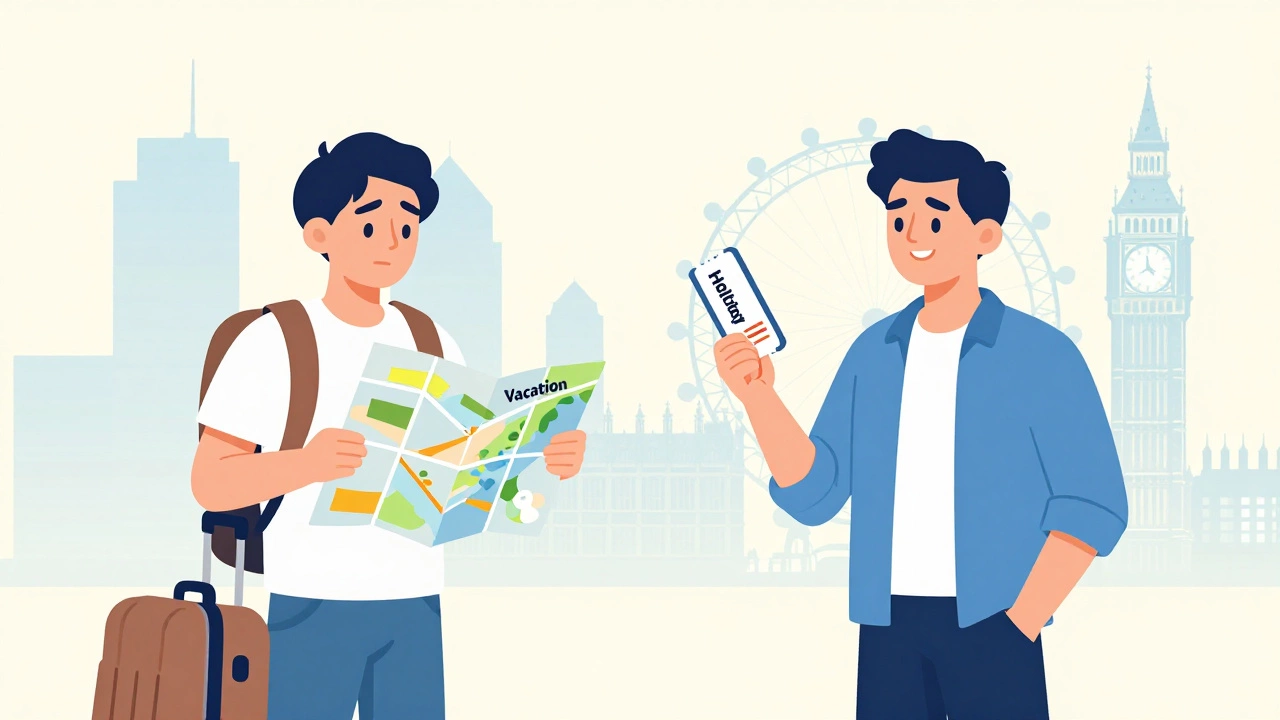
US vs UK Holiday Terminology Checker
Click a concept on the left to see how it translates from US to UK English.
Context & Usage
If you’ve ever tried to explain your summer plans to a friend from across the Atlantic, you might have hit a linguistic wall. You say "vacation," they hear something slightly off, or perhaps they just nod along while mentally correcting you. The truth is, there isn’t just one direct swap for the word "vacation" in British English. It depends entirely on whether you’re talking about the act of taking time off, the destination you’re visiting, or the specific cultural phenomenon of staying put.
For most practical purposes, the British equivalent of "vacation" is holiday. But that’s only the starting point. To really understand how Brits talk about time away from work, you need to look at three distinct layers: the legal right to rest (annual leave), the activity itself (going on holiday), and the increasingly popular choice to stay home (the staycation). Let’s break down exactly what these terms mean, how they’re used, and why the British approach to time off is unique.
The Word Swap: Why "Holiday" Rules in the UK
In the United States, "vacation" covers everything from a week at the beach to a day trip to the city. In the UK, that umbrella term is "holiday." If you tell a Londoner you are going on a "vacation," they will likely think you are an American tourist or someone who watches too much US television. It’s not wrong, per se, but it sounds foreign.
Here’s the catch: "Holiday" in British English has a double life. For Americans, "holiday" usually means a public bank holiday like Christmas or Easter-a day off work mandated by the government. For Brits, "holiday" primarily refers to leisure travel. So, when a Brit says, "I’m going away on holiday next week," they mean they are booking a flight or driving to a cottage. They aren’t talking about New Year’s Day.
To avoid confusion, context is king. If you want to be precise, you can specify:
- Going on holiday: Traveling for leisure (e.g., "We’re going on holiday to Cornwall.")
- A bank holiday: A public holiday where banks and businesses close (e.g., "The office is closed for the May bank holiday.")
- Time off: A neutral term for any break from work, regardless of whether you travel.
This distinction matters because it shapes how people plan their year. The concept of "holiday" is deeply tied to movement-getting away from the daily grind-whereas "time off" is more abstract.
The Legal Reality: Annual Leave vs. Vacation Days
While "holiday" describes the experience, "annual leave" is the administrative reality. This is the closest functional equivalent to the American concept of "vacation days" accrued through employment. In the UK, your right to time off is governed by the Working Time Regulations 1996, which sets the statutory minimum entitlement.
As of 2026, full-time employees in the UK are entitled to a minimum of 5.6 weeks of paid annual leave per year. That translates to 28 days if you work a five-day week. However, this number often includes the eight public bank holidays. Many employers offer more, with 25 to 30 working days of leave being common in private sector roles. Public sector jobs, such as teaching, often align with school terms, resulting in longer breaks during summer and winter.
Unlike some US states where vacation pay is not legally guaranteed, the UK’s statutory framework ensures that almost every worker gets paid time off. This creates a cultural expectation that everyone takes their leave. Managers are generally expected to encourage staff to use their allowance, partly due to health and safety regulations that prevent burnout. You don’t "bank" vacation days indefinitely; you take them, or you lose them, depending on your company’s policy.
This structured approach means that "annual leave" is a finite resource that needs careful planning. It’s not just about freedom; it’s about balancing personal time with professional obligations within a regulated system.

The Rise of the Staycation: Staying Put to Get Away
If traditional holidays involve flying to Spain or driving to Scotland, the staycation is the British twist on the concept. Coined in the early 2000s, this portmanteau of "stay" and "vacation" has become a permanent fixture in British culture. It refers to taking time off work but remaining in your own country-or even your own region-for leisure.
Staycations surged in popularity after the 2008 financial crisis and again during the pandemic, but they’ve stuck around. Why? Because they’re cheaper, less stressful, and environmentally friendly. Instead of spending hours in airport security, Brits might book a weekend at a holiday cottage in the Lake District or a city break in Edinburgh. The goal is still disconnecting from work, but the method is local exploration.
The staycation trend has transformed domestic tourism. Rural areas that were once overlooked are now hotspots for short breaks. Companies like Airbnb and specialized UK platforms have made it easy to find unique accommodations, from converted barns to seaside lodges. This shift has also led to a rise in "micro-adventures"-short, intense outdoor experiences close to home, like wild camping in Wales or hiking in the Peak District.
For many, a staycation isn’t a second-best option; it’s a deliberate choice. It allows for deeper relaxation without the jet lag or logistical headaches of international travel. It’s the ultimate expression of "making the most of what you have"-a very British virtue.
Bank Holidays: The Pillars of the British Calendar
You can’t talk about British time off without mentioning bank holidays. These are the official public holidays in England, Wales, and Northern Ireland (Scotland has its own list). They are the backbone of the British holiday calendar, providing predictable windows for short breaks.
There are typically eight bank holidays in England and Wales each year. Key dates include:
- New Year’s Day: January 1st
- Good Friday: The Friday before Easter Sunday
- Easter Monday: The Monday after Easter Sunday
- Early May Bank Holiday: First Monday in May
- Spring Bank Holiday: Last Monday in May
- Summer Bank Holiday: Last Monday in August
- Christmas Day: December 25th
- Boxing Day: December 26th
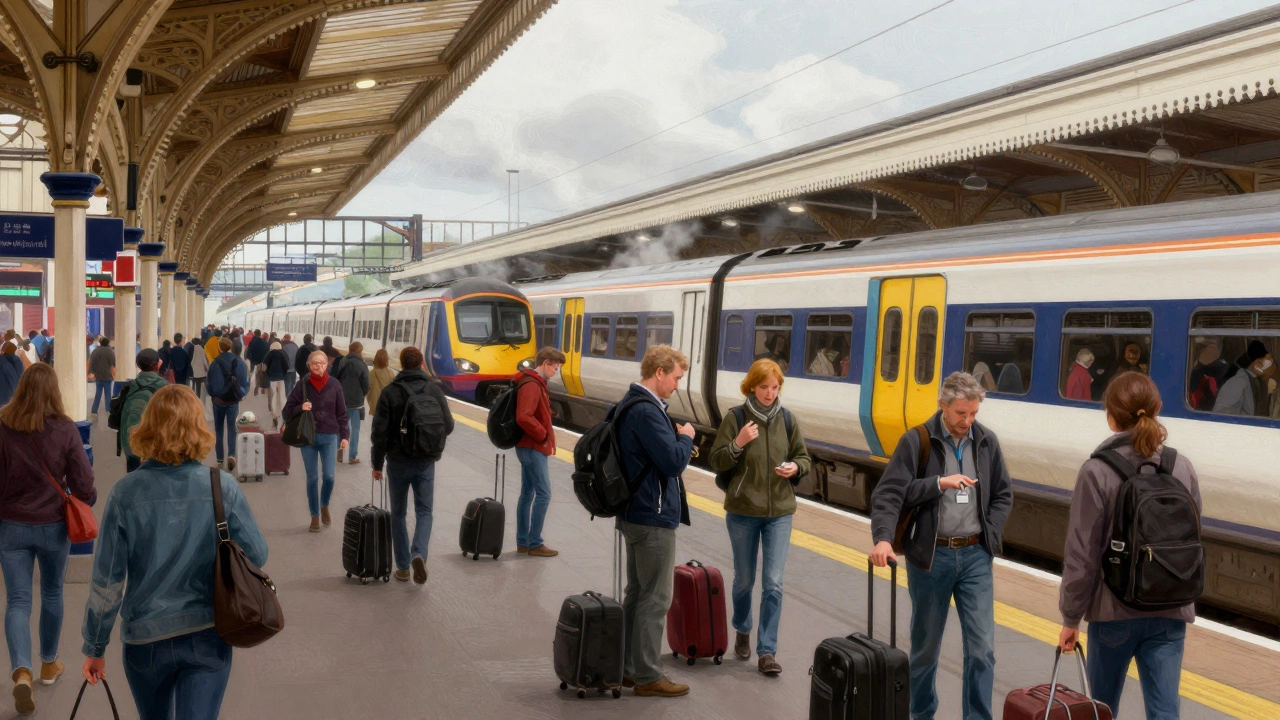
These days are crucial for planning. If a bank holiday falls on a Tuesday, workers often take the surrounding days off to create a four-day weekend. This clustering effect drives massive travel peaks. Roads clog up, train tickets sell out weeks in advance, and airports see surges in departures. For those avoiding crowds, timing your "holiday" outside these windows is essential.
Bank holidays also influence the rhythm of work life. Unlike the US, where holidays are scattered throughout the year, the UK’s concentrated bank holidays create distinct "break seasons." This makes long stretches of uninterrupted work possible between major holidays, affecting how people schedule their annual leave.
Cultural Nuances: How Brits Talk About Time Off
Beyond the formal terms, there are colloquialisms that reveal how Brits view their downtime. Language reflects attitude, and British slang around holidays is rich with meaning.
"A bit of a breather": This phrase suggests a short, necessary pause rather than a grand adventure. It’s often used for a weekend getaway or a few days off to recharge.
"Getting away from it all": This implies escaping urban stress or daily responsibilities. It’s commonly associated with rural retreats, countryside cottages, or quiet coastal towns.
"Half-term": While technically referring to school breaks, this term influences family holiday planning. Parents often align their annual leave with half-term to maximize family time, leading to crowded attractions during these periods.
"Long weekend": A highly prized asset in the British calendar. By combining a bank holiday with one or two days of annual leave, workers can create a three- or four-day break without using up too much of their yearly allowance.
These phrases highlight a pragmatic approach to time off. It’s not always about luxury or exotic destinations; it’s about balance, recovery, and making efficient use of limited days.
| Concept | US Term | UK Term | Context/Usage |
|---|---|---|---|
| Leisure Travel | Vacation | Holiday | General term for traveling for fun | Paid Time Off | Vacation Days / PTO | Annual Leave | Legal entitlement to paid time off work | Public Holiday | Holiday / Federal Holiday | Bank Holiday | Official day off recognized by government/banks | Staying Home | Staycation | Staycation | Taking time off but not traveling abroad | Short Break | Weekend Getaway | Short Break / Long Weekend | 2-4 days away from home |
Planning Your British Holiday: Practical Tips
Whether you’re a visitor trying to navigate the system or a local optimizing your annual leave, understanding these nuances helps you plan better. Here are some key strategies:
Book Early for Bank Holidays: If you want to travel during a bank holiday period, book trains and accommodation months in advance. Prices skyrocket, and availability drops rapidly.
Use Annual Leave Strategically: Since the minimum is 28 days, many people split their leave into smaller chunks. Taking one or two days off around a bank holiday creates a long weekend without depleting your entire allowance.
Consider Shoulder Seasons: The UK weather is unpredictable, but late spring (May) and early autumn (September/October) offer fewer crowds and milder temperatures compared to peak summer months.
Explore Domestic Destinations: With the rise of staycations, local attractions have improved. National Trust properties, independent museums, and rural pubs offer high-quality experiences without the hassle of international travel.
Understanding the difference between "holiday," "annual leave," and "bank holiday" isn’t just about semantics. It’s about fitting into the rhythm of British life. Whether you’re chasing sun in Cornwall or simply enjoying a quiet long weekend at home, knowing the language helps you make the most of your time off.
Do Brits say vacation or holiday?
Brits almost exclusively use the word "holiday" to refer to leisure travel or time off for fun. Using "vacation" is understood but sounds distinctly American. For public days off like Christmas, they say "bank holiday" or "public holiday."
How many vacation days do you get in the UK?
By law, full-time employees in the UK are entitled to a minimum of 5.6 weeks (28 days) of paid annual leave per year. This often includes the eight public bank holidays. Many employers offer additional days, bringing the total to 25-30 working days.
What is a staycation?
A staycation is a holiday where you take time off work but stay in your own country or region instead of traveling abroad. It’s popular in the UK for being cost-effective, low-stress, and environmentally friendly.
Are bank holidays the same as public holidays?
In the UK, "bank holiday" is the common term for what Americans call "federal holidays" or "public holidays." These are days when banks, post offices, and many businesses are closed. Employees typically get the day off work, though not all workers are legally entitled to paid leave on these specific days unless included in their contract.
When is the best time to go on holiday in the UK?
The best times for good weather and fewer crowds are late May, June, September, and early October. Avoid school holidays and bank holiday weekends if you want to escape the crowds, especially at popular tourist destinations like the Lake District or Scottish Highlands.