Leave No Trace Camping Calculator
How Well Are You Following the Golden Rule?
Answer these 4 questions about your camping habits to see your Leave No Trace score.
The golden rule of camping isn’t about bringing the fanciest tent or the most expensive sleeping bag. It’s not even about finding the prettiest spot by the lake. It’s simpler, quieter, and far more powerful: leave no trace. That’s it. If you remember nothing else from your time in the woods, remember this: take only photos, leave only footprints.
Why This Rule Exists
People have been camping for generations, but the damage started adding up fast once it became popular. In the 1960s, national parks in the U.S. saw trash piles, broken branches, and fire rings that never fully died out. Campers didn’t mean harm-they just didn’t know better. By the 1970s, rangers were spending more time cleaning up than guiding hikers. That’s when the Leave No Trace program was born, backed by the U.S. Forest Service and the National Park Service. It wasn’t about rules for rules’ sake. It was about survival-for the land, the animals, and the next person who wants to feel that same quiet magic.What Leaving No Trace Actually Looks Like
It sounds simple, but it’s easy to slip up. Here’s what it means in practice:- Carry out every scrap of trash-even compostable stuff like apple cores or banana peels. They don’t belong in the wild, and animals will tear through your campsite looking for them.
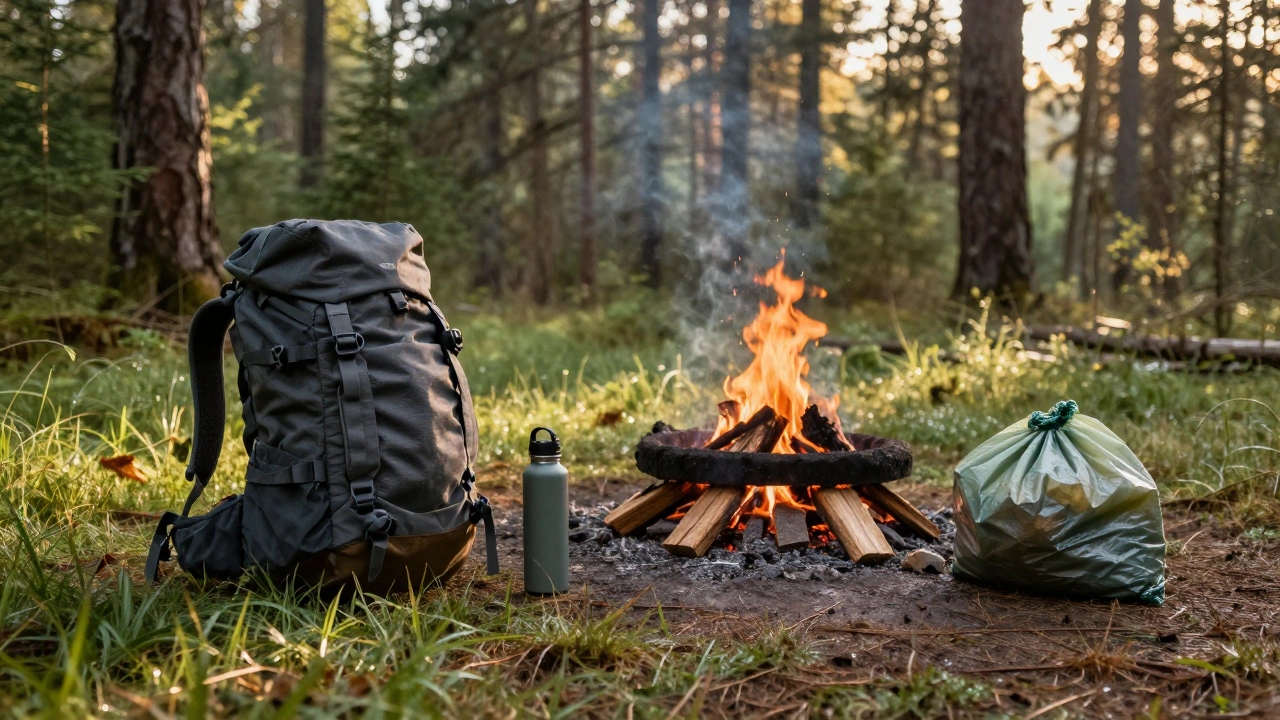
- Use established fire rings or portable stoves. If you build a fire, keep it small, burn only sticks from the ground (never cut live branches), and drown it with water until it’s cold to the touch.
- Pack out all toilet paper and hygiene products. Bury human waste at least 200 feet from water, trails, or campsites, and use a trowel to dig a hole 6-8 inches deep.
- Don’t pick flowers, carve names into trees, or move rocks. These things might seem tiny, but they’re part of a system. A single picked wildflower could be the last one a bee finds before it starves.
- Keep noise down. That playlist you love? Save it for the car. Wildlife hears everything, and loud music can drive animals away from their homes-or worse, make them aggressive.
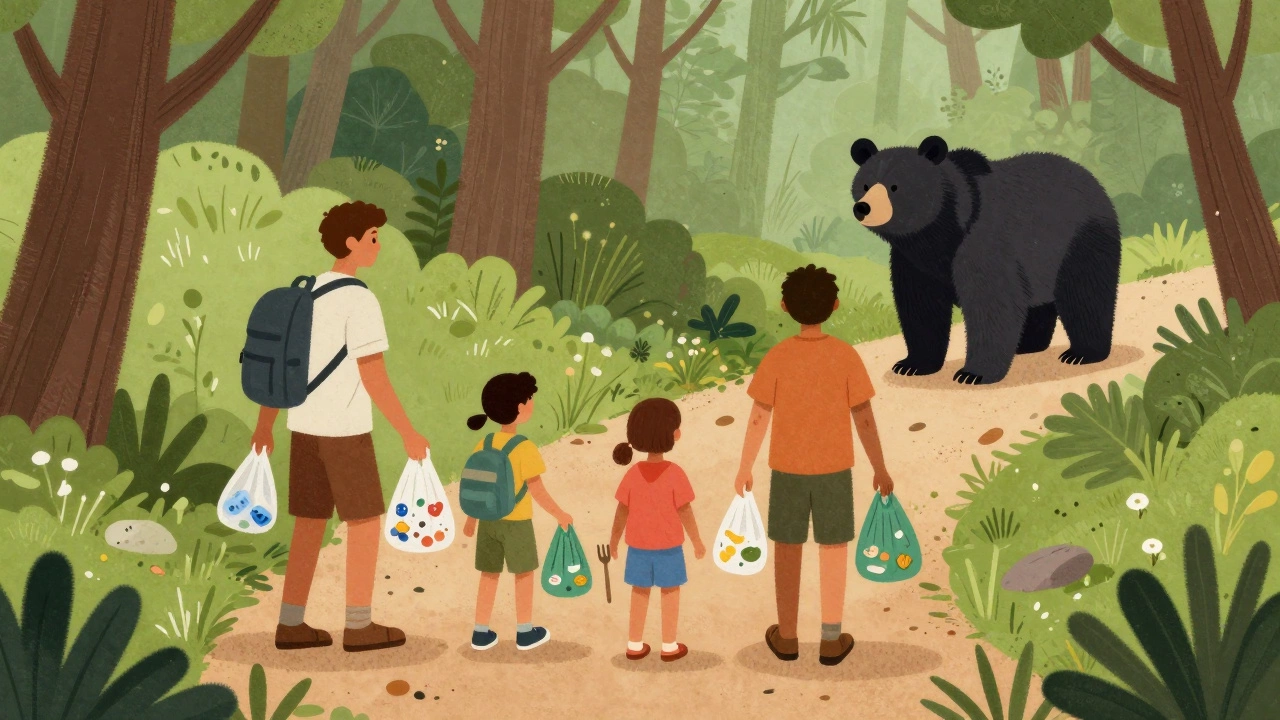
One family in Oregon left behind a single plastic bag of food scraps. A black bear found it. The next week, it came back to the same spot. Then the week after that. By the third visit, park rangers had to euthanize the bear. It wasn’t evil. It was trained. And it was trained by people who thought, “It’s just one bag.”
It’s Not Just About Trash
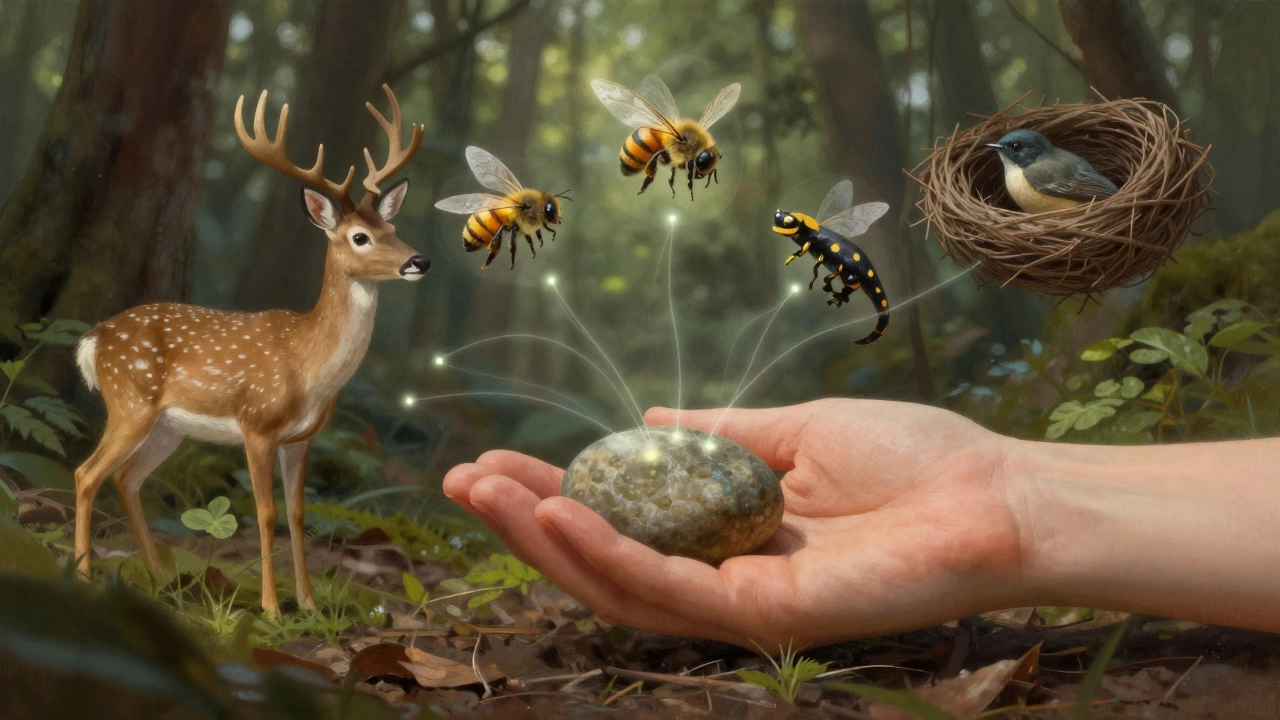
The golden rule isn’t only about what you leave behind. It’s about what you bring in-and how you interact with the place. Many campers don’t realize that even natural items like pinecones, feathers, or smooth stones have a role. Removing them disrupts ecosystems. A stone might be a hiding spot for a salamander. A pinecone might feed a squirrel through winter. A feather could be part of a bird’s nest next year.And then there’s water. Pouring dishwater into a stream might seem harmless, but soap-even biodegradable soap-can kill aquatic insects and algae. Those are the base of the food chain. Always wash dishes 200 feet from water sources, then scatter the gray water over a wide area so it soaks in and doesn’t run anywhere.
Why This Matters for Eco-Friendly Cottages
If you’re staying in an eco-friendly cottage, you’re already choosing a quieter way to travel. But the cottage is just one part. The land around it? The trail you hike from the door? The lake you kayak on? They’re all connected. The same rule applies: don’t treat nature like a hotel room you can leave messy.Many eco-cottages now provide reusable containers, compost bins, and detailed guides on local wildlife. That’s great-but it doesn’t replace personal responsibility. A cottage can be solar-powered and made from reclaimed wood, but if you leave a candy wrapper on the path to the woods, you’ve broken the golden rule. The cottage doesn’t undo your impact. You do.
What Happens When People Follow the Rule
In the Adirondacks, a group of volunteers started a “Pack It Out” campaign in 2021. They didn’t fine people. They didn’t post signs. They just showed up on weekends with gloves and bags and quietly cleaned up. Then they took photos of what they found-a child’s shoe, a broken lantern, a wedding ring-and posted them with a simple caption: “We didn’t leave this. Did you?”Within a year, reports of litter dropped by 68%. Not because of punishment. Because people saw what their carelessness looked like-and they didn’t want to be the reason.
At Yellowstone, rangers noticed elk were starting to gather near parking lots, not because they were hungry, but because they’d learned that humans dropped food. After a strict no-feeding policy and better trash storage, the elk returned to their natural foraging areas. Within two years, their body condition improved. Their calves survived longer. No one had to move them. They just needed space to be wild again.
What to Do If You See Someone Breaking the Rule
You’re not a park ranger. You’re not there to scold. But you can help.- If someone’s dumping trash, say something calm: “Hey, I’m picking up some litter-want to help?” Most people will say yes. It’s easier to join than to argue.
- If someone’s building a fire in a no-fire zone, point to the sign and say, “I think this area’s fire-free. Want me to show you where the nearest safe spot is?”
- If you see someone taking a rock or a plant, say, “That’s beautiful. Did you know it’s illegal to remove things from the park? I’ve seen how it adds up.”
People don’t respond to guilt. They respond to connection. If you make it about shared love for the place, not blame, you’ll get more cooperation.
The Ripple Effect
One person following the golden rule doesn’t change the world. But if ten people do? Then twenty? Then a hundred? That’s how clean rivers, quiet forests, and healthy wildlife populations are saved.Think of it like this: every time you leave a site cleaner than you found it, you’re not just protecting the land. You’re protecting the next family who comes through. The kid who wants to see their first deer. The couple who wants to sleep under stars without hearing a car horn. The elderly hiker who needs a quiet trail to remember what peace feels like.
That’s the real reward. Not a perfect photo. Not a trophy. Just knowing you helped keep the wild, wild.
Final Thought: It’s Not a Rule. It’s a Gift.
The golden rule of camping isn’t about sacrifice. It’s about respect. It’s about saying, “This place doesn’t belong to me. It belongs to the trees, the bears, the ants, and the next person who needs to feel small under the sky.”You don’t need to be perfect. Just try. Pack out what you pack in. Don’t feed the animals. Don’t take souvenirs from nature. Keep your voice low. Wash your dishes far from water. And when you leave, take a moment to look back. If the site looks exactly as it did when you arrived-no extra trash, no scuffed earth, no broken branches-you’ve done more than camp.
You’ve honored it.
Is the golden rule of camping the same as Leave No Trace?
Yes, the golden rule of camping is the core idea behind Leave No Trace. Leave No Trace is the official seven-principle framework developed by outdoor educators and agencies, while the golden rule is the simple, memorable phrase that sums it all up: leave the place as you found it, or better. Both mean the same thing-respect nature so it stays alive for others.
Can I still have a campfire if I follow the golden rule?
Yes, but only where allowed. Use existing fire rings, keep fires small, burn only dead wood you find on the ground, and never leave a fire unattended. Always drown it with water until it’s cold. If fires are banned-don’t argue. Use a portable stove instead. It’s safer, cleaner, and just as effective.
What if I forget to pack out my trash?
Go back. Even if it’s hours later or you’ve already driven a mile, turn around. It’s not about guilt-it’s about responsibility. If you can’t go back, leave a note for the next camper or contact the park office. Most rangers will appreciate the honesty and can help clean it up before wildlife finds it.
Does the golden rule apply to winter camping too?
Absolutely. Snow doesn’t hide trash-it just hides it until spring. Human waste freezes but doesn’t disappear. Fire rings can scorch the soil underneath. Animals still search for food. The same rules apply: pack out everything, bury waste properly, avoid disturbing snow-covered vegetation, and keep noise low. Winter campsites are just as fragile.
Do I need special gear to follow the golden rule?
No. You just need a trash bag, a trowel (or a sturdy stick), and a little awareness. A reusable water bottle helps. A portable stove reduces fire risk. But the most important tool is your own judgment. Ask yourself: “Will this still look like nature tomorrow?” If the answer’s no, don’t do it.
Is it okay to feed animals if I’m careful?
No. Never. Even a single piece of bread or a peanut can change an animal’s behavior forever. Bears, raccoons, and even squirrels can become dependent on humans. That leads to conflict, relocation, or death. Feeding wildlife isn’t kindness-it’s a death sentence disguised as generosity.
What if everyone else is breaking the rule? Should I still follow it?
Yes. Because someone has to be the example. You might be the only one who packs out their trash that day. But that one action sets a tone. Others will notice. And if you’re quiet about it-just doing it without judging-they might start doing it too. Change doesn’t start with crowds. It starts with one person who refuses to look away.