Airport Rest Recommendation Tool
Not sure where to sleep during your layover? Answer a few questions about your time, budget, and needs to get a personalized recommendation.
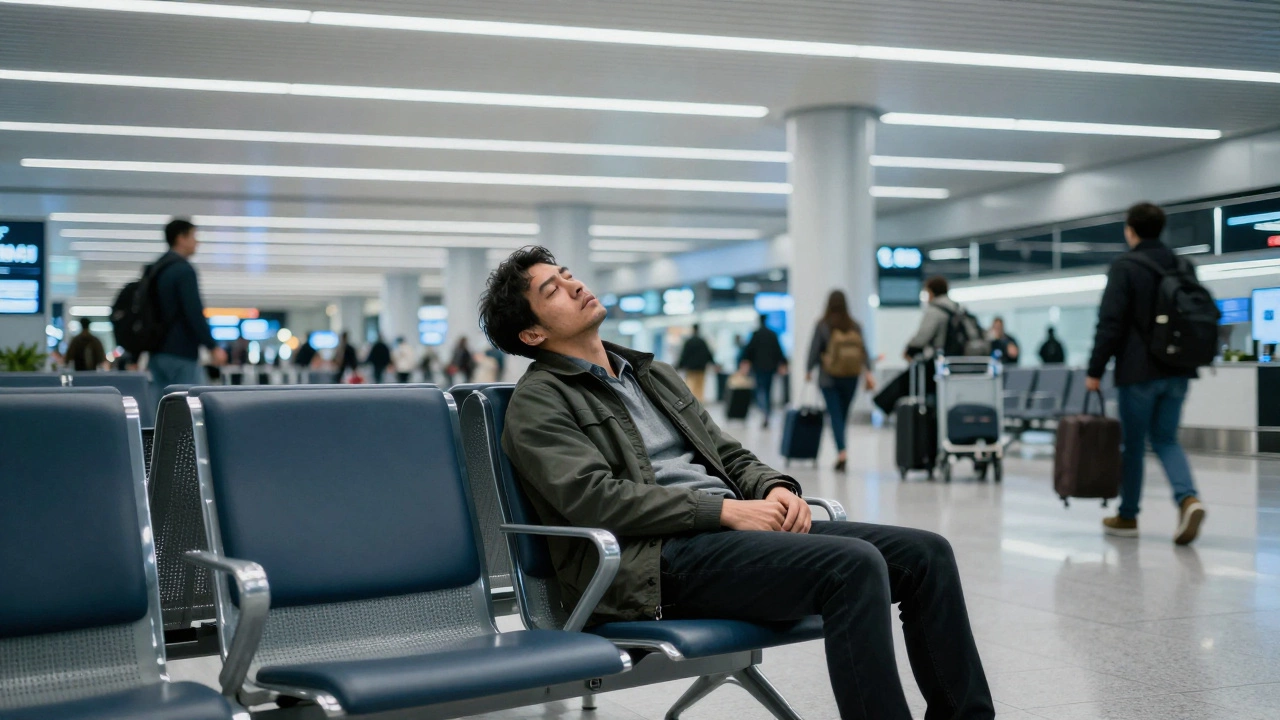
You’ve been stuck in a terminal for six hours. Your flight is delayed until tomorrow morning. Your back hurts, your neck is stiff, and the fluorescent lights are giving you a headache. You look around at the rows of plastic chairs and realize that trying to sleep on them is not going to work. So, where do you actually go?
Finding a place to rest during a long layover or an unexpected delay is one of the most stressful parts of travel. Most people assume they have two choices: suffer on a hard chair or pay a fortune for a hotel room. But the reality is much more complex. Airports today offer a wide range of options, from free quiet zones to luxury suites with showers. Knowing which option fits your situation can save your sanity-and your wallet.
The Best Option: On-Airport Hotels
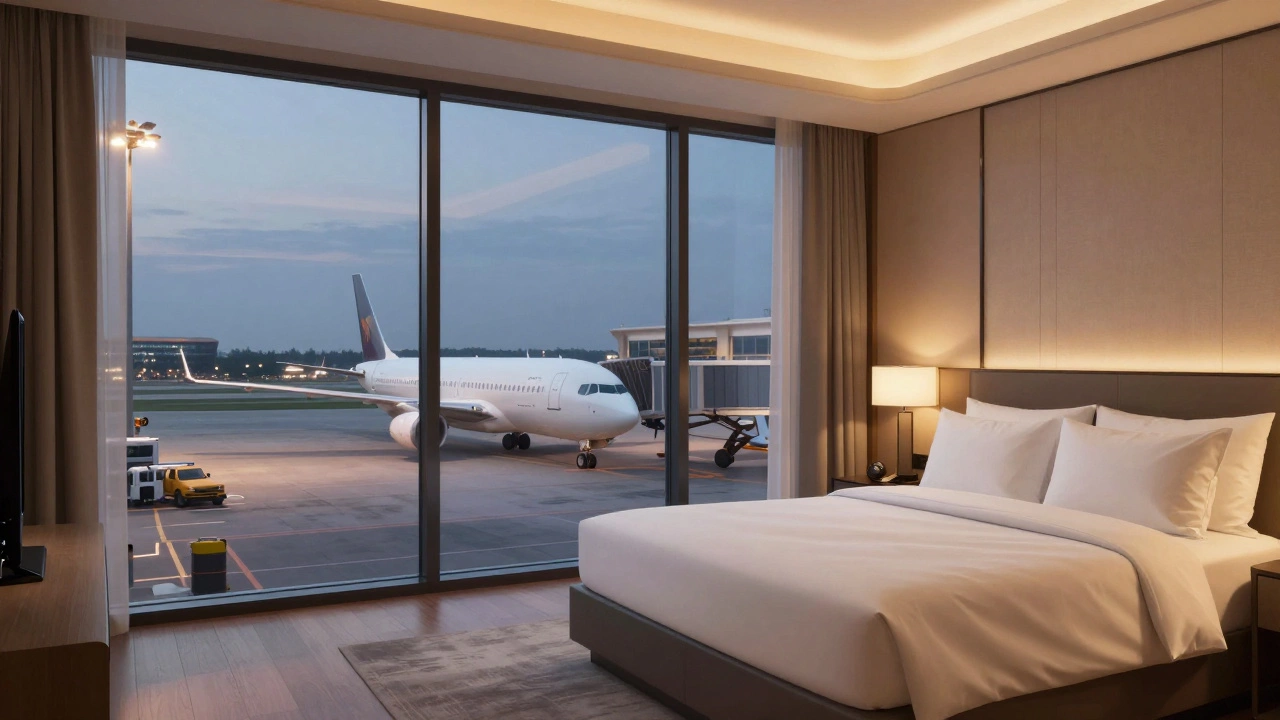
If you have some budget to spare and need a real bed, an on-airport hotel is usually the best choice. These properties are designed specifically for travelers who are transiting through the airport. They eliminate the stress of traffic, security checks, and getting lost in a new city.
There are generally two types of on-airport accommodations:
- Airside Hotels: These are located inside the secure area (after passport control and security). This is the gold standard for international connections because you don’t need to leave the airport, clear immigration, or worry about missing your next flight due to traffic. Examples include the Aerotel Tokyo at Narita International Airport and the Airside Hotel at Frankfurt Airport.
- Landside Hotels: These are connected to the terminal via a shuttle bus or a walking bridge but are outside the secure zone. You will need to exit the airport, check into the hotel, and then re-enter security later. This works well if you have a long layover (8+ hours) and want to stretch your legs, or if you are arriving late at night and want to be close to the departure gates. The Hilton Garden Inn near many major US hubs falls into this category.
When booking, always check if the hotel offers a "day use" rate. Many business hotels allow you to book a room for just 4-6 hours at a discounted price compared to a full overnight stay. This is perfect for a mid-day connection.
The Budget Choice: Sleeping in the Terminal
If you don’t want to spend money on a hotel, you can try to sleep in the terminal itself. This requires preparation, the right gear, and a bit of luck regarding the airport’s policies.
Not all airports are friendly to overnight sleepers. Some, like Singapore Changi (SIN) and Amsterdam Schiphol (AMS), are known for being very accommodating with comfortable seating and even dedicated nap pods. Others, like certain terminals at Los Angeles International Airport (LAX) or Paris Charles de Gaulle (CDG), may ask you to move along or close certain areas overnight.
To make terminal sleeping bearable, you need the right strategy:
- Find the Right Spot: Look for rows of seats without armrests. If every seat has an armrest, you won’t be able to lie down flat. Gates that are far from high-traffic corridors are quieter. Sometimes, the baggage claim area is empty and quiet after midnight.
- Use the Right Gear: A travel pillow is essential, but a neck brace or a U-shaped memory foam pillow works better. Bring an eye mask and noise-canceling headphones or earplugs. Airports are loud-carts rolling, announcements blaring, and footsteps echoing.
- Security and Comfort: Keep your valuables close to your body. Use a small backpack as a pillow so you don’t lose it. Dress in layers; airport AC can be freezing at night, even if it was hot during the day.
Websites like Sleeping in Airports provide user-generated reviews of specific terminals, telling you exactly which gates have the best seats and whether staff are tolerant of sleepers.
The Middle Ground: Nap Pods and Sleep Capsules
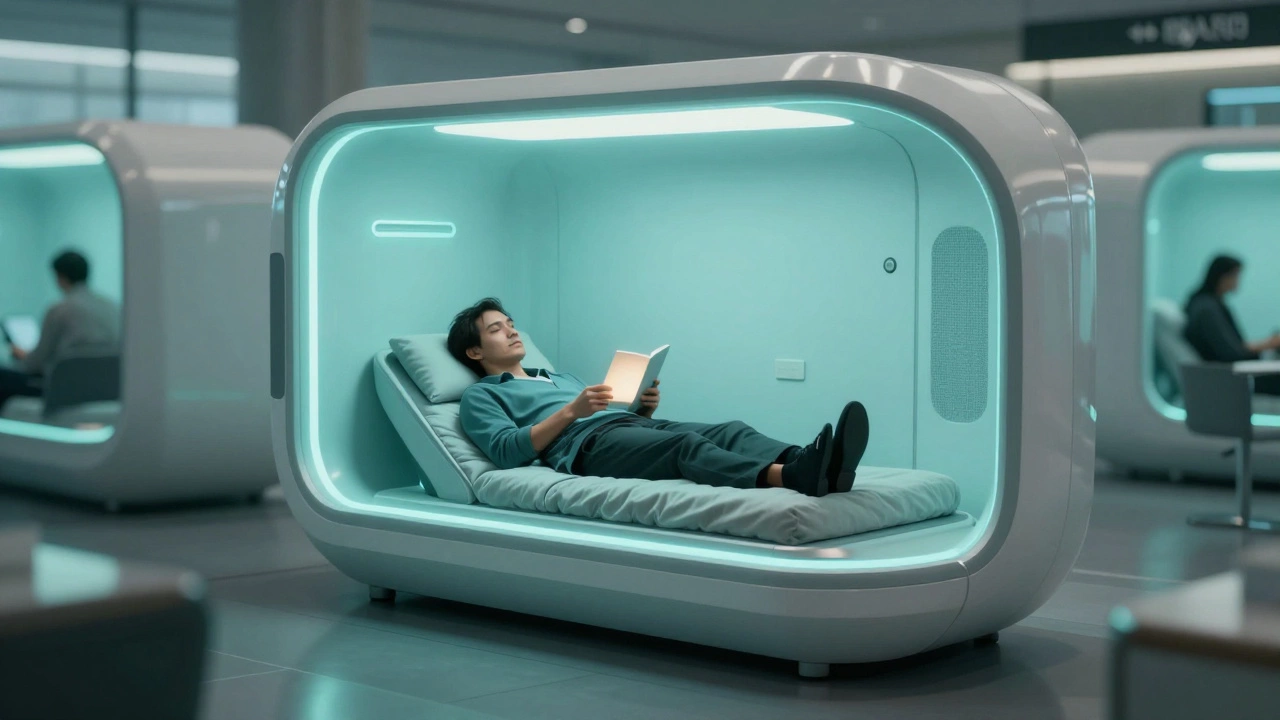
For those who find terminal seats too uncomfortable but hotels too expensive, sleep capsules or nap pods are a growing solution. These are small, private rooms or booths where you can lie down for a few hours. They often come with a mattress, a light, and sometimes a shower.
This model is popular in Asia and increasingly common in Europe. For example, YOTELAIR offers compact cabins at London Heathrow and New York JFK. You can rent a pod by the hour, making it a flexible option for short layovers. In Seoul’s Incheon Airport (ICN), you’ll find The Pod, which provides clean, private spaces for resting.
The main advantage here is privacy and hygiene. You aren’t sharing space with strangers, and you get a proper surface to lie on. However, these pods can still be pricey, often costing $30-$50 per hour, so they are best for layovers of 3-6 hours.
Alternative Rest Options: Lounges and Showers
If you can’t sleep deeply, you might just need to relax and freshen up. Airport lounges are excellent for this. While they don’t typically offer beds, many have reclining chairs, quiet zones, and complimentary food and drinks.
Access to lounges is usually granted through premium airline tickets, frequent flyer status, or paid memberships like Priority Pass. Some independent lounges also allow day passes. Even if you can’t sleep, sitting in a comfortable chair away from the terminal crowd can help you recharge.
Another critical amenity is the shower. Feeling sweaty and tired makes it impossible to rest. Many airports now offer public shower facilities for a fee. At Frankfurt Airport, for instance, you can access showers in the Skyline Club or other partner lounges. Freshening up can make a huge difference in how you feel for the rest of your journey.
How to Choose the Right Option for You
Your decision should depend on three factors: time, budget, and location.
| Option | Best For | Cost Estimate | Privacy Level |
|---|---|---|---|
| On-Airport Hotel | Long layovers (8+ hrs), families, deep sleep needs | $100 - $300+ | High |
| Sleep Capsule/Pod | Medium layovers (3-6 hrs), solo travelers | $30 - $80 | Medium-High |
| Airport Lounge | Short breaks, working, freshening up | $25 - $60 (or included) | Low-Medium |
| Terminal Sleeping | Budget travelers, short naps, flexible schedules | Free | None |
If you are traveling with children or elderly companions, avoid terminal sleeping. The discomfort and lack of privacy make it difficult for everyone. An on-airport hotel or a family-friendly lounge is worth the extra cost. If you are a solo traveler on a tight budget, terminal sleeping is viable if you research the airport beforehand.
Tips for a Better Layover Experience
No matter where you choose to rest, a few general tips can improve your experience:
- Check Visa Requirements: If you plan to leave the airport for a landside hotel, ensure you have the necessary visa to enter the country. Some countries allow transit without a visa, while others require entry clearance. Getting denied entry can ruin your trip.
- Download Offline Maps: Airports are mazes. Download offline maps of the airport terminal to locate gates, lounges, and hotels quickly. Signal can be spotty in some areas.
- Stay Hydrated: Airports are dry environments. Drink water before and during your rest. Dehydration worsens fatigue and jet lag.
- Set Multiple Alarms: Whether you’re in a hotel or a terminal, set alarms on your phone and watch. Don’t rely on just one device. Missing your flight because you overslept is a nightmare no one wants.
Resting during a layover doesn’t have to be a struggle. By understanding your options-from the comfort of an on-airport hotel to the resourcefulness of terminal sleeping-you can turn a tedious wait into a productive break. Plan ahead, pack smart, and prioritize your comfort. After all, you’ll need your energy for the destination ahead.
Can I sleep in any airport terminal?
Not all airports allow overnight sleeping. Policies vary by country and terminal. Some airports, like Singapore Changi, encourage it, while others may ask you to leave if you are not boarding a flight soon. Always check the specific airport’s policy online before relying on terminal sleeping.
Are on-airport hotels safe?
Yes, on-airport hotels are generally very safe. They are located within or adjacent to secure airport zones, meaning access is controlled. Staff are trained to handle transient guests, and security measures are strict. However, always keep your valuables with you and lock your hotel room door.
What is the cheapest way to rest at an airport?
The cheapest way is to sleep in the terminal for free. To make this more comfortable, bring a travel pillow, eye mask, and earplugs. Alternatively, some airports offer low-cost nap pods or capsule hotels for under $50 for a few hours, which is cheaper than a full hotel room.
Do I need a visa to stay in an on-airport hotel?
It depends on the hotel’s location. If the hotel is airside (inside the secure zone), you usually do not need a visa. If it is landside (outside security), you must pass through immigration, which means you need a valid visa or entry permit for that country. Always verify visa requirements before booking a landside hotel.
Can I book a hotel room for just a few hours?
Many on-airport hotels offer "day use" rates, allowing you to book a room for 4-6 hours at a lower price than an overnight stay. This is ideal for layovers. Check the hotel’s website or call them directly to ask about day-use availability and pricing.